Table of Contents
Swiggy India Hyperlocal Market Leader : 18 core Strategies
The landscape of Indian retail and consumption has undergone a fundamental transformation over the last decade, catalyzed by the rise of hyperlocal on-demand platforms. At the center of this shift is Swiggy Limited, a Bengaluru-headquartered organization that has evolved from a nascent food delivery startup in 2014 into a comprehensive multi-service ecosystem encompassing quick commerce, dining out, and business-to-business (B2B) logistics. Swiggy’s trajectory—from its incorporation as Bundl Technologies Private Limited to its successful listing as a public company in November 2024—illustrates the scaling of a solution-first approach to urban convenience. This report provides an exhaustive analysis of the company’s business model, technological infrastructure, financial performance, and the competitive dynamics of the Indian market.
1. Company Overview
| swiggy Company Overview | Company Information |
|---|---|
| Company Name | Swiggy |
| Founded Year | 2014 |
| Industry / Sector | Food Delivery, Quick Commerce, Logistics, Hyperlocal Services |
| Headquarters | Bengaluru, Karnataka, India |
| Company Revenue | ₹11,247 crore (FY 2023–24, approx.) |
| Founders | Sriharsha Majety Nandan Reddy Rahul Jaimini (co-founder, exited) |
| Company Type | Private (Indian Consumer Internet & Logistics Unicorn) |
| Products / Platforms | Swiggy Food Delivery Swiggy Instamart (Quick Commerce) Swiggy Genie (Pickup & Drop) Swiggy Dineout Swiggy Minis (D2C marketplace) |
| Target Market | Urban and semi-urban consumers, restaurants, cloud kitchens, local merchants, D2C brands. |
| Market Role | India’s leading on-demand food delivery and quick-commerce ecosystem. |
| Unique Value Proposition | End-to-end hyperlocal logistics network combining food, grocery, and local commerce with fast delivery and deep restaurant partnerships. |
| Geographic Presence | 600+ cities across India |
| Growth Snapshot | 1. Among India’s top two food delivery platforms 2. Instamart emerged as a major quick-commerce player 3. Strong growth in non-food verticals (Genie, Dineout, Minis) 4. Moving toward profitability with operational efficiency focus |
2. Corporate Overview and Genesis
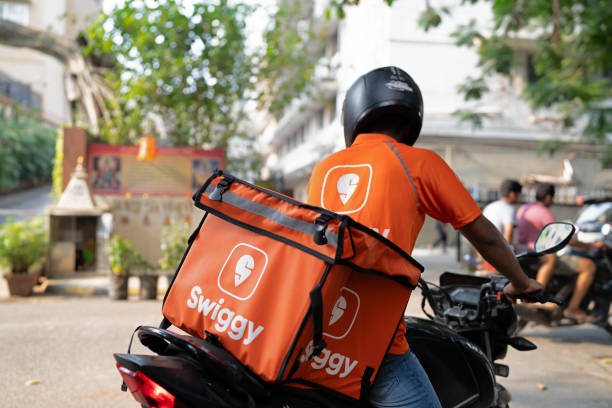
The origins of Swiggy are rooted in the identification of a structural inefficiency in the Indian restaurant industry. While food delivery was not a new concept in 2014, it was largely fragmented and dependent on restaurant-owned delivery staff, which led to inconsistent service quality and restricted delivery radiuses. Founded by Sriharsha Majety, Nandan Reddy, and Rahul Jaimini, Swiggy was built on the premise that an exclusive, managed delivery fleet could provide a “lightning-fast” and reliable experience that third-party marketplaces previously lacked.
The transition from a food delivery service into a “logistics hub of excellence” was marked by strategic milestones. Following its launch in Bengaluru, the platform expanded rapidly, reaching more than 700 cities by 2025. The company’s mission—to elevate the quality of life for urban consumers by offering unparalleled convenience—has guided its expansion into diverse segments such as Swiggy Instamart (quick commerce), Swiggy Genie (hyperlocal courier), and Swiggy Dineout (restaurant reservations). On April 1, 2024, the entity was converted into a public limited company, setting the stage for one of India’s largest technology IPOs.
| Milestone | Year | Significant Event |
| Incorporation | 2013 | Founded as Bundl Technologies Private Limited |
| Market Entry | 2014 | Launch of on-demand food delivery in Bengaluru |
| Cloud Kitchens | 2017 | Launch of “The Bowl Company” and “Swiggy Access” |
| Expansion | 2019 | Entry into general product delivery (Swiggy Stores/Go) |
| Quick Commerce | 2020 | Launch of Instamart during the COVID-19 pandemic |
| Acquisition | 2022 | Acquisition of Dineout from Times Internet |
| B2B Integration | 2023 | Acquisition of LYNK Logistics for retail distribution |
| Public Listing | 2024 | IPO raising USD 1.34 billion; listed on Indian exchanges |
3. Business Model and Revenue Streams
The Swiggy business model functions as a sophisticated multi-sided marketplace that orchestrates interactions between consumers, restaurant/merchant partners, and an independent delivery fleet. The platform operates on the principle of a “growth flywheel,” where increased consumer demand attracts more merchants, which in turn leads to higher delivery density and lower operational costs per order.
The core of the business is its hyperlocal logistics engine. Unlike traditional e-commerce, which relies on centralized warehousing and multi-day delivery, Swiggy focuses on immediate fulfillment within a radius of 3–5 kilometers. This requires a real-time matching algorithm that accounts for restaurant preparation time, delivery executive proximity, traffic conditions, and weather.
Primary Revenue Channels
Revenue generation is diversified across several streams, mitigating the risk of over-dependence on a single category. The primary contributor remains commissions from restaurant partners, which typically account for 15% to 25% of the gross order value (GOV). This is supplemented by delivery fees paid by customers, which are dynamically priced based on demand and distance.
Beyond basic transaction fees, Swiggy has developed high-margin auxiliary revenue streams. Advertising and sponsored listings allow restaurants to pay for premium visibility on the app, while Swiggy One—a multi-service subscription program—provides a recurring revenue base while enhancing customer retention. The quick commerce segment, Instamart, contributes through product markups and B2B commissions from brands seeking rapid distribution.
| Revenue Stream | Mechanism | Estimated Pricing/Margin |
| Commissions | Percentage of order value from restaurants/merchants. | 15% – 25% |
| Delivery Fees | Charges to customers for logistics facilitation. | Variable (₹20 – ₹40+ surge) |
| Advertising | Fee for banner ads and top-tier restaurant listings. | High-margin |
| Subscription | Swiggy One membership fees (monthly/annual). | ₹99 – ₹299+ |
| Platform Fees | Fixed fee per order for app maintenance. | Small per-order fee |
| Instamart | Product markups and brand partnership fees. | Growing share of revenue |
4. Product and Service Ecosystem
Swiggy’s expansion strategy has been defined by a “unified app” philosophy, where multiple services are integrated into a single interface to reduce customer acquisition costs (CAC) and increase the lifetime value (LTV) of the user.
Swiggy Food Delivery
Food delivery remains the bedrock of the company, serving approximately 14 million transacting users at a frequency of 4.5 times per month as of 2024. The segment has achieved EBITDA profitability through operational efficiencies and the scale of its 2.6 lakh-strong restaurant network. Recent innovations include “Bolt,” which offers 10-minute delivery for select items, and “Snacc,” which focuses on smaller meal portions, addressing the shifting consumption patterns of Gen Z and urban professionals.
Swiggy Instamart (Quick Commerce)
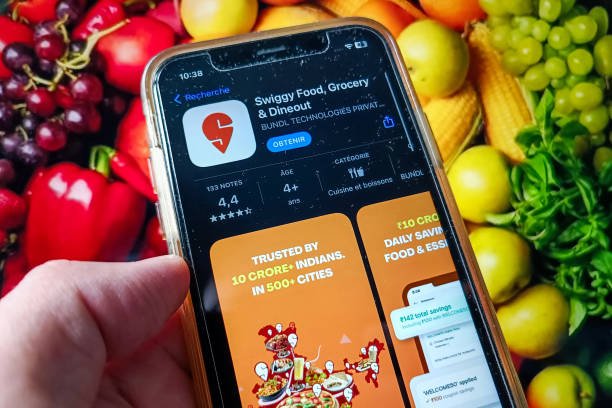
Launched in 2020, Instamart pioneered the 10-minute delivery model for groceries and essentials in India. It utilizes a network of over 500 dark stores (delivery-only fulfillment centers) to stock approximately 17,000 to 20,000 SKUs. To compete with traditional retail, Swiggy has introduced “Megapods”—larger stores of 10,000 to 12,000 square feet that can house up to 50,000 SKUs, including electronics, fashion, and toys.
Hyperlocal and B2B Services
Swiggy Genie offers a “personal assistant” service for picking up and dropping off items within a city, charging a distance-based fee. The 2023 acquisition of LYNK Logistics further extended the company’s reach into the B2B space, digitizing the supply chain for FMCG brands and connecting them to over 100,000 kirana (small retail) stores.
Private Labels and Dineout
The company has experimented with vertical integration through cloud kitchens such as “The Bowl Company” and “Breakfast Express,” though it has recently shifted toward a “kitchen incubator” model (Swiggy Access) to support restaurant partners. Swiggy Dineout allows users to discover restaurants, book tables, and pay bills with discounts, capturing the “out-of-home” consumption market.
5. Target Market and Customer Segmentation
Swiggy primarily targets the “urban foodie”—busy professionals and students in Tier-1 and Tier-2 cities who value time over the cost of delivery. However, the market dynamics are shifting. As of 2025, one in four new users comes from Tier-2 and Tier-3 cities, indicating a democratization of convenience-led commerce beyond the major metros.
The consumer base is increasingly segmented. Gen Z is identified as the fastest-growing demographic, characterized by high-frequency ordering and a preference for “instant gratification” via quick commerce. Meanwhile, “monthly stock-up” behavior is emerging in quick commerce, with 40% of users now using platforms like Instamart for full-month grocery needs rather than just unplanned top-ups.
| Segment | Characteristic | Preferred Service |
| Urban Professionals | Time-poor, high disposable income. | Swiggy One, Dineout |
| Students/Gen Z | High frequency, small ticket sizes. | Bolt, Snacc, Instamart |
| Families | Planned purchases, bulk buying. | Instamart (Maxxsaver) |
| B2B/Retailers | Small businesses, Kirana stores. | LYNK Logistics |
Regional preferences also play a critical role. Swiggy holds a higher user preference in Southern India (42%) and major metros (34%), while its primary competitor, Zomato, leads in Northern and Eastern India. This regional dominance allows Swiggy to maintain strong logistics density in high-value markets like Bengaluru, Mumbai, and Hyderabad.
6. Competitive Landscape and Market Position
The Indian on-demand delivery market is a duopoly in food delivery and a three-way battle in quick commerce. Swiggy maintains a market share of approximately 42% in the food delivery segment, competing directly with Zomato. In the quick commerce sector, Swiggy Instamart (25% share) currently trails Blinkit (46%) and Zepto (29%), highlighting the intense capital requirement and operational focus needed to gain leadership in this high-growth vertical.
Comparative Market Shares (2025 Projection)
| Platform | Food Delivery Share | Quick Commerce Share | Key Strength |
| Zomato / Blinkit | ~58% | ~46% | Market leadership, profitability focus |
| Swiggy | ~42% | ~25% | Unified app, diversified B2B services |
| Zepto | N/A | ~29% | Pureplay focus, high metro density |
| BigBasket / Flipkart | N/A | <10% | Supply chain expertise, established user base |
The entry of traditional e-commerce giants like Amazon and Flipkart into the quick commerce space has intensified the competition. Swiggy’s defense strategy focuses on its “unified app” advantage, where the same delivery fleet can fulfill a food order and an Instamart order in the same trip, maximizing fleet utilization. Furthermore, the introduction of “Maxxsaver” for bulk orders directly targets the “value-conscious” segment, providing discounts of up to ₹500 on high-value grocery carts. Swiggy India Hyperlocal Market Leader : 18 core Strategies
7. Financial Performance and Capital Structure
Swiggy’s financial narrative is a study in balancing rapid scale with the drive toward unit economics. For the fiscal year ending March 2025, the company reported consolidated revenue of ₹15,227 crore, a jump from ₹11,247 crore in the previous year. However, this growth has come at the cost of widening net losses, primarily due to the “Instamart Profitability Puzzle”. While food delivery has stabilized with an EBITDA margin of 2.9% of GOV, Instamart’s heavy investment in dark stores and infrastructure resulted in an EBITDA margin of -4.6% in the latest quarter.
Consolidated Financial Summary (FY20 – FY25)
| Metric (₹ Cr) | FY2020 | FY2021 | FY2022 | FY2023 | FY2024 | FY2025 (Projected) |
| Revenue from Sales | 3,468 | 2,547 | 5,705 | 8,265 | 11,247 | 15,227 |
| Total Expenses | 7,292 | 3,843 | 9,355 | 12,538 | 13,447 | 18,015 |
| Operating Profit | -3,824 | -1,296 | -3,650 | -4,273 | -2,199 | -2,788 |
| Net Profit/Loss | -3,915 | -1,616 | -3,628 | -4,179 | -2,350 | -3,116 |
| Operating Cash Flow | -3,841 | -1,175 | -3,900 | -4,060 | -1,313 | -2,169 |
The company’s capitalization before the IPO was supported by ₹25,809 crore in funding from marquee investors. Post-IPO, the market capitalization stands at approximately ₹90,414 crore. The shareholding structure is led by Prosus (25.4%), followed by SoftBank (7.6%) and Accel (5.4%). The IPO proceeds of approximately ₹11,327 crore are being utilized to settle borrowings of the Scootsy subsidiary, expand the dark store network, and invest in brand awareness and cloud infrastructure.
Ratios and Efficiency Metrics (TTM)
The Return on Equity (ROE) of -255% and Return on Capital Employed (ROCE) of -29.2% reflect the high-burn nature of the current growth phase in the quick commerce market. However, the reduction in debt and the expectation of a “good quarter” post-IPO suggest that the company is transitioning toward a more sustainable capital structure. The debtor days have increased from 45.7 to 59.0, indicating a potential stretch in B2B collection cycles as the LYNK Logistics segment scales.
8. Technological Infrastructure and Innovation
Swiggy’s competitive moat is increasingly built on data and artificial intelligence. The platform processes billions of data points daily to optimize every touchpoint of the consumer journey.
Real-Time Intelligence and Microsoft Fabric
To address the critical need for speed in a business where orders are delivered in 10-30 minutes, Swiggy deployed “Real-Time Intelligence” in Microsoft Fabric. This allows the back-end team to analyze streaming data—from inventory levels in dark stores to live road conditions—in seconds, rather than the previous 10-minute lag. This system is particularly effective in identifying “coupon misuse,” where discount codes leaked on social media can be detected and deactivated in real-time to protect margins.
Neural Search and Conversational AI
The platform’s “Neural Search” allows users to interact with the app using conversational queries like “Show me vegan-friendly starters”. Built using Large Language Models (LLMs), this feature understands the context of dishes, recipes, and user intent, moving beyond simple keyword matching. In early 2026, Swiggy further expanded this by enabling end-to-end ordering via third-party AI assistants like ChatGPT and Claude using Anthropic’s Model Context Protocol (MCP).
Logistics and Routing
The smart backend makes over a million predictions per second, utilizing a “data lake” to track everything from a customer’s browsing history to the current “load” on a restaurant’s kitchen. The “Driver Dost” chatbot helps delivery partners with route planning and tracking earnings, while AI models predict potential delivery delays to manage customer expectations.
9. Operations and Supply Chain Management
Swiggy’s operational excellence is defined by its ability to manage a massive decentralized supply chain. The company’s core logistical asset is its fleet of 6.9 lakh delivery partners, which is managed as an independent workforce rather than a direct employee base.
The Quick Commerce Supply Chain
Instamart operates on a “dark store” model, where inventory is held in delivery-only warehouses located within high-density residential areas. The move toward “Megapods” represents a strategic shift from being a “top-up” grocery service to a comprehensive retailer. These Megapods (up to 12,000 sq. ft.) allow Swiggy to maintain a fill rate (Order-to-Inventory matching) that is often superior to traditional retail.
| Asset Type | Primary Function | Scale/Capacity |
| Dark Store | Hyperlocal fulfillment of groceries. | 15,000 – 20,000 SKUs |
| Megapod | High-assortment fulfillment (Electronics/Fashion). | 50,000 SKUs |
| Fulfilment Center | B2B storage and distribution for kiranas. | 22+ centers (LYNK) |
| Delivery Executive | Last-mile transport (Two-wheelers). | 6.9 lakh partners |
The Guinness World Record Milestone
Swiggy demonstrated its operational capability by delivering 11,000 vada pavs in a single order to schools supported by the Robin Hood Army in Mumbai. This was facilitated by the new “Swiggy XL” EV fleet, showcasing the ability to handle high-volume bulk deliveries that traditional hyperlocal fleets might struggle with.
10. Marketing and Customer Acquisition Strategy
Marketing at Swiggy has evolved from simple discount-led acquisition to brand-building and loyalty-focused retention.
Membership and Loyalty
The Swiggy One membership is the centerpiece of its retention strategy. By offering unlimited free deliveries on both food and Instamart, the program creates high “stickiness”. The introduction of “Swiggy One BLCK”—an invite-only tier—provides premium benefits such as “On-Time Guarantees” and priority customer support, further segmenting the user base.
Strategic Sponsorships
Swiggy became the official sponsor of Shark Tank India Season 4, positioning itself at the intersection of entrepreneurship and convenience. The platform also uses targeted discounts, such as the “Maxxsaver” feature on Instamart, which automatically applies savings of up to ₹500 on bulk orders, encouraging users to increase their basket size.
| Campaign/Tool | Objective | Impact |
| Swiggy One | Increase order frequency/retention. | 5.7 million members |
| Maxxsaver | Drive high-value bulk grocery orders. | Higher AOV in 100 cities |
| Bolt | Capture the “instant gratification” market. | 12% of food orders already |
| EatRight | Target health-conscious users. | 1.8 million healthy items |
11. Customer Experience and Service Reliability
Swiggy’s customer relationship management is built on 24/7 digital support and a “no-questions-asked” refund policy for many common issues, which has been critical in building consumer trust in an online-only service.
The Unified Experience
The decision to keep food, groceries, and Genie in one app contrasts with Zomato’s strategy of keeping Blinkit separate. This allows Swiggy users to “seamlessly” switch between categories. For instance, a user might open the app to order lunch and then realize they need milk from Instamart, completing both transactions within the same session.
Service Innovations
The “Swiggy Seal” program is a quality-assurance initiative aimed at ensuring that restaurant partners meet high standards of hygiene and packaging. Additionally, the platform’s “Incognito Mode” and “Eatlists” (curated lists of favorite restaurants) are examples of personalized features that enhance the user interface (UX), making ordering “fun and create positive emotions”.
12. Company Culture and Workforce Dynamics
Swiggy’s culture is defined by its core values, which include being “vocally self-critical,” “paranoid about consumer experience,” and “doing more with less”. CEO Sriharsha Majety describes the company’s culture as its “lifeblood,” emphasizing that it is designed for Swiggsters to “do the best work of their lives”.
The Gig Worker Reality
While the corporate culture is robust, the gig-worker fleet faces a different set of challenges. An estimated 55% of delivery workers work 10–12 hours daily, and nearly 20% work 12–14 hours to meet earnings targets. A report titled “Prisoners on Wheels” highlighted that over one-third of delivery partners take home less than ₹10,000 per month after deducting operational expenses. Swiggy India Hyperlocal Market Leader : 18 core Strategies
To address these vulnerabilities, Swiggy has committed to:
- Onboarding 1 lakh women delivery partners by 2030.
- Providing career-growth paths for top delivery partners.
- Partnering with Sulabh International for free restroom access in major cities.
- Launching financial literacy programs for partners in collaboration with the NSE.
13. Risks, Challenges, and Legal Compliance
Swiggy operates in a high-risk, high-reward environment where regulatory scrutiny is intensifying.
Antitrust and Competition Law
In November 2024, an investigation by the Competition Commission of India (CCI) found that Swiggy and Zomato had breached antitrust laws. The findings indicated that the platforms engaged in “exclusive contracts” with certain restaurants and pushed for “price parity,” which prevented restaurants from offering lower prices on other platforms. The CCI’s final decision could involve substantial monetary penalties or mandated changes to business practices, which Swiggy listed as a significant “internal risk” in its IPO prospectus.
Labor and the Gig Economy
There is a growing global and domestic push to reclassify gig workers as “employees” rather than “independent contractors”. In India, the Code on Social Security (2020) has begun to define platform workers, but enforceable standards on minimum wages and working hours remain a grey area. State-level legislation, such as the Rajasthan Platform Based Gig Workers Act (2023), aims to improve protections, creating a fragmented regulatory landscape that Swiggy must navigate.
Operational and Environmental Risks
The pressure of “10-minute delivery” targets leads to increased traffic risks, with riders admitting to taking risks like driving on the wrong side of the road to avoid delays. Additionally, traffic fines can be a significant cost for riders, sometimes exceeding their monthly savings.
14. Sustainability and ESG Initiatives
Swiggy has integrated its ESG (Environmental, Social, and Governance) commitments into a long-term roadmap to 2030, reinforcing its responsibility as a public company.
Zero-Emission Delivery (EV Transition)
The company has committed to transitioning its entire delivery fleet to electric vehicles (EVs) by 2030. As part of the UNEP-hosted “Deliver-E Coalition,” Swiggy has scaled its EV fleet 7x in the last 12 months, resulting in a reduction of over 4,500 tonnes of CO2 emissions. Partners can access over 70 EV models through collaborators like Yulu, Zypp, and Hero.
Waste Reduction and Social Impact
Swiggy aims to facilitate the transition to responsible packaging for 100% of its restaurant partners by 2030. The “Swiggy Serves” program, launched in 2025, aims to distribute 100 million meals by 2030 to address hunger while minimizing perishable waste in operations by 25% year-on-year.
15. Growth Strategy and Future Plans
The organization’s growth strategy is focused on expanding the “Total Addressable Market” (TAM) by diversifying its use cases.
- Financial Service Integration: Swiggy is leveraging its user data to offer financial solutions, such as “Instant Loans” for restaurant partners and co-branded credit cards for consumers.
- Drone Deliveries: In partnership with ANRA Technologies, the company is trialing drone deliveries to bypass urban traffic, potentially revolutionizing the speed of medicine and high-value item fulfillment.
- B2B Scaling: By leveraging LYNK Logistics, Swiggy aims to become the “Kirana Commerce platform of the future,” digitizing the traditional distribution supply chain in India.
- Premiumization: The “Swiggy One BLCK” tier and focus on high-value categories in Instamart (electronics, appliances) are aimed at increasing the revenue per user from affluent urban segments. Swiggy India Hyperlocal Market Leader : 18 core Strategies
16. SWOT Analysis
An objective evaluation of Swiggy’s current market position highlights the tension between its operational strengths and the competitive pressures of the Indian market.
Strengths
- Market Duopoly: Maintains a strong 42% share in a stable food delivery market.
- Unified App Ecosystem: Cross-service utilization reduces user churn and CAC.
- Technological Maturity: Real-time AI integration via Microsoft Fabric and LLM-driven search.
- B2B Diversification: Acquisition of LYNK provides a defensive moat in the traditional retail supply chain.
Weaknesses
- Heavy Losses in Quick Commerce: Instamart’s burn continues to weigh on the overall consolidated profit.
- Lower Regional Market Share in North India: Trails Zomato significantly in high-growth Northern regions.
- Negative Efficiency Ratios: Negative ROE and ROCE indicate a long path to capital efficiency.
Opportunities
- Tier-2/3 Expansion: Capturing the “next 500 million” users in smaller Indian cities.
- Financial Services: Monetizing consumer and merchant data through lending and cards.
- EV Fleet Cost Savings: Long-term reduction in delivery costs through 100% electrification.
- Ad Revenue Scaling: Leveraging platform traffic to build a high-margin digital advertising business.
Threats
- Antitrust Penalties: Financial and operational impact of the CCI investigation.
- New Entrants: Potential disruption from Amazon, Flipkart, or government-backed ONDC.
- Gig Worker Reclassification: Legal shifts could mandate employee-like benefits, destroying current unit economics.
- Market Satiation: High competition for Gen Z attention could lead to infinite price wars.
17. Industry and Market Trends
The Indian e-commerce market is projected to reach USD 67 billion by 2025, with online groceries growing at a 45% annual rate from 2025 to 2030. The primary trend is “Convergence,” where food delivery platforms, grocery apps, and B2B wholesale providers are merging into single-point convenience hubs.
The emergence of “Quick Commerce” as an essential service in urban cities (now accounting for 5-6% of household grocery spending) signifies a permanent shift in consumer behavior. Consumers are increasingly comfortable with an “omnichannel” approach, where they use physical stores for fresh produce (70-80%) but rely on apps for packaged foods and groceries (15-20%).
18. Final Evaluation
Swiggy Limited represents the apex of India’s hyperlocal transformation. From a strategic perspective, its greatest achievement is the construction of a logistics infrastructure that operates at a scale and speed previously unimaginable in the Indian context. The company’s “solution-first” approach has successfully identified and monetized the “urban time-poverty” of India’s rising middle class.
However, as a newly public entity, Swiggy is at a critical juncture. The “growth-at-any-cost” phase of its evolution must now give way to a “path-to-profitability” phase. The core food delivery business has proven its ability to generate positive margins, but the future of the company’s valuation rests on its ability to solve the profitability puzzle of Instamart and successfully scale its B2B logistics arm. The recent antitrust findings by the CCI add a layer of regulatory complexity that could force a recalibration of its merchant relationships. Swiggy India Hyperlocal Market Leader : 18 core Strategies
Overall, Swiggy’s diversified ecosystem, deep technological integration, and commitment to long-term sustainability via EV adoption position it as a resilient leader in the Indian internet economy. Its ability to navigate the upcoming regulatory shifts and maintain its “unified app” advantage will determine if it can sustain its decacorn status in an increasingly crowded market.
FAQ
How do I place an order?
Download the Swiggy app (iOS/Android) or visit the website.
Enter your delivery address.
Browse restaurants/dishes, add items to cart, and proceed to checkout.
Choose payment method and confirm the order.
Can I schedule an order for later?
Yes, during checkout, tap “Schedule” and select your preferred date and time.
How do I track my order?
Use the “Track Order” feature in the app to see:
Estimated delivery time
Restaurant confirmation
Food preparation status
Delivery executive details & live location
What is Swiggy Super?
Swiggy Super is a membership program offering benefits like:
Available via monthly/annual subscription.
Free delivery on eligible orders
Extra discounts
Priority customer support
What payment options are available?
Credit/Debit cards
UPI (PhonePe, Google Pay, etc.)
Net Banking
Swiggy Money (wallet)
Cash on Delivery (where available)
How do I apply a coupon/discount?
At checkout, tap “Apply Coupon” to see available offers. Some are auto-applied.
How long do refunds take?
For online payments: 5–10 business days, depending on your bank.
For failed Cash on Delivery orders: Refund via Swiggy Money or original payment method.
Why was my payment declined?
Insufficient funds
Bank/server issues
Incorrect card/UPI details
Contact your bank or try another payment method.
How do I reset my password?
Go to Login → “Forgot Password” → enter registered email/phone for reset link.
Can I change my delivery address?
You can change the address before ordering. After placing the order, contact support immediately via app/phone
Why is the app not working?
What is Swiggy Genie?
A service to pick up and deliver anything (documents, parcels, groceries, etc.) within the same city.
What is Swiggy Instamart?
Grocery delivery service with quick turnaround (15–30 minutes) on daily essentials.