Table of Contents
| Category | Details |
|---|---|
| Company Name | AI Deepfake Investment Scam Networks (Cybercrime Ecosystem – Not a Legitimate Company) |
| Founded Year | Emerged rapidly from 2022 onward with the widespread adoption of generative AI and deepfake technologies |
| Industry / Sector | Cybercrime / Financial Fraud / AI-Enabled Fraud / Digital Scam Networks |
| Headquarters | No official headquarters; operations are typically conducted through cross-border criminal syndicates using distributed infrastructure, encrypted messaging platforms, and fraudulent websites |
| Company Revenue | Estimated billions of US dollars stolen globally each year through AI-enabled investment fraud, according to international cybercrime and law enforcement reports |
| Founders | No legitimate founders; organized by anonymous cybercriminal groups, transnational fraud syndicates, and organized crime networks |
| Company Type | llegal Criminal Network / Transnational Cybercrime Organization |
| Products / Platforms | Deepfake Videos, AI Voice Cloning, Fake Investment Platforms, Fraudulent Cryptocurrency Exchanges, Fake Trading Apps, Scam Websites, WhatsApp & Telegram Investment Groups, Facebook & Instagram Advertisements, Phishing Pages, AI Chatbots, Impersonation Campaigns |
| Target Market | Retail investors, cryptocurrency traders, elderly individuals, first-time investors, professionals, social media users, and victims seeking high-return investment opportunities |
| Market Role | One of the fastest-growing forms of financial cybercrime, exploiting generative AI, synthetic media, and social engineering to deceive victims into transferring money or cryptocurrency |
| Unique Value | AI-generated celebrity endorsements, realistic deepfake videos, voice cloning, fake financial advisors, personalized phishing, multilingual scam operations, automated chatbots, fake trading dashboards, and sophisticated psychological manipulation techniques |
| Geographic Presence | Global operations affecting victims across North America, Europe, Asia-Pacific, the Middle East, Africa, and Latin America, often coordinated through international cybercrime networks |
| Growth Snapshot | AI deepfake investment scams have expanded rapidly alongside advances in generative AI. Criminal networks now combine deepfake videos, voice cloning, fake investment apps, cryptocurrency wallets, messaging platforms such as WhatsApp and Telegram, and social media advertising to target victims at scale. These operations increasingly use automation, AI chatbots, and cross-border infrastructure to run sophisticated investment fraud campaigns, making AI-enabled financial deception one of the fastest-evolving threats in the global cybercrime landscape. |
AI Deepfake Investment Scams: How Synthetic Media Is Fueling Financial Fraud.
The Paradigm Shift in Cybercrime and Synthetic Media
The global financial ecosystem is currently facing an unprecedented crisis of digital trust, driven by the rapid weaponization of artificial intelligence (AI). The democratization of generative AI, particularly deep learning models capable of synthesizing highly realistic audio and video, has permanently altered the landscape of financial fraud. In 2024 alone, the Federal Bureau of Investigation’s Internet Crime Complaint Center (IC3) recorded $16.6 billion in cybercrime losses, representing a 33% year-over-year increase, with AI-enhanced social engineering driving a rapidly growing share of these incidents. By 2025, deepfake video scams had surged by 700%, with threat intelligence firms detecting over 159,000 unique deepfake scam instances in a single quarter. This integration of deepfake technology into investment scams and corporate fraud has effectively eliminated the traditional technical and linguistic barriers that once hindered large-scale cybercriminal operations.
The fundamental shift introduced by AI in the realm of financial fraud is characterized by speed, quality, and scalability. Historically, social engineering and phishing campaigns relied on intensive human effort, often resulting in communications riddled with detectable flaws such as awkward phrasing, generic greetings, or noticeable visual artifacts. Today, generative AI achieves human-quality output at machine speed. Empirical research indicates that an AI system can generate a highly convincing, personalized phishing email in approximately five minutes, compared to the 16 hours it might take a human researcher to craft a message of equivalent quality. This represents a 192x increase in operational speed, meaning a single threat actor can produce in one day what previously required a specialized team working for months. The effectiveness of these AI-generated lures is equally profound; studies demonstrate that AI-generated phishing emails achieve a 54% click-through rate compared to just 12% for traditional phishing, representing a 4.5x effectiveness multiplier.
Beyond direct financial losses—which in the cryptocurrency sector alone reached $11.37 billion in the United States in 2025—the proliferation of deepfake investment scams has catalyzed a sociological phenomenon termed “truth decay”. As synthetic video, cloned voices, and AI-generated text become indistinguishable from authentic communications, organizations and individuals lose the ability to trust digital interactions at face value. This report provides an exhaustive analysis of the technical mechanisms, operational pipelines, prominent corporate and retail case studies, financial laundering networks, and regulatory responses surrounding the global epidemic of AI-driven deepfake investment scams.
Technological Foundations of Deepfake Fraud
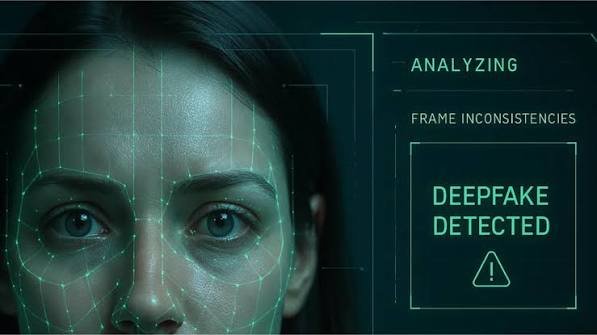
The term “deepfake” originates from the synthesis of “deep learning” and “fake,” referring to media manipulated or entirely generated by artificial intelligence to deceptively mimic real individuals. These forgeries rely on vast datasets of publicly available images, videos, and voice recordings, which are processed using sophisticated neural networks. The technological barrier to entry has plummeted, allowing threat actors to distribute hostile synthetic content at a cost as low as $0.07 per view, enabling scams to achieve mass-scale proliferation virtually overnight.
Generative Adversarial Networks and Diffusion Models
The technical engine behind most high-fidelity deepfakes is the Generative Adversarial Network (GAN). A GAN operates through a continuous, competitive feedback loop between two highly specialized algorithms: the “generator” and the “discriminator”. The generator analyzes source data and creates a synthetic piece of media designed to seamlessly replicate the original subject. Simultaneously, the discriminator, functioning as an internal quality control mechanism, analyzes the generated media against the real data to detect inconsistencies, rendering artifacts, or digital anomalies. If the discriminator identifies the media as a forgery, the generator adjusts its parameters and regenerates the asset. This adversarial process repeats millions of times until the discriminator can no longer distinguish the synthetic media from reality.
Recently, diffusion models have also gained prominence in deepfake generation. These models operate by intentionally adding random Gaussian “noise” to data and then learning to reverse the process, slowly denoising the data to construct a hyper-realistic image or video from scratch. Both architectures allow attackers to bypass traditional liveness detection and identity verification checks used by financial institutions.
Voice Cloning and Lip-Syncing Integration
While full-frame video synthesis requires substantial computational power, voice cloning has become alarmingly accessible. Modern neural voice synthesis algorithms require a mere three to thirty seconds of sample audio to accurately replicate a target’s vocal cadence, tone, and accent. Attackers strip audio from public appearances, earnings calls, or social media posts, feed it into a voice-cloning algorithm, and generate a text-to-speech model that can dynamically enunciate any script in the victim’s exact voice.
Once the audio is generated, threat actors utilize advanced lip-syncing software to modify the mouth movements of an existing video to perfectly match the newly generated synthetic audio track. This ensures that the visual and auditory streams are seamlessly aligned, removing the cognitive dissonance that typically alerts humans to deception.
Corporate Executive Impersonation: The Landmark Arup Incident
The theoretical risks of synthetic media materialized catastrophically in early 2024, when the Hong Kong branch of Arup, a prominent multinational British engineering and design firm, fell victim to one of the most sophisticated deepfake attacks documented to date. The incident resulted in the staggering loss of 25.6million(approximatelyHK200 million) and serves as the definitive case study in technology-enhanced social engineering.
Attack Vector and Execution Methodology
The operation commenced with a highly targeted spear-phishing campaign. A finance employee at Arup received an email that appeared to originate from the company’s Chief Financial Officer (CFO), who was based in the United Kingdom. The email discussed the need to execute a highly confidential, urgent financial transaction. Demonstrating standard cybersecurity awareness, the employee initially suspected the email was a phishing attempt and hesitated to comply.
To alleviate these suspicions and exploit the employee’s reliance on visual confirmation, the attackers deployed the critical phase of the operation: a live video conference call. The employee was invited to join a video meeting to discuss the transaction. Upon joining, the employee saw and heard what appeared to be the CFO, alongside several other familiar senior colleagues. The video participants exhibited natural body language, their facial movements synchronized perfectly with their speech, and they discussed the confidential transaction using appropriate professional terminology and measured vocal cadences.
Crucially, the employee’s verification instinct—to see and hear the executive making the request—was weaponized against him. Convinced by the hyper-realistic deepfakes, the employee authorized 15 separate wire transfers to five different bank accounts in Hong Kong, totaling $25.6 million.
Discovery, Investigation, and Liability Implications
The fraud remained undetected until the employee followed standard post-transaction procedures and contacted Arup’s global headquarters through an out-of-band channel to discuss the “secret transaction.” The genuine executives immediately confirmed that no such meeting had taken place and they had no knowledge of the deepfake video conference, instantly revealing the fraud. Hong Kong police reported the attack in February 2024, though Arup did not publicly identify itself as the victim until May 2024.
The attackers had compromised no internal IT networks or servers; as Arup’s Chief Information Officer noted, this was not a traditional cyberattack but rather a flawless manipulation of human trust. While no direct arrests for the primary heist have been announced, Hong Kong police did arrest eight individuals in April 2025 for related deepfake-enabled fraud schemes involving the use of lost identity cards to open the very bank accounts used to launder such funds.
The Arup incident raises unprecedented questions regarding corporate civil liability and directors’ duties. In traditional civil fraud cases, liability rests on proving intentional misrepresentation, reliance on that misrepresentation, and resulting loss. However, when an employee is deceived by a deepfake of such exceptional quality that it defeats standard verification protocols, proving that the employee breached a duty of care becomes highly complex. Legal analyses suggest that courts recognize the profound difficulty of detecting high-fidelity deepfakes, which weighs heavily against finding employee liability. Consequently, the burden shifts entirely to the enterprise to implement Zero Trust architectures and cryptographic out-of-band verification protocols.
| Case Study Element | Forensic Details of the Arup Incident |
|---|---|
| Target Organization | Arup (Multinational Engineering Firm, Hong Kong Branch) |
| Financial Extraction | 25.6million(HK200 million) |
| Attack Vector Progression | Spear-phishing email escalated to a live deepfake video conference |
| Media Manipulated | Real-time face-swap and voice cloning of the CFO and multiple colleagues |
| Transaction Volume | 15 wire transfers executed to 5 local bank accounts |
| Systemic Failure Point | Total reliance on visual/audio verification without independent cryptographic authentication |
Historical Context and Evolution of Corporate Fraud
The Arup case was not an isolated anomaly but the culmination of an escalating trend. One of the earliest documented precursors occurred in 2019, before generative AI was widely democratized. The CEO of an unnamed UK-based energy company received a phone call from an individual sounding exactly like the chief executive of the firm’s German parent company. The caller perfectly mimicked the executive’s distinct vocal cadence and German accent, instructing the CEO to urgently transfer €220,000 (approximately $243,000) to a Hungarian supplier. The funds were immediately routed through accounts in Hungary and Mexico and were never recovered.
By 2025, the attacks had grown bolder and more visually sophisticated. A finance director at a multinational firm in Singapore authorized a payment of $499,000 after attending a Zoom call where every participating senior executive was an AI-generated forgery. The evolution from single-voice cloning in 2019 to multi-participant real-time video generation in 2024 and 2025 illustrates the rapid maturation of the underlying generative adversarial networks.
Retail and Consumer Exploitation: The Quantum AI Syndicate
While corporate attacks yield massive single-payout sums, the retail consumer sector is being devastated by high-volume, highly automated deepfake investment scams. The most prominent of these campaigns operate under the guise of “Quantum AI” and utilize deepfakes of high-profile celebrities, politicians, and business leaders to solicit fraudulent cryptocurrency investments.
The Borrowed Authority Model
The retail investment scam pipeline relies heavily on the psychological principle of “borrowed authority.” Threat actors scrape video footage of trusted global figures and synthesize their voices and lip movements to endorse entirely fabricated financial platforms. According to industry analyses, Elon Musk is the most frequently impersonated figure in global deepfake scams, consistently depicted promoting platforms that promise extraordinary, AI-driven financial returns. The financial devastation is profound; documented cases include an 82-year-old retiree losing $690,000 and another North American victim losing $1.7 million after engaging with Musk deepfakes.
The operation extends far beyond a single personality. Threat actors meticulously localize their campaigns, generating deepfakes of regional leaders to target specific national demographics with tailored linguistic and cultural markers.
| Target Country | Impersonated Figure | Fraudulent Campaign Theme |
|---|---|---|
| Singapore | Tharman Shanmugaratnam (President) & Lee Hsien Loong | Quantum AI Investment Scheme |
| France | Patrick Pouyanné (CEO, TotalEnergies) | Fake TotalEnergies Giveaway |
| Mexico | Andrés Manuel López Obrador (President) | Mexican Investment Society Project |
| Italy | Giorgia Meloni (Prime Minister) | State-sponsored “FinInvest” Program |
| Canada | Kevin O’Leary (Businessman) | AI Trading Bot promising $27,000 CAD monthly |
| Czechia | Andrej Babiš (Politician) | Prima News Broadcast Manipulation |
| United States | Elon Musk, Tucker Carlson | Quantum AI, Trump Liberty Coins |
Operational Pipeline and Technical Infrastructure
The operational mechanics of the Quantum AI deepfake campaigns have been exhaustively deconstructed by cybersecurity researchers at Palo Alto Networks’ Unit 42. The pipeline functions through a highly structured, multi-phase sequence designed to circumvent digital security while maximizing psychological compliance:
- The Lure (Social Distribution): Scammers purchase advertisements on social media platforms (such as Meta, X, and Telegram) or deploy spoofed news articles that mimic reputable journalism outlets. These advertisements prominently feature the deepfake videos to capture immediate attention and bypass standard text-based content moderation algorithms.
- The Landing Page: Clicks redirect victims to newly registered, single-use domains (e.g.,
bitquantumai[.]com,huerwlleiss-herton[.]pro,euphemiouslystner[.]life). These domains host the deepfake video files and feature a data-harvesting registration form requesting the victim’s name, email, and phone number. - The Human Pitch: Upon form submission, the victim receives a phone call from a human operator acting as an “account manager,” who applies high-pressure sales tactics to secure an initial deposit, typically around $250.
- The Fabricated Dashboard: Victims are granted access to a specialized application featuring a fabricated financial dashboard. The dashboard algorithmically displays steady, artificial profits, psychologically grooming the victim to invest significantly larger sums of their personal wealth.
- The Extraction Phase: To cement absolute trust, scammers occasionally allow a small initial withdrawal. However, once the victim attempts to withdraw the bulk of their heavily inflated “profits,” the scammers demand exorbitant withdrawal fees, claim tax complications, or simply lock the account, effectively stealing the principal investment.
The underlying technical infrastructure of these campaigns relies heavily on Content Delivery Networks (CDNs) and a shared set of specialized video-hosting domains, such as belmar-marketing[.]online, ai-usmcollective[.]click, and fortunatenews[.]com. By utilizing CDNs with multiple IP addresses routed through countries like the United States, the Netherlands, and Russia, threat actors can rapidly serve video payloads globally while completely obscuring their true geographical location. Furthermore, threat intelligence indicates that AI-themed investment scam networks have utilized advanced techniques like Keitaro cloaking across as many as 15,500 domains to evade security scanners, keeping these malicious domains active for an average of 142 days.
The scale of the fraud became so systemic that the Securities and Futures Commission (SFC) of Hong Kong was forced to issue a formal public warning specifically regarding the Quantum AI entity, noting that the scammers utilized purported news websites to disseminate false information and subsequently requested the Hong Kong Police Force to block access to the malicious domains.
Forensic Deconstruction: The Ambani-Goswami Campaigns
The technical sophistication of regionalized deepfake campaigns was acutely demonstrated in a series of viral videos targeting the Indian public, featuring fabricated interactions between Reliance Industries Chairperson Mukesh Ambani and Republic TV Editor-in-Chief Arnab Goswami.
Sourcing, Manipulation, and Visual Anomalies
Analysis by the Deepfakes Analysis Unit (DAU) revealed that the viral investment scam videos were seamlessly stitched together from entirely unrelated, years-old media. Mukesh Ambani’s visual track was scraped from a 2017 Reliance Industries corporate update, while Arnab Goswami’s footage was sourced from a December 2024 news broadcast. The attackers meticulously matched clothing and body language while digitally erasing original background text, altering podium colors, and removing network watermarks (such as the Republic TV and Jio logos) to create a pristine canvas for the forgery.
Despite the visual seamlessness at a macro level, granular forensic analysis exposed deep structural flaws in the deepfake’s rendering process.
- Audio Anomalies: The AI-generated voice of Arnab Goswami lacked his characteristic pitch, pacing, and natural pauses, resulting in a monotonous, unusually fast-paced delivery. Ambani’s synthesized voice exhibited an artificial accent that deviated entirely from his authentic speech patterns, sounding highly scripted and devoid of natural intonation.
- Visual Glitches: Lip-syncing artifacts were prominent. In zoomed-in frames, Goswami’s mouth movements resembled a puppet, and his teeth were unnaturally hidden. When rendering Ambani, the generative model struggled with spatial coherence; Ambani’s oral cavity revealed an unnatural, extra set of teeth upon opening, and his neck and ears unnaturally changed shape and size throughout the video. AI Deepfake Investment Scams: How Synthetic Media Is Fueling Financial Fraud.
Evading Detection Through Artificial Artifacts
A critical finding from the DAU analysis was the attackers’ deliberate use of anti-detection mechanisms. The creators intentionally inserted visual flickering glitches at the beginning of the video, mimicking a standard television broadcast error. This intentional degradation of video quality is a known adversarial tactic designed to confuse automated deepfake video detection algorithms by masking the subtle pixel-level manipulations inherent to face-swapping technology.
Despite these evasion tactics, specialized algorithmic models conclusively identified the manipulation. Voice safety tools like Hiya returned a 99% probability of AI generation for the audio. TrueMedia’s deepfake detector yielded a 100% confidence score on its AI-generated audio and voice anti-spoofing analysis, an 84% confidence score for face manipulation, and a 64% score for video facial analysis. ElevenLabs’ proprietary speech classifier returned a “very likely” verdict, indicating the audio was explicitly generated using their software. This highlights that while deepfakes can easily deceive the human eye, multimodal algorithmic detection—specifically analyzing audio spectrograms—remains highly effective against current-generation synthetic media.
The Indian Ecosystem: Hyper-Targeted Vulnerabilities
India has emerged as a primary, hyper-targeted demographic for AI-driven financial cybercrime. A 2025 analysis indicated that 47% of Indian adults have encountered or been directly victimized by an AI voice-cloning or deepfake scam, a rate nearly double the global average of 25%. The vulnerability of the Indian demographic is exacerbated by rapid digital payment adoption, high smartphone penetration, and disparate levels of digital literacy.
The Gwalior Cryptocurrency Scam
One of the most extensive individual financial frauds recorded in Madhya Pradesh involved a 70-year-old chartered accountant, Ashok Vijayvargiya, who served as the chief election officer of the Gwalior Chamber of Commerce. Over a seven-month period, Vijayvargiya lost Rs 21.05 crore (approximately $2.5 million) to a deepfake-enabled cryptocurrency trading syndicate. The victim was targeted via a WhatsApp spear-phishing campaign by a synthetic persona identifying as “Divya Singh,” an investment advisor.
The scam followed a highly structured psychological grooming methodology. To build absolute trust, the attackers permitted the victim to withdraw an initial profit of Rs 1.88 lakh early in the engagement. Convinced of the platform’s legitimacy, the victim transferred massive sums across dozens of transactions from multiple high-net-worth bank accounts (including Union Bank, HDFC, and ICICI). The fraud was only discovered during the final extraction phase, when the scammers blocked a withdrawal request and demanded an additional Rs 10.34 crore for “taxes, commissions, and high-risk security deposits”. By the time the victim realized the deception and filed a First Information Report (FIR), the funds had already been systematically layered and laundered through a sprawling domestic and international network.
Executive Deepfakes and KYC Theft
High-profile government figures are also routinely deepfaked to lend sovereign credibility to fraudulent schemes in India. In Hyderabad, a 71-year-old retired doctor lost over Rs 20 lakh to a syndicate that utilized a highly polished AI-generated video of Union Finance Minister Nirmala Sitharaman endorsing an investment opportunity. The deepfake video directed the victim to a WhatsApp contact acting on behalf of a fictitious entity called “Fin Bridge Capital.”
The attackers utilized the authority established by the deepfake to convince the victim to submit highly sensitive Know Your Customer (KYC) documents, including her Aadhaar card, PAN card, and personal banking details, theoretically enabling the syndicate to perpetrate secondary identity theft. The victim was then manipulated into transferring funds that were supposedly converted into dollars and stored in a fabricated “Bitcoin Block” platform. As with the Gwalior case, the scam unraveled only when the victim was coerced to pay exorbitant withdrawal fees to access her fabricated profits.
Medical Impersonation and Identity Theft
The threat of AI and synthetic identity theft extends beyond pure financial trading scams into professional impersonation, posing severe risks to public safety. In a highly documented case in Madhya Pradesh, a fraudster named Narendra Vikramaditya Yadav successfully secured a position as a cardiologist at Mission Hospital in Damoh by stealing the identity of a renowned UK-based cardiologist, Professor John Camm. Operating under the fabricated persona of “Dr. N John Camm,” the fraudster bypassed basic credentialing checks and allegedly conducted highly sensitive medical procedures, including angiography and angioplasty, without a valid medical license.
While not a traditional deepfake investment scam, the “John Camm” case underscores the profound vulnerabilities in organizational verification processes. It highlights how digital identity manipulation and credential forgery can seamlessly bypass institutional safeguards, leading to systemic malpractice and, in this instance, police investigations into the resulting deaths of several patients.
The Convergence of Romance and Investment Scams (Pig Butchering)
Deepfake technology has also revolutionized romance and matrimonial scams, converging them into complex financial fraud pipelines often referred to as “pig butchering” or financial grooming. Globally, pig butchering losses have topped an astonishing $75 billion since 2020, according to research from the University of Texas. India currently ranks third globally for new romance scam profiles, accounting for 12% of the worldwide total.
Fraudsters operating on Indian matrimonial applications no longer rely on static stolen imagery. They utilize AI generators to create entirely synthetic, photorealistic human faces, forge verified identity documents, and maintain the illusion through real-time AI face-swapping during live video calls. In one documented instance, a 35-year-old software engineer was targeted by a synthetic persona posing as a well-qualified architect. The relationship was cultivated over weeks of conversations and live video calls. Once emotional intimacy and trust were established through these hyper-realistic interactions, the conversation inevitably pivoted to earning “safe returns” via forex trading. Real-time face-swapping technology—fed through a virtual camera on platforms like WhatsApp or Skype—ensures that the live video call, once the ultimate proof of human authenticity, serves merely to lock in the victim’s trust before the financial extraction begins. Arrests in regions ranging from Surat to Kochi confirm that localized crime syndicates are rapidly adopting these AI toolsets.
The Financial Infrastructure: Mule Networks and Cyber-Mafias
The extraction of capital in deepfake investment scams relies on highly sophisticated, virtually impenetrable money-laundering infrastructures. Analyzing the financial aftermath of the Gwalior CA case reveals a masterclass in transaction layering and the industrial-scale use of money mule accounts to obscure the ultimate beneficiaries.
The 20,507 Mule Account Network
To completely obfuscate the audit trail of the stolen Rs 21.05 crore in the Gwalior incident, the cybercrime syndicate deployed a massive nationwide money-laundering network comprising 20,507 identified mule bank accounts, distributed across 12 distinct transaction layers. Financial forensics conducted by the Madhya Pradesh State Cyber Cell mapped the rapid, algorithmic fragmentation of the funds:
| Transaction Phase | Number of Beneficiary Accounts | Operational Function |
|---|---|---|
| Layer 1 | 77 Accounts | Direct receipt of stolen funds from the victim’s primary bank accounts. |
| Layer 2 | 493 Accounts | Immediate splitting of high-value deposits to begin obscuring the audit trail. |
| Layer 3 | 12,720 Accounts | Mass dispersion into micro-transactions to overwhelm forensic tracking. |
| Layer 4 | 7,218 Accounts | Further obfuscation before final extraction or conversion into cryptocurrency. |
| Total Identified | 20,507 Accounts | Representing one of the largest cyber money-laundering networks uncovered. |
This extreme fragmentation ensures that the administrative cost and time required for law enforcement to legally freeze and recover the funds often exceed the value of the micro-transactions themselves. The routing analysis indicated that southern Indian states—specifically Andhra Pradesh, Tamil Nadu, and Kerala—acted as the primary transit hubs, absorbing 35% of the initial high-value transfers before dispersing them nationwide. For example, forensic tracing identified Rs 50 lakh moving to a single account in Andhra Pradesh, while Rs 25 lakh each landed in accounts in Chennai and Kozhikode.
The individuals holding these accounts, classified as “money mules,” generally fall into three distinct categories:
- Unaware Participants: Individuals tricked by fake remote job offers or romance scams into processing payments.
- Suspicious but Willing: Individuals who sense illicit activity but turn a blind eye in exchange for a commission.
- Fully Complicit Operatives: Professional launderers who knowingly manage multiple corporate entities and merchant IDs to facilitate the fraud.
Transaction pattern analysis revealed that some low-level mules used fractions of the stolen funds for routine daily purchases, such as groceries, before transferring the bulk onward. This highlights the deep integration of the criminal enterprise into the everyday legitimate economy. Furthermore, investigators discovered the use of illegal payment gateways and manipulated merchant ID (MID) accounts designed to prevent mule accounts from being easily frozen by authorities.
Structural Adaptations of Cyber-Mafias and DFaaS
The deployment of Deepfake-as-a-Service (DFaaS) has fundamentally catalyzed the evolution of cyber-mafias. These syndicates operate with a level of organization that easily fits the strict criteria established by the United Nations Convention against Transnational Organized Crime (UNTOC) and domestic frameworks like the Maharashtra Control of Organised Crime Act (MCOCA).
These organizations operate with cartel-like supply chains and a strict, heavily compartmentalized division of labor. Technical specialists train GAN models and execute voice clones; data scrapers harvest target imagery from social media; customer service operators (often victims of human trafficking held in massive Southeast Asian scam compounds in countries like Myanmar) execute the live psychological grooming; and financial specialists manage the crypto-laundering and mule account logistics.
By offering DFaaS, these syndicates cut their operational overhead costs by up to 80%. This allows non-technical criminal factions to simply rent deepfake capabilities, producing over 1,000 malicious clips per day. The return on investment is staggering; analyses suggest an ROI of 500%, where an initial infrastructure investment of Rs 25 lakh can yield Rs 1 crore in weekly illicit revenues. By operating physical bases in Southeast Asia while digitally targeting victims in India and the West, these cyber-mafias leverage international jurisdictional vacuums to comfortably evade domestic anti-organized crime legislation.
Legal, Regulatory, and Institutional Countermeasures
The transnational, highly technical, and decentralized nature of deepfake fraud presents severe challenges to traditional jurisdictional law enforcement. In response, governments are attempting to build holistic, multi-layered regulatory frameworks. The Indian government’s approach provides a comprehensive model for horizontal regulation.
The Indian Legal Framework
India’s strategy to combat deepfake financial cybercrime does not rely on a single, monolithic AI law, but rather integrates enhanced penal codes with stringent platform liability regulations and data protection mandates.
| Legislative Act | Relevant Provisions for Deepfake and Cyber Fraud |
|---|---|
| Information Technology (IT) Act, 2000 | Sec 66C: Penalizes identity theft, directly applicable to the creation of synthetic identities. Sec 66D: Penalizes cheating by personation, applicable to executive deepfake impersonation. Sec 66E: Penalizes severe privacy violations. |
| Bharatiya Nyaya Sanhita (BNS), 2023 | Sec 111: Specifically targets organized crime syndicates committing cybercrimes and economic offenses, crucial for prosecuting DFaaS cartels. Sec 318/319: Addresses severe cheating and cheating by personation. |
| Digital Personal Data Protection (DPDP) Act, 2023 | Mandates strict data processing safeguards, directly targeting the unauthorized scraping of personal biometric data (faces and voices) used to train malicious generative AI models. |
Intermediary Liability and the 36-Hour Takedown Mandate
Recognizing that social media platforms—such as Meta, X, and YouTube—are the primary distribution vectors for deepfake investment scams, the Indian government has aggressively targeted intermediary liability. Under the amended IT Intermediary Rules of 2021 (specifically Rule 3(1)(b)), platforms are legally obligated to exercise proactive “due diligence” to prevent the hosting of misinformation, impersonation, and deepfakes. Furthermore, the government has proposed mandatory labeling rules requiring clear, permanent watermarks on all synthetically generated media.
Crucially, the Ministry of Electronics and Information Technology (MeitY) instituted a strict 36-hour takedown mandate. Platforms must completely remove deepfake content within 36 hours of receiving a user or government complaint. Failure to comply triggers Rule 7 of the IT Rules 2021, which strips the platform of its “safe harbor” immunity under Section 79 of the IT Act. Once safe harbor is revoked, the executives of the social media platforms can be held directly civilly and criminally liable for the third-party fraudulent content hosted on their networks.
This regulatory pressure forces technology companies to become the primary arbiters of digital truth, shifting the massive burden of cyber defense from state police units to private corporate compliance teams. However, as noted in various analyses, platform moderation remains largely reactive and inadequate. Because deepfake scams are highly targeted and heavily sponsored via paid advertising algorithms, they often circulate long enough to entrap victims and extract capital well before automated takedown protocols or manual reviews take effect. As platforms are private entities profiting from user engagement and ad revenue, there is an inherent conflict of interest in aggressively policing their most lucrative advertising networks.
Institutional Safety Nets and Inter-Agency Coordination
To coordinate responses across disparate geographic jurisdictions, India has established the Indian Cyber Crime Coordination Centre (I4C) and the National Cyber Crime Reporting Portal (NCCRP, accessible via the 1930 toll-free helpline). These federal institutions integrate with state-level entities, like the Madhya Pradesh State Cyber Cell, to automate takedown notices via the centralized SAHYOG portal and track mule accounts across state lines.
Concurrently, the Indian Computer Emergency Response Team (CERT-In) has issued vital directives urging organizations to adopt digital watermarking and advanced detection tools to authenticate digital communications. CERT-In also launched the Certified Security Professional in Artificial Intelligence (CSPAI) program to train a new generation of cyber responders equipped to handle synthetic threats. To ensure accountability, Grievance Appellate Committees (GACs) have been established, allowing citizens to appeal platform-level content moderation decisions when tech giants fail to address deepfake grievances.
Advanced Defensive Architectures and Proactive Mitigation
As deepfakes render human visual and auditory verification entirely obsolete, organizational security must pivot from human-centric trust to cryptographic and behavioral Zero Trust architectures. The defense against AI-generated fraud relies on deploying countermeasures that are inherently immune to sensory manipulation.
Advanced Algorithmic Detection and Network Filtering
To combat the distribution of deepfake infrastructure (such as the sprawling Quantum AI domains), cybersecurity firms deploy Advanced URL Filtering powered by Precision AI. Systems developed by firms like Palo Alto Networks utilize inline deep learning and generative AI to automate feature learning, analyzing unstructured datasets to identify abstract patterns of malicious web hosting. By correlating newly registered domains with specific video payloads and known CDN infrastructure, these filters can preemptively block access to deepfake scam landing pages in real-time, effectively neutralizing the social media lure before the victim can input their data. Furthermore, AI-powered anti-fraud systems like Seqrite’s AntiFraud.AI use behavioral analytics to identify suspicious transaction patterns indicative of mule account activity.
Biometric Orchestration and Cryptographic Provenance
Financial institutions and corporate networks must overhaul their authentication protocols. Relying on simple video conferencing for high-value fund transfers, as seen in the Arup case, is a catastrophic vulnerability. Security frameworks now require Biometric Orchestration platforms featuring “Intelligent Liveness” detection. These systems evaluate the micro-biological signatures of a user—such as sub-dermal blood flow, pupil dilation, and natural micro-expressions—that current GANs and diffusion models struggle to perfectly replicate in real-time.
Furthermore, the implementation of cryptographic out-of-band verification is essential. In this architecture, a transaction initiated on a video call must be cryptographically signed via a separate, secured physical hardware token or quantum-resistant hashing protocol. This severs the attacker’s ability to rely solely on synthetic media for authorization; even if the video and audio are perfectly cloned, the absence of the physical cryptographic key prevents the transaction from executing.
Conclusion
The escalation of AI deepfake investment scams represents a fundamental crisis in the architecture of digital trust. From the highly targeted $25.6 million extraction at Arup to the decentralized, high-volume decimation of retail investors via Quantum AI celebrity deepfakes, threat actors are leveraging artificial intelligence to bypass the cognitive defenses of their victims. The industrialization of this threat, facilitated by Deepfake-as-a-Service, sprawling 20,000-node money mule networks, and the psychological warfare of pig butchering, ensures that the scale of the problem will only compound as generative models become cheaper and faster to run.
Combating this epidemic requires a paradigm shift away from visual and auditory reliance. Organizations and individuals must recognize that any unverified digital communication—regardless of the familiarity of the face or the exactness of the voice—is potentially hostile. The integration of cryptographic provenance, behavioral biometrics, media literacy, and aggressive international regulatory enforcement targeting the financial arteries of cyber-mafias is paramount. Without establishing a unified, systemic defense against synthetic manipulation, the global digital economy remains critically exposed to the infinite scalability of algorithmic deception. AI Deepfake Investment Scams: How Synthetic Media Is Fueling Financial Fraud.