Table of Contents
Deepinder Goyal leadership strategy 2026
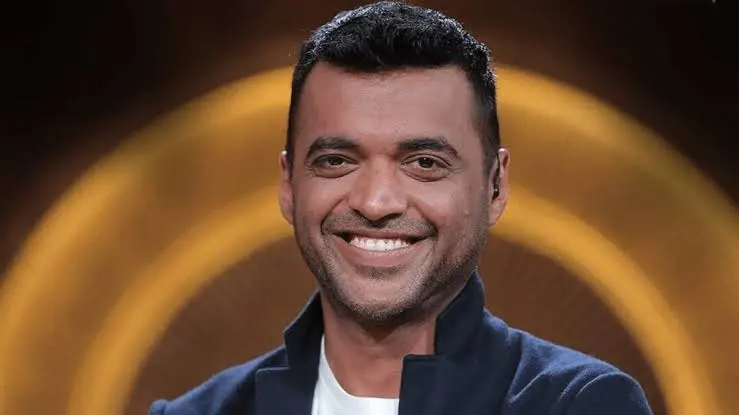
The transformation of the Indian consumer internet landscape over the past two decades is epitomized by the trajectory of Deepinder Goyal, the founder of the entity now known as Eternal Limited. From its origins as a nascent menu-scanning service within the confines of a corporate consultancy to its current status as a multi-vertical titan encompassing food delivery, quick commerce, and hyper-local logistics, the evolution of Zomato—and the subsequent formation of the Eternal holding structure—represents a definitive case study in institutional scale and founder resilience. Goyal’s journey is not merely a chronicle of corporate growth; it is a testament to the maturation of the Indian startup ecosystem, transitioning from the unorganized experimentation of the early 2000s to the rigorous governance and accountability of the public markets.
| Born | anuary 26, 1983, Muktsar, Punjab |
| zomato founded | July 2008 |
| net worth | 150 crores USD |
| x | x |
Biographical Foundations and the Intellectual Crucible of IIT Delhi
Deepinder Goyal was born on January 26, 1983, in Muktsar, a town in the Punjab region of India. His upbringing was rooted in a middle-class academic environment, which provided the foundational emphasis on intellectual rigor and discipline that would later characterize his leadership style. His father, Harbans Lal Goyal (also identified in some records as Ashok Goyal, a government engineer), and his mother, an educator specializing in the English language, instilled in him a structured approach to problem-solving and a deep-seated respect for analytical excellence. This pedagogical background was critical in shaping a mind that would later navigate the logistical complexities of an industry defined by fractional margins and high-frequency transactions.
In 2000, Goyal achieved significant success in the highly competitive IIT-JEE examinations, securing admission to the Indian Institute of Technology (IIT) Delhi. He enrolled in the Integrated Master of Technology program, focusing on the specialized field of Mathematics and Computing. His tenure at IIT Delhi was not only an academic exercise but a formative period for his future entrepreneurial endeavors. It was here that he met Kanchan Joshi, a fellow student pursuing an MSc in Mathematics, who would become his first wife and a significant partner during the early years of his professional journey.
The analytical training provided by the Mathematics and Computing program at IIT Delhi proved to be a critical asset. The ability to model complex systems, understand algorithmic efficiency, and approach business problems through a mathematical lens would later allow Goyal to navigate the logistical challenges inherent in the food delivery business. It was during his campus years that the first seeds of his future venture were sown; he reportedly managed Excel sheets to help peers navigate campus restaurant options, a direct precursor to the digital directory model that would define the early stages of his career. Deepinder Goyal leadership strategy 2026
| Academic and Early Professional Profile | Details and Timeline |
| Date of Birth | January 26, 1983 |
| Birthplace | Muktsar, Punjab, India |
| Educational Institution | Indian Institute of Technology (IIT), Delhi |
| Degree | Integrated M.Tech in Mathematics and Computing |
| Graduation Year | 2005 |
| Early Career (2006–2009) | Senior Associate Consultant at Bain & Company |
The Corporate Incubator: Bain & Company and the Genesis of Foodiebay
Upon graduating from IIT Delhi in 2005, Goyal entered the corporate world as a management consultant at Bain & Company, starting his tenure in January 2006. As a Senior Associate Consultant, he was exposed to high-level strategic problem-solving and the operational nuances of global enterprises. It was within the office environment of Bain’s New Delhi branch that Goyal encountered the specific friction point that would lead to a billion-dollar innovation. During lunch hours, he observed a consistent inefficiency: colleagues frequently formed queues at the office pantry solely to browse through a limited and often outdated collection of physical menu cards from local restaurants.
The loss of time and the lack of comprehensive information represented a clear market gap. In collaboration with his colleague Pankaj Chaddah, Goyal began scanning these menus and uploading them to an internal company portal. The internal traction for this tool was immediate and significant, providing a “eureka moment” that suggested the potential for a broader consumer application. Encouraged by this internal success, the duo decided to expand the project beyond the walls of Bain & Company. On January 26, 2008, the service was officially launched to the public as a website named Foodiebay.in.
Operating initially as a side project while the founders maintained their full-time consulting roles, Foodiebay focused on digitizing menus for restaurants in the Delhi-NCR region. Within nine months, the platform became the largest restaurant directory in Delhi, offering a comprehensive digital alternative to physical menu cards. By November 2009, the potential of Foodiebay had become undeniable, leading Goyal and Chaddah to resign from Bain & Company to dedicate themselves fully to the venture. The transition from the security of a prestigious consulting role to the uncertainty of a startup was met with skepticism from Goyal’s family, who preferred the stability of his previous employment. Nevertheless, the commitment of the founders remained firm, and the company was formally incorporated as DC Foodiebay Online Services Private Limited on January 18, 2010.
Strategic Rebranding and the Evolution of the Information Layer
As Foodiebay gained traction, the founders faced a critical brand challenge. The name “Foodiebay” had two primary drawbacks: it was potentially derivative of the e-commerce giant eBay, and it was descriptively narrow, potentially limiting the company’s ability to expand into broader lifestyle categories. In 2010, the platform was rebranded as Zomato.com. The name was chosen for its phonetic similarity to “tomato” while remaining distinctive enough to function as a unique brand identity that could scale internationally.
This rebranding marked a psychological and strategic shift. Zomato was no longer just a digital menu card service; it was becoming a burgeoning lifestyle platform. The early business model centered on advertising and premium listings, where restaurants paid for increased visibility and access to analytics regarding user search patterns. While this provided a steady revenue stream, Goyal recognized that the “information layer”—providing data about where to eat—had inherent scalability limits compared to the “transaction layer”—facilitating the actual meal delivery. This insight would eventually drive the company toward the capital-intensive but transformative food delivery market.
| Corporate Evolution Milestones | Date / Event | Strategic Significance |
| Launch of Foodiebay.in | January 26, 2008 | Entry into digital restaurant listings. |
| Resignation from Bain | November 2009 | Full-time commitment to entrepreneurship. |
| Incorporation | January 18, 2010 | Formalizing the business structure. |
| Rebranding to Zomato | 2010 | Global brand identity and name uniqueness. |
| International Expansion | 2012 | Expansion to UAE, South Africa, UK, etc. |
| Launch of Food Delivery | March 2015 | Pivot from info-directory to transaction model. |
International Expansion and Global Ambitions
By 2012, Zomato had established dominance in major Indian metros and began its foray into international markets. This expansion was aggressive and served to position Zomato as one of the first truly global consumer internet brands originating from India. The international journey began with the UAE, followed by rapid entry into Sri Lanka, Qatar, the United Kingdom, the Philippines, and South Africa.
Under Goyal’s leadership, the company adopted a strategy of both organic entry and strategic acquisitions to gain market share in diverse geographies. Between 2014 and 2015, Zomato’s footprint expanded to more than 20 countries. One of the most notable acquisitions during this period was the purchase of Seattle-based Urbanspoon in January 2015 for approximately $60 million, a move that provided Zomato with an immediate and significant presence in the United States, Australia, and Canada.
Despite this rapid expansion, the international journey was fraught with challenges. The operational complexity of managing disparate markets with unique culinary cultures and regulatory environments placed immense strain on the organization. Eventually, the company had to rationalize its international portfolio to focus on high-growth and profitable core markets, a process that underscored Goyal’s willingness to make difficult, data-driven decisions even when they involved retreating from previous expansions.
The Transformation of Food Delivery and the Unicorn Era
The year 2015 marked a fundamental pivot for Zomato. While the company had built an unrivaled database of restaurant information, the emergence of competitors signaled that the future of the industry lay in the logistics of delivery. Recognizing that the advertising-based model could not match the volume or the customer wallet-share of transactional services, Goyal launched Zomato’s food delivery operations in India in March 2015.
This pivot required a massive restructuring of the company’s internal operations. Zomato transformed from a lean software-driven directory into a logistics-heavy powerhouse managing a fleet of hundreds of thousands of delivery partners. The competition in the food delivery segment was brutal, characterized by aggressive discounting, heavy capital burn, and a relentless race for market dominance. During this period, Goyal focused on building a robust delivery infrastructure, developing routing algorithms specifically tailored for the complexities of Indian urban geography.
The relentless pursuit of scale bore fruit in 2018, when Zomato officially achieved “Unicorn” status, with its valuation surpassing $1 billion. This period also saw significant leadership changes, including the exit of co-founder Pankaj Chaddah, leaving Goyal as the primary face and driver of the company’s vision.
| Delivery and Scale Metrics (FY23) | Reported Value |
| Orders Served | 647 million |
| Annual Active Customers | 58 million |
| Operational Cities | 800+ |
| Restaurant Partners | 226,000 |
| Delivery Partners | 352,000 |
Strategic M&A as a Core Growth Engine: Uber Eats and Blinkit
Goyal’s leadership has been defined by a bold approach to Mergers and Acquisitions (M&A). Rather than building every vertical from scratch, he utilized the company’s capital to acquire competitors and adjacent service providers, thereby consolidating market share and diversifying revenue streams. In January 2020, Zomato executed a landmark acquisition by purchasing Uber Eats’ India business in an all-stock deal. This acquisition was strategic in two ways: it eliminated a major competitor in the domestic market and provided Uber with a 9.99% stake in Zomato, aligning the interests of two global tech entities.
The most transformative acquisition, however, occurred in 2022 when Zomato acquired the quick-commerce platform Blinkit (formerly Grofers) for approximately $568 million (₹4,447 crore). This move was initially met with skepticism by some market analysts who feared the high burn rate of the quick-commerce sector. However, Goyal viewed Blinkit as a critical growth engine, anticipating that the demand for ultra-fast delivery of groceries and essentials would eventually rival the demand for prepared meals.
| Key Acquisition History | Year | Deal Value / Details |
| MenuMania (New Zealand) | 2014 | ~$5 crore |
| Urbanspoon (Global) | 2015 | ~$60 million |
| Runnr (Logistics) | 2017 | Fulfillment capability |
| Uber Eats (India) | 2020 | All-stock deal for 9.99% stake |
| Blinkit (Quick-Commerce) | 2022 | $568 million (all-stock) |
| Paytm Movies & Events | 2024 | ₹2,048 crore ($244.2 million) |
The integration of Blinkit also highlighted Goyal’s intense management style. He revealed in public forums that he had asked Blinkit CEO Albinder Dhindsa to step down twice during the rocky integration phase as part of a “tough leadership reset” designed to break down and then rebuild an executive’s confidence to meet the demands of a larger, public organization. This “rock bottom” phase, as Goyal describes it, is a deliberate method to push high-potential leaders to their limits to ensure they can adapt to new company structures. Deepinder Goyal leadership strategy 2026
The Public Market Milestone: The 2021 IPO
In July 2021, Zomato became the first of India’s “new-age” tech startups to list on the public markets. The Initial Public Offering (IPO) was a watershed moment for the Indian startup ecosystem, signaling to global investors that Indian unicorns had reached institutional maturity. The IPO was subscribed 35 times over, reflecting massive investor enthusiasm for the food-tech model.
The listing price was set at ₹76 per share, and the company debuted at a valuation of approximately $12 billion. For Goyal, the IPO was more than a liquidity event; it was a shift in governance. As the CEO of a publicly traded entity, he was now subject to quarterly scrutiny, rigorous regulatory disclosures, and the discipline of institutional investors. This transition required balancing the “founder-style” experimentation that built the company with the predictability demanded by capital markets.
The stock’s performance post-IPO was initially volatile, characterized by a rapid surge followed by corrections as the market grappled with the company’s path to profitability. However, under Goyal’s guidance, Zomato gradually moved toward financial sustainability, reporting its first quarterly profits in the years following the listing, which significantly bolstered investor confidence.
| IPO Performance Data (July 2021) | Metric |
| IPO Offer Size | ₹9,375 crore |
| Price Band | ₹72–₹76 per share |
| Listing Valuation | Over $13.3 billion |
| Subscription Level | 35x |
| Market Debut Date | July 23, 2021 |
Rebranding to Eternal Limited and the Holding Company Structure
In early 2025, a major corporate restructuring took place. Zomato Limited was rebranded as Eternal Limited. This was not a mere name change for the food delivery app but the creation of a holding company structure designed to house multiple distinct business verticals. Eternal Limited operates as an umbrella entity for four primary businesses:
- Zomato: The core food delivery and restaurant discovery platform.
- Blinkit: The quick-commerce vertical focusing on ultra-fast delivery.
- Hyperpure: A B2B vertical that supplies fresh ingredients directly from farmers and producers to restaurants.
- District: A newly launched app (stemming from the acquisition of Paytm’s entertainment business) that consolidates movie ticketing, live events, sports, and dining-out reservations into a single lifestyle portal.
The shift to Eternal reflected Goyal’s vision of building a “forever” company—one that could outlive individual business cycles. By early 2026, Eternal had grown into a tech empire with a market capitalization exceeding ₹2.35 lakh crore. The financial health of the group remained robust during this transition; in the quarter ending late 2025, Eternal reported a 73% year-on-year increase in net profit, reaching ₹102 crore, while operational revenue surged by 201% to ₹16,315 crore.
| Eternal Limited Vertical Breakdown (2026) | Primary Function | Strategic Role |
| Zomato | Food Delivery & Search | Cash cow and core brand |
| Blinkit | Quick-Commerce | Primary growth engine |
| Hyperpure | B2B Ingredient Supply | Vertical integration and quality control |
| District | Entertainment & Ticketing | Capturing “going out” wallet share |
Financial Architecture and Personal Wealth
Deepinder Goyal’s professional success has translated into a massive personal fortune, making him one of the wealthiest self-made entrepreneurs in India. As of early 2026, his net worth is estimated between $1.6 billion and $1.8 billion (approximately ₹14,000 crore to ₹15,300 crore). His wealth is primarily derived from his equity stake in Eternal Limited, which stands at approximately 3.83% of the company as of 2025.
| Net Worth and Asset Analysis | Estimated Value / Details |
| Estimated Net Worth (2026) | $1.7–$1.8 billion |
| Primary Asset | 3.83% stake in Eternal Ltd |
| Annual Salary | Foregone (₹3.5 cr base) since FY22 |
| Luxury Residence | DLF The Camellias, Gurugram (₹52.3 cr) |
| Farmland | 5 acres in Delhi (₹79 cr) |
| Car Collection | Ferrari Roma, Porsche 911 Turbo, Lamborghini Urus |
Despite his billionaire status, Goyal has famously opted to forego his annual salary for several years, choosing instead to focus on the long-term appreciation of his equity. His lifestyle, while relatively low-profile compared to global tech moguls, includes a collection of high-performance luxury vehicles worth approximately ₹50 crore and significant real estate holdings in Gurugram, including a luxury apartment at the prestigious DLF Camellias.
The Angel Investor Paradigm and Shark Tank India
Goyal is a prolific angel investor with a portfolio of over 30 companies. His investment strategy typically focuses on “high-frequency consumer platforms,” health tech, and logistics—sectors where he can apply the operational playbooks developed at Zomato. His investing activity often reflects a “founder-operator” perspective, favoring companies that demonstrate strong cohort retention and fulfillment reliability. Deepinder Goyal leadership strategy 2026
In 2024, Goyal’s public profile expanded further when he joined the panel of “sharks” on Shark Tank India Season 3. His presence on the show was marked by a clinical, analytical approach to pitches, often focusing on unit economics rather than narrative. On the show, he famously made a solo investment of ₹2 crore for 15% equity in Goenchi Feni, a premium alcohol brand, highlighting his interest in innovative consumer products.
| Notable Angel and Shark Tank Investments | Sector | Investment Details |
| Shiprocket | Logistics Tech | Series D & E |
| Ultrahuman | Health/Wearables | Series B |
| Unacademy | EdTech | Series H |
| Bira 91 | Beverages | Notable Investor |
| Pristyn Care | HealthTech | Series E |
| Goenchi Feni | Alcohol (Shark Tank) | ₹2 crore for 15% |
| LAT Aerospace | Aerospace | $20M Angel Round |
Personal Narrative: Family and Relationships
Goyal’s personal life has often been a subject of public curiosity, mirroring the “pursuit and fresh start” nature of his professional career. His first marriage to Kanchan Joshi, whom he met at IIT Delhi, lasted for several years as they built the foundations of Zomato together. During the early years of the startup, Kanchan stood by him as the business scaled from a side-project to a national giant. They have a daughter named Siara (variously spelled as Sitara or Saira), born in 2013. Following their divorce around 2015, the couple has reportedly prioritized the well-being of their daughter through a graceful co-parenting arrangement. Kanchan Joshi has continued her own distinguished career as an Assistant Professor of Mathematics at Delhi University.
In February 2024, Goyal married Grecia Muñoz, a Mexican entrepreneur and former model who subsequently changed her name to Gia Goyal. The marriage received significant media attention, reflecting Goyal’s status as a prominent figure in the Indian business world. Grecia has been involved in business ventures and has transitioned into the business world after a career in television hosting and modeling.
The 2026 Leadership Transition: Stepping Down as CEO
On January 21, 2026, Deepinder Goyal made the surprising announcement that he would step down as the Group CEO and Managing Director of Eternal Limited, effective February 1, 2026. This transition marks the end of an eighteen-year tenure at the helm of the organization he founded in 2008.
Goyal’s decision to step aside was framed not as a retirement but as a strategic pivot. In his letter to shareholders, he expressed a desire to focus on “high-risk exploration and experimentation”—ideas that he believes are better pursued outside the rigid structure and quarterly reporting requirements of a large public company like Eternal. He noted that as the CEO of a listed entity, his “bandwidth for zero-to-one ventures” was limited by the legal and operational expectations of the role.
Albinder Dhindsa, the founder and CEO of Blinkit, was named the new Group CEO of Eternal Limited, a move that signals the increasing importance of quick commerce within the group’s future strategy. Goyal will transition into the role of Vice Chairman (non-executive), where he will continue to influence long-term strategy, culture, leadership development, and governance while being removed from day-to-day execution.
| Leadership Succession (2026) | Role Transition |
| Deepinder Goyal | Resigning as Group CEO; becoming Vice Chairman |
| Albinder Dhindsa | Taking over as Group CEO |
| Succession Date | February 1, 2026 |
| Reasoning | Focus on high-risk, experimental ventures outside public markets |
Impact and Legacy in the Digital Economy
Deepinder Goyal’s impact on the Indian economy extends beyond the financial success of Eternal Limited. He pioneered the “platform-as-a-service” model in India’s food sector, fundamentally changing how millions of Indians interact with local commerce. His emphasis on data-driven decision-making, ruthless execution, and willingness to disrupt his own business models (such as the pivot from advertising to delivery and then to quick commerce) has set a benchmark for a generation of Indian entrepreneurs.
Furthermore, the “Zomato Mafia”—a network of former employees and executives who have gone on to found their own successful startups—represents a significant ripple effect of Goyal’s leadership, contributing to the broader growth of India’s digital ecosystem. His awards and recognition, spanning from the “ET Startup of the Year” to the “GQ Man of the Year,” reflect a career that has combined commercial success with a significant shift in cultural and consumer habits.
| Career Recognition and Honors | Year | Awarding Body |
| ET Startup of the Year | 2011 | The Economic Times |
| Young Business Leader | 2012 | Business Today |
| Distinguished Alumni Award | 2018 | IIT Delhi |
| GQ India Man of the Year | 2022 | GQ India |
| Entrepreneur of the Year | 2024 | NDTV |
Conclusion
The professional biography of Deepinder Goyal is a study in the evolution of modern enterprise. By moving from the granular problem of office menu cards to the macro-challenge of hyper-local logistics and quick commerce, Goyal has demonstrated a unique ability to navigate the transition from founder-led agility to institutional scale. The formation of Eternal Limited and his subsequent transition to the role of Vice Chairman in 2026 represents a mature strategic move, decoupling the innovative, risk-taking core of the founder from the disciplined execution required of a public powerhouse. As he ventures into new domains such as aerospace and AI-driven business tools, Goyal remains a central figure in the Indian tech narrative—one whose legacy is defined by the relentless pursuit of efficiency and the belief that any friction in the consumer experience is a billion-dollar opportunity waiting to be solved. Deepinder Goyal leadership strategy 2026