
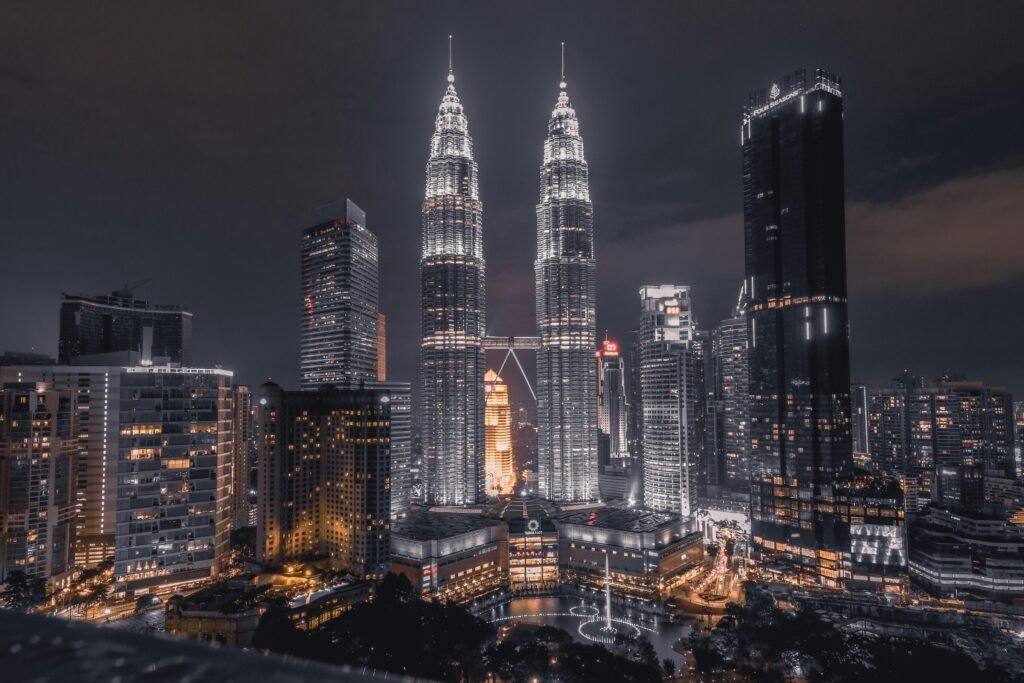
Petronas Twin Towers in Kuala Lumpur
Digital transformation in Malaysia tourism 2026.
Executive Overview
Malaysia’s tourism and hospitality technology sector represents one of Southeast Asia’s most dynamic growth vectors. The convergence of strong tourism demand (12.94 million international arrivals in 2024, up 46.7% year-over-year), government-backed digital innovation initiatives (Visit Malaysia 2026 campaign targeting 43 million arrivals), and accelerating technology adoption has catalyzed a transformative digital shift across the industry. Malaysia’s hospitality market, valued at USD 48.65 billion in 2025, is projected to reach USD 69.02 billion by 2030 (7.24% CAGR), while smart tourism technologies offer potential revenue multiplication to USD 110 billion—a 4.4-fold increase from the current USD 25 billion baseline.
This case study examines Malaysia’s emerging tourism and hospitality technology ecosystem through four integrated dimensions: (1) market dynamics and growth drivers, (2) technology adoption and operational integration, (3) competitive landscape and strategic positioning, and (4) challenges, opportunities, and future trajectory through 2030.
Malaysia’s Tourism & Hospitality Technology Sector: Market Growth, Technology Adoption, and Strategic Targets (2024-2030)
Part I: malaysia Market Fundamentals and Growth Drivers
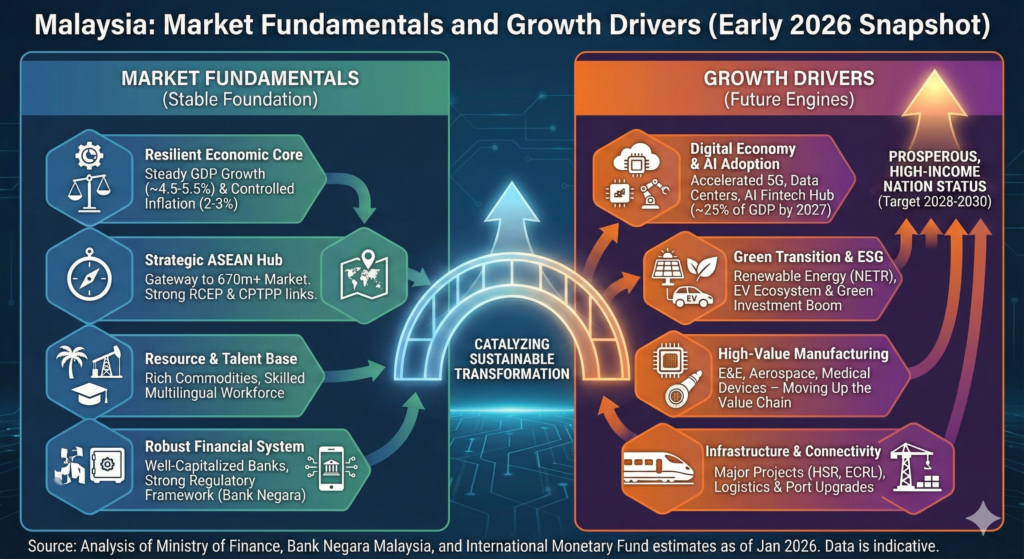
Market Size and Growth Trajectory
Malaysia’s hospitality sector is experiencing sustained expansion, driven by tourism recovery, domestic travel momentum, and rising guest expectations for digitized experiences. The sector’s financial scale provides context for technology investment priorities:
- 2025 Market Value: USD 48.65 billion (baseline for capital allocation decisions)
- 2030 Projection: USD 69.02 billion (42% cumulative growth)
- CAGR 2025-2030: 7.24% annually
- Smart Tourism Potential: USD 110 billion by 2030 (vs. USD 25 billion current baseline), representing a theoretical 4.4x revenue multiplier if digital transformation targets are fully achieved.
This growth is underpinned by three structural drivers: international tourism recovery, government promotional campaigns, and private sector capital reallocation toward technology-enabled service models.
Visit Malaysia 2026: Catalyzing Digital Transformation
The Malaysian government’s Visit Malaysia 2026 (VMY 2026) campaign serves as the primary catalyst for hospitality technology adoption. The campaign’s scale and digital emphasis are reshaping industry investment priorities:
Campaign Targets and Resource Allocation:
- Tourist arrival target: 43-47 million visitors (vs. 12.94 million in 2024, a 232-263% increase)
- Tourism revenue target: RM329 billion (USD ~$73 billion, vs. RM157 billion in 2023)
- Government promotional budget: RM550 million allocation for marketing and infrastructure
- Tax incentives: RM1,000 individual income tax relief for domestic travel expenses; corporate tax relief for hospitality operators investing in digital and sustainability upgrades
Progress Indicators: As of November 2025, international visitor arrivals had reached 38.3 million—on track to exceed the 43 million annual target. January-May 2025 arrivals (16.9 million) represented 20% year-over-year growth, demonstrating accelerating momentum. This sustained demand trajectory has incentivized hotels to accelerate digital investments to enhance operational capacity and guest experience, particularly in high-volume periods.
Visa Policy Support: Extended visa-free access for Chinese and Indian tourists (until end of 2026) has driven visible impact: Chinese tourist arrivals increased 4% in 2024 versus 2019 (baseline), while Indian tourist arrivals surged 47% in the same comparison. These high-volume source markets (collectively representing millions of annual visitors) are increasingly digitally native—preferring AI-driven trip planning, mobile payment systems, and contactless services—creating market demand for technology integration.
Part II: Hospitality Market Structure and Digital Channel Dynamics
Accommodation Composition and Expansion Patterns
Malaysia’s hotel market exhibits clear segmentation that influences technology adoption rates and investment priorities:
By Hotel Type (2024):
- Independent hotels: 61.24% market share (anchoring market with cost-conscious technology implementations)
- Chain hotels: Advancing at 8.29% CAGR, expanding through asset-light management contracts
- Luxury segment: Growing fastest at 10.18% CAGR (highest technology investment rates per property)
By Accommodation Class (2024):
- Mid- and upper-mid-scale: 41.28% of market (primary adopters of mobile check-in, AI services)
- Luxury properties: Concentrated in Kuala Lumpur and Penang, accelerated pipeline expansion, premium technology implementations
By Geography:
- Central region (KL, Selangor): 47.23% market share (highest technology density)
- East Malaysia: 9.99% CAGR (eco-tourism, infrastructure unlocking secondary destinations)
This market structure creates a “two-speed” adoption pattern: luxury and chain properties rapidly deploying integrated smart systems, while independent budget hotels adopt modular, lower-cost digital solutions (mobile check-in systems, cloud PMS, chatbots) with longer payback periods.
Booking Channel Dynamics: OTA Dominance and Direct Channel Opportunity
The shift in booking channels represents both a challenge and opportunity for hoteliers, with direct technology investment partially driven by economics of OTA dependence:
2024 Channel Distribution:
- Online Travel Agencies (OTAs): 55.88% of bookings
- Direct digital channels: 44.12% of bookings
- OTA commission rates: 18-25% (compressing hotel margins by up to 8-10 percentage points)
Forecast Shift (2024-2030):
- OTA market share declining to 46% by 2030
- Direct digital channels growing at 13.17% CAGR, accelerating to 54% of bookings by 2030
This shift reflects hotels’ strategic response to OTA commission pressure: by investing in proprietary digital platforms, mobile apps, loyalty programs, and direct rate guarantees, hotels can recover margin leakage and build direct customer relationships. The arithmetic of this shift is straightforward: a hotel with 100 rooms booked through OTAs at 18-25% commission loses 18-25 rooms’ worth of revenue to commission fees; shifting 5-10 percentage points of bookings to direct channels recovers 5-10 rooms per month, or 60-120 rooms annually. This economic incentive is driving technology investment across the sector.
Key OTA Players in Malaysia:
- Agoda: Market leader, 2.5 million properties in Asia, 35 million+ active loyalty members, dominant in Malaysia/Thailand/Singapore
- Booking.com: Strong #2 position, 28 million+ global listings, 40,000+ premium Asian partners
- Expedia: Moderate Asian presence (~12% market share), growing via partnerships
- Airbnb: Expanding short-term rentals and premium luxury (Airbnb Luxe) offerings, 25,000+ premium properties in Asia
- Traveloka: Regional challenger, 40%+ market share in Indonesia, expanding presence in Malaysia
Part III: Technology Adoption and Operational Integration
Smart Hotel Technology Implementation: Current State
Malaysia’s hotels are rapidly deploying integrated digital systems across guest-facing and back-office operations. Technology adoption rates have accelerated notably since 2020, with acceleration continuing through 2025: Digital transformation in Malaysia tourism 2026.
Guest-Facing Technologies:
- Mobile Check-In and Digital Room Keys
- Adoption growth: 10% (2020) → 21.5% (2022) → 35% (2024)
- Guest impact: Eliminates front desk queues, reduces check-in time from 10-15 minutes to <2 minutes
- Implementation: Major chains (Marriott, Hilton, IHG) offer this as standard; mid-range properties increasingly adding via third-party platforms
- Post-pandemic stickiness: Contactless check-in adoption remained elevated post-COVID, with health/hygiene preferences sustaining demand
- Artificial Intelligence and Chatbots
- Enterprise adoption: 70% of Malaysian enterprises integrated AI/automation by 2023; chatbots are the most popular AI tool in service sectors
- Hotel deployment: AI-powered chatbots handling 24/7 guest inquiries (reservations, service requests, recommendations, problem resolution)
- Operational efficiency: Malaysia Airlines’ chatbot handled 1 million interactions with 80% automated resolution rate; similar patterns emerging in hospitality
- Traveler preference: 40% of Malaysians actively use AI for trip planning (highest adoption among nine surveyed regional markets), creating expectation for AI-enabled hotel services
- Revenue impact: Hotels with AI recommendations report 22% higher in-house spending (dining, services) in luxury segments
- Internet of Things (IoT) and Smart Room Controls
- Adoption rate: 55% of hotels deploying IoT by 2024
- Applications: Smart thermostats adjusting to occupancy, automated lighting (off when guests absent), occupancy sensors, predictive maintenance alerts
- Sustainability benefit: Energy consumption in IoT-enabled hotels averaging 25-30% reduction per guest-night versus conventional properties
- Guest experience: Guests control room temperature, lighting, entertainment via smartphone app (increasingly expected in premium segments)
- Cloud-Based Property Management Systems (PMS)
- Adoption: 72% of Malaysian hotels using cloud-based PMS by 2024 (up from ~25% in 2020)
- Operational benefit: Real-time occupancy visibility, housekeeping task allocation, integrated front-office/back-office workflows
- Integration capability: Connects with revenue management, guest communication, loyalty programs, and OTA channel managers
- Oracle infrastructure: Oracle’s announced $6.5 billion investment to establish first Malaysia public cloud region underscores sector importance
- Virtual and Augmented Reality
- Implementation: Emerging in luxury and mid-upscale segments; virtual room tours enabling pre-booking property preview
- Conversion impact: VR tours reduce booking decision uncertainty, particularly valuable for international guests unfamiliar with properties
- Experience design: Some properties using AR for in-room interactive experiences (e.g., cultural information overlays, dining menus)
Back-Office and Operational Technologies:
- Predictive Analytics: Demand forecasting, dynamic pricing optimization, length-of-stay prediction, maintenance needs forecasting
- Guest Data Analytics: Post-stay surveys, sentiment analysis, personalization algorithms for targeted offers
- Automated Revenue Management: Real-time rate optimization across channels based on occupancy, demand signals, competitive positioning
Traveler AI Adoption: Leading Regional Indicator
Malaysia’s travelers demonstrate exceptional AI adoption for trip planning, with implications for hospitality service expectations:
Agoda 2026 Travel Outlook Report (October 2025, 3,353 respondents):
- 40% of Malaysians actively using AI for trip planning: Highest among nine surveyed markets (Vietnam 28%, Indonesia 26%, Thailand 25%, Philippines 24%)
- 59% planning to use AI for next trip: Indicating acceleration beyond current 40% baseline
- Trust levels: 36% express trust in AI-generated information; 12% still uncertain
- Use cases:
- Destination recommendations: 34%
- Activity/attraction suggestions: 33%
- Restaurant recommendations: 29%
- Domestic travel trend: 47% of Malaysian travelers planning to focus on local exploration in 2026 (17% increase year-over-year), aligning with Visit Malaysia 2026 campaign momentum
Budget Constraints: 64% of Malaysian travelers planning to spend USD $50 (RM206.60) or less per night on accommodation—informing both the prevalence of budget hotel segments and the economics of technology investment (need for cost-effective, scalable implementations).
Part IV: Sectoral Deep-Dives
Smart Tourism Initiatives: Melaka and State-Level Implementation
Melaka’s Smart Tourism Melaka AI initiative exemplifies how state governments are leveraging AI and digital systems to enhance visitor experiences and operational capacity:
Melaka Smart Tourism Goals:
- Target: 19 million visitors by 2026 (doubling historical volume)
- Digital foundation: 220+ planned events with AI-enabled event management, registration, and scheduling
- Technology applications:
- Real-time crowd monitoring and congestion detection via AI analytics
- Predictive staffing allocation and traffic flow optimization
- Dynamic capacity management (real-time venue availability updates)
- Digital heritage mapping and virtual interpretation platforms for cultural sites
- Centralized information hubs with integrated maps, itineraries, and service details
AI-Driven Benefits:
- Visitor experience: Reduced confusion via digital navigation, real-time event updates, accessibility information
- Operational efficiency: AI-optimized staff allocation, reduced bottlenecks, improved event safety
- Economic impact: Better visitor flow distribution across non-peak attractions, spreading tourism benefits beyond major hotspots
- Data-driven planning: Government can analyze visitor patterns, identify emerging preferences, and design targeted marketing/infrastructure investments
Government Digitalization: Transition from paper-based licensing and approvals to automated workflows, reducing processing times and administrative friction.
Digital Ecosystem Infrastructure
Malaysia’s broader digital ecosystem is creating enabling conditions for tourism technology innovation:
KTMB SuperApp and Integrated Journey Planning:
- AI-driven journey planner integrating rail transportation with lifestyle services (dining, accommodation, activities)
- Virtual card on app with physical card launch planned
- Demonstrates ASEAN’s move toward seamless, integrated digital experiences for travelers
MyDigital ID: Cross-border digital identity verification potential, enabling streamlined visa procedures and payment systems across ASEAN region.
Part V: Competitive Landscape and Regional Positioning
Online Travel Agencies: Global and Regional Dynamics
Malaysia’s hospitality technology ecosystem must be understood within the context of intense OTA competition, where Agoda and Booking.com control the vast majority of distribution channels:
OTA Market Leadership in Malaysia:
- Agoda: Market leader, 2.5 million properties in Asia-Pacific, 35 million+ active loyalty members with 15% using AgodaCash (mobile loyalty wallet)
- Booking.com: Strong #2, 28 million+ global listings, growing 20% YoY in Asian hotel inventory
- Regional platforms: Traveloka (40%+ Indonesia market share, growing in Malaysia), Trip.com (strong in China but expanding), MakeMyTrip (India-focused)
Technology Integration by OTAs:
- AI personalization: Trip.com’s TripGenie (9 languages), Agoda’s behavioral recommendation engines
- Virtual tours: Emerging capability across major platforms, reducing booking friction
- Super-app integration: Grab and GoTo leveraging embedded user bases to cross-sell travel services at marginal acquisition cost
- Payment integration: Multiple local payment methods (Alipay, WeChat, GCash, etc.), reducing friction for regional travelers
Commission Economics and Platform Dependency:
The OTA commission structure (18-25%) creates sustained economic pressure on hoteliers to invest in direct channels and proprietary technology. A 200-room mid-scale hotel with 70% occupancy (140 rooms/night) paying 20% OTA commission loses 28 rooms worth of revenue daily (840 rooms monthly). This economic reality underpins the 13.17% CAGR in direct digital channels, as hotels increasingly view technology investment as commission offset.
Regional Startup Ecosystem and Innovation
Malaysia’s technology startup ecosystem is providing innovation inputs to the hospitality sector:
Startup Ecosystem Scale:
- 21,400+ active startups (2025) with $18.9 billion in cumulative funding
- Global Entrepreneurship Index: 43rd globally (2020), up from 58th previous year
- Global Innovation Index: 2nd most innovative in Southeast Asia (2020)
- Target: 5,000 startups by 2025; top 20 global ecosystem by 2030
Tourism-Specific Startups:
- Atamai Labs: Travel-tech startup focused on hospitality automation (founded 2019)
- Visit Malaysia AI: Government-backed app for personalized itinerary design and collaborative travel planning
- Emerging opportunities: Payment solutions, real-time translation, AR/VR experiences, sustainability tracking
Government Support Programs:
- RM300,000 average grant per startup
- AI Sandbox program: 900 AI startups targeted by 2026
- Deep Tech Xccelerator: 12-week acceleration with RM300,000 value per startup
- Regulatory sandboxes reducing barriers to fintech, digital commerce innovation
Part VI: Smart Hotel Management: Operational Excellence Case Study
The Sarawak hotel sector illustrates the practical implementation of smart hotel concepts and the transformation of guest experiences through integrated technology:
Smart Hotel Operations Framework
Integrated Property Management Systems (PMS):
- Centralized operational dashboard enabling front-office teams to monitor occupancy in real-time
- Automated housekeeping task allocation (priority rooms, maintenance flags)
- Seamless check-in/check-out management with integrated billing
- Real-time revenue reporting and rate parity management
IoT-Enabled Guest Rooms:
- Automatic temperature adjustment based on occupancy sensors
- Lighting automation (guest-controlled or motion-triggered)
- Smart locks eliminating physical keycards (mobile keys via hotel app)
- Occupancy-linked amenities (coffee makers, TVs turning on automatically)
Mobile-First Guest Journey:
- Guests use smartphones as primary interface with hotel services
- Pre-arrival communication: room preferences, digital key delivery, welcome messaging
- In-stay service ordering: food/beverage, housekeeping, maintenance via app (eliminating phone calls)
- Checkout: digital payment finalization, no front desk required
Sustainability Integration:
- Energy consumption tracking per room and per occupied night
- Water usage monitoring with leak detection
- Carbon footprint calculation and guest awareness
- Compliance with international sustainability certifications
Staff Efficiency:
- Chatbots and service robots handling routine guest inquiries, freeing staff for high-touch interactions
- Predictive maintenance alerts (HVAC, plumbing, electrical) reducing emergency repairs
- Staff training on technology systems to maximize adoption and troubleshooting capability
Financial Impact of Smart Hotel Investments
Revenue Metrics:
- Hotels utilizing advanced analytics: 18% higher guest satisfaction scores versus peers without data-driven personalization
- AI-powered recommendation systems: 22% increase in in-house spending (dining, spa, services) in luxury properties
- Direct booking growth: Properties emphasizing digital channels growing direct bookings 13.17% CAGR (vs. 7.24% OTA growth)
Cost Reductions:
- Energy efficiency: 25-30% reduction in power consumption per guest-night in IoT-optimized properties
- Labor productivity: 30% improvement in housekeeping efficiency via digital task management
- Maintenance costs: Predictive maintenance reducing emergency repairs by 20-30%
- Front office staffing: Mobile/digital check-in reducing front desk transactions by 50%
Implementation Costs and ROI:
- Typical smart hotel investment: RM2-5 million for mid-scale 100-150 room property
- Payback period: 3-5 years (depending on occupancy rates and labor costs)
- Challenge: Upfront capital intensity remains barrier for independent and budget hotels
- Government support: Tax incentives and RM550 million VMY 2026 infrastructure allocation reducing effective investment burden
Part VII: Wellness, Medical Tourism, and Specialized Segments
Wellness Tourism Growth
Wellness tourism represents one of Malaysia’s fastest-growing hospitality segments, increasingly technology-enabled:
Growth Metrics:
- Wellness tourism segment: 31% growth (2021-2023)
- Outpaced general tourism recovery by 12 percentage points
- Represents 10-15% of inbound hospitality volume
Technology Applications:
- AI-driven wellness recommendations based on guest profiles (age, health status, fitness goals)
- Wearable integration (fitness trackers syncing with hotel wellness programs)
- Virtual wellness consultations (yoga, meditation, nutrition)
- Sustainable hotel certification highlighting wellness amenities
Market Position: Malaysia positioning itself as value-for-money, high-quality wellness hub competing with Thailand and Bali.
Medical Tourism Integration
Government Support: Malaysia Healthcare Travel Council (MHTC) driving international marketing
- Medical tourists attracted from Indonesia, China, Middle East
- Hospital bed expansion from 1,000 to 2,800 private beds (2024-2026)
- Digital health records and telemedicine integration
Part VIII: Challenges and Barriers to Digital Transformation
Implementation Barriers
While technology adoption is accelerating, structural barriers constrain the pace and breadth of implementation:
Financial Constraints:
- Small and mid-sized hotels (majority of independent segment) struggle with upfront capital costs (RM2-5 million for integrated systems)
- Limited access to venture capital or specialized hospitality technology financing
- Longer payback periods (3-5 years) deter risk-averse operators
- Government incentives (tax relief, grants) help but don’t fully offset capital barriers
Cybersecurity and Data Privacy Risks:
- Increased digitalization creating expanded attack surface (data breaches, ransomware)
- Guest data protection requirements (personal information, payment details) creating compliance burden
- Shortage of cybersecurity expertise in hospitality workforce
- Travel data sensitivity (itineraries, payment information) requiring robust encryption and access controls
Workforce Capability Gaps:
- Digital skill deficits among hospitality staff accustomed to traditional service models
- 70%+ of Malaysian enterprises lack formal AI governance and policy frameworks
- Need for continuous training as technologies evolve rapidly
- Turnover in service roles (particularly among younger staff) creating training repetition burden
- Generational divide: older managers less familiar with emerging technologies
Digital Infrastructure Limitations in Secondary Markets:
- East Malaysia and secondary cities lag in broadband quality and reliability
- IoT sensor network coverage uneven across country
- Cloud infrastructure investment (Oracle’s $6.5 billion announced commitment) still in early phases
- 5G rollout by STC and other telcos ongoing but incomplete
Cultural and Behavioral Factors:
- Some guest segments (older travelers, certain domestic markets) less comfortable with fully digital check-in
- Preference for human interaction in premium segments despite technology availability
- Chatbot language limitations (non-English queries, complex context) creating service failures
- Regional payment method diversity requiring multi-platform support
Addressing Challenges: Mitigation Strategies
- Phased implementation: Modular technology adoption (start with mobile check-in, add PMS, then IoT) reduces upfront capital
- Industry partnerships: Technology providers bundling solutions at reduced cost; outsourced cybersecurity services
- Government support expansion: Proposed increases in RM550 million VMY 2026 allocation; extended tax incentives beyond 2026
- Workforce development: Industry associations (MyBHA-Vendfun partnership) providing training; academic programs in hospitality technology
- Regional collaboration: ASEAN-wide standards for digital payments, digital ID enabling cross-border innovation
Part IX: Strategic Opportunities and Future Roadmap (2025-2030)
Emerging Technology Opportunities
1. Artificial Intelligence and Hyper-Personalization
- Opportunity: AI enabling real-time analysis of guest preferences, delivering tailored room settings (temperature, lighting, entertainment), personalized dining recommendations, targeted loyalty offers
- Competitive advantage: Properties implementing AI-driven personalization reporting 18-22% higher satisfaction and in-house spending
- Timeline: Widespread adoption expected 2025-2027 as costs decline and expertise increases
- Investment priority: Mid-to-luxury segments first, followed by mid-scale chains
2. Virtual and Augmented Reality Experiences
- Opportunity: VR enabling immersive pre-booking property tours, AR for in-room cultural/dining experiences, virtual destination exploration
- Market application: Particularly valuable for international guests unfamiliar with properties and destinations
- Conversion impact: Potential 5-10% improvement in booking conversion rates via pre-booking uncertainty reduction
- Timeline: Rapid growth expected 2026-2030 as VR hardware costs decline and content libraries expand
3. Blockchain and Loyalty Program Innovation
- Opportunity: Blockchain enabling transparent, transferable loyalty points across hotel chains and partners; secure smart contracts for booking and payment
- Competitive advantage: Differentiated loyalty programs building customer retention
- Timeline: Experimental phase 2025-2027, mainstream adoption 2028-2030
4. Sustainability and Carbon Tracking
- Opportunity: AI-powered energy management, guest-facing carbon footprint dashboards, automated sustainability reporting
- Market driver: ESG-focused travelers willing to pay premium for certified eco-properties
- Revenue impact: Premium positioning enables 5-15% rate increase in target segments
- Regulatory driver: Potential mandatory carbon reporting requirements (post-2025)
5. Cross-Border Payment Innovation
- Opportunity: Integration of ASEAN payment systems, MyDigital ID cross-border recognition, real-time currency conversion
- Guest impact: Seamless payment across Malaysia/Thailand/Singapore/Vietnam without multiple payment systems
- Timeline: Government-driven ASEAN-wide standards expected 2026-2028
Visit Malaysia 2026 Acceleration Opportunity
The VMY 2026 campaign creates a concentrated window for technology investment:
- Demand surge period: 2026 will see peak demand with 43-47 million arrivals (+232% vs. 2024)
- Capacity constraint: Hotels need operational efficiency gains to handle volume surge without proportional staff increases
- Revenue optimization: Dynamic pricing and revenue management critical given willingness-to-pay variation across source markets
- Digital marketing amplification: Social media, mobile apps, AR/VR experiences essential to capture demand
- Investment timing: Hotels needing 12-18 months to implement systems should begin immediately (Q4 2025/Q1 2026)
Part X: Comparative Regional Analysis
Malaysia vs. Peer Markets
Malaysia’s Relative Positioning:
- AI adoption by travelers: 40% Malaysia vs. 25-28% across other Southeast Asia markets (Vietnam 28%, Thailand 25%) — Malaysia leads
- Startup ecosystem strength: 43rd globally (2020), 2nd most innovative in Southeast Asia — competitive but below Singapore
- Government support intensity: RM550 million VMY 2026 allocation represents significant public sector commitment (comparable to Thailand, Vietnam tourism investments)
- OTA market concentration: Agoda dominance similar across region (market leader in Malaysia, Thailand, Singapore)
- Technology adoption phase: Malaysia in “growth” phase (2024-2027) — following Singapore’s leadership but ahead of Indonesia/Vietnam in implementation breadth
Competitive Differentiation Opportunities:
- Position as “smart tourism destination” leveraging AI adoption leadership and Visit Malaysia 2026 visibility
- Develop ASEAN-wide payment and digital ID standards (positioning Malaysia as regional fintech hub)
- Build hospitality technology export sector (exporting solutions to Thailand, Vietnam, Indonesia)
- Cultivate digital-first leisure segments (wellness, eco-tourism, cultural immersion) requiring technology integration
Part XI: Industry Outlook and Projected Trajectory
Base Case Scenario (Most Likely, 2025-2030)
Market Growth:
- Hospitality market reaches USD 69 billion by 2030 (7.24% CAGR)
- Smart tourism revenues grow to USD 60-70 billion (realistic path, vs. theoretical USD 110 billion potential)
- Tourist arrivals normalize at 30-35 million annually (post-VMY 2026 peak moderation)
Technology Adoption:
- Mobile check-in: 50-60% of properties (from 35% baseline)
- AI integration: 80%+ of mid-scale and luxury properties
- IoT/smart systems: 70-80% of all hotels (from 55% baseline)
- Direct digital bookings: 54% of reservations (from 44.12% baseline), reducing OTA dependency
Competitive Dynamics:
- Agoda and Booking.com maintain dominance but face pressure from direct booking strategies
- Super-app integration (Grab, GoTo travel services) capturing 5-10% of transactions
- Regional OTAs (Traveloka) expanding presence in Malaysia
- Startup ecosystem producing 2-3 successful hospitality tech companies
Employment and Skills:
- Technology adoption creating 15,000-20,000 new skilled hospitality tech jobs
- Workforce upskilling programs training 50,000+ staff in digital operations
Acceleration Scenario (2025-2030, Conditional)
Triggers for Acceleration:
- Post-VMY 2026, sustained government support for digital tourism (extended incentives beyond 2026)
- Major FDI inflows in hospitality technology (international tech companies establishing Malaysia R&D centers)
- Breakthrough adoption of AR/VR, blockchain (earlier than base case)
- ASEAN regional standards for payments/digital ID driving cross-border innovation
Outcomes:
- Smart tourism revenues reach USD 80-90 billion (closer to theoretical potential)
- Malaysia positioning as regional digital tourism leader
- 40-50% of hospitality tech exports from Malaysia to regional markets
- USD 5+ billion in additional annual tourism revenue by 2030
Downside Scenario (Slower Adoption)
Constraints:
- Cybersecurity incidents deterring technology investment
- Economic downturn reducing hospitality investment (post-VMY 2026 demand recession)
- Competitive pressure from Singapore, Thailand, Vietnam eroding Malaysia’s market share
- Technology implementation delays in secondary markets
Outcomes:
- Technology adoption plateaus at 2025 levels
- OTA dependency remains elevated (>50% of bookings through 2030)
- Smart tourism revenues reach only USD 40-50 billion
- Malaysia losing competitive position in regional tourism landscape
Part XII: Conclusion and Strategic Recommendations
Malaysia’s tourism and hospitality technology sector is at an inflection point. The convergence of strong demand drivers (VMY 2026 campaign attracting 43-47 million visitors), exceptional traveler technology adoption (40% actively using AI for trip planning), and government-backed innovation support has created a window for transformative digital change.
Key Findings:
- Market Opportunity is Substantial: The hospitality market growing from USD 48.65 billion (2025) to USD 69 billion (2030) represents USD 20+ billion in new economic activity. Intelligent technology deployment can capture a disproportionate share of this growth through efficiency gains and premium pricing power.
- Technology Adoption is Accelerating: Mobile check-in penetration tripled from 2020 to 2024; AI chatbot adoption reached 70% among enterprises; IoT systems in 55% of hotels. This pace will likely continue, supported by declining technology costs and proven ROI.
- Malaysia is Leading Regionally: With 40% of travelers using AI for trip planning (vs. 25-28% in peer markets), Malaysia is positioned to capture early-mover advantage in AI-enhanced tourism experiences.
- Direct Booking Shift Creates Strategic Imperative: OTA commission rates (18-25%) compress margins; direct digital channels growing at 13.17% CAGR represent the most sustainable margin recovery strategy. Hotels must invest in proprietary digital platforms now to capture this shift.
- Barriers Remain Significant: Upfront capital costs, cybersecurity risks, workforce skill gaps, and digital infrastructure limitations in secondary markets constrain adoption breadth. Government incentives and industry partnerships are essential to overcoming these barriers.
Strategic Recommendations for Hospitality Operators:
- Invest in Integrated Technology Stacks: Hotels should prioritize cloud-based PMS, mobile check-in, AI chatbots, and IoT systems as core infrastructure rather than optional enhancements. Phased, modular implementation reduces upfront capital while building organizational capability.
- Build Direct Digital Channels: Allocate technology budget to proprietary mobile apps, loyalty programs, and direct rate guarantees to offset OTA commission dependency. Target 50%+ direct bookings by 2028.
- Develop AI-Driven Personalization: Implement guest data analytics and AI recommendation engines to increase in-house spending (dining, services, experiences). Potential 15-25% incremental revenue from personalization programs.
- Prioritize Cybersecurity and Compliance: Invest in robust data security, guest privacy compliance, and cybersecurity insurance to mitigate growing risks. Build internal capability or outsource to specialized providers.
- Invest in Workforce Development: Allocate 1-2% of technology budgets to staff training in digital operations, customer service automation, and data analytics. Build “digital champions” within organizational teams.
Strategic Recommendations for Government and Industry Bodies:
- Extend VMY 2026 Support Beyond 2026: Consider making digital and sustainability tax incentives permanent (or at least through 2030) to sustain momentum beyond the campaign peak.
- Develop Skills Training Infrastructure: Government and industry associations should expand hospitality technology training programs, targeting 50,000+ staff upskilling by 2028.
- Support Secondary Market Digital Infrastructure: Allocate government investment to improve broadband quality and cloud infrastructure in East Malaysia and secondary cities.
- Establish ASEAN-Wide Standards: Work with regional governments to develop common standards for digital payments, digital ID, and cybersecurity frameworks, enabling cross-border tourism innovation.
- Foster Startup Ecosystem: Expand grants, regulatory sandboxes, and venture capital pathways for hospitality tech startups. Target 10-15 successful exits by 2030.
Outlook: Malaysia’s tourism and hospitality technology sector will likely continue to expand at above-market growth rates through 2030, driven by sustained demand, government support, and demonstrated ROI from early adopters. The window for competitive differentiation is open now; hotels and technology companies that move decisively in 2025-2027 will establish market leadership positions in a region-leading digital tourism ecosystem.
official Vietnamese government websites
| Malaysia Government Portal | Malaysia Government Portal |
Read more country case studies done before this.
| china | china |
| hong kong | hong kong |
| japan | japan |
| sinagpore | singapore |
| taiwan | taiwan |
| uAE | UAE |
| vietnam | vietnam |
| saudi arbia | saudi arbia |
| india | india |
| south korea | south korea |


Jljlbb, never heard of it before, which makes it all the more exciting! Ready to go see what the new and exciting has to offer and check out here: jljlbb