
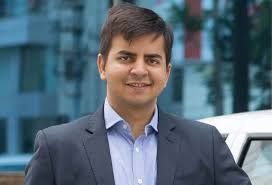
Ola Founders: Complete Profile and Visionary Leadership
Ola’s success as India’s dominant ride-hailing platform and emerging electric vehicle manufacturer stems fundamentally from the unique complementarity of its two co-founders—Bhavish Aggarwal and Ankit Bhati—who embodied distinctly different yet mutually reinforcing skill sets. Founded in December 2010 by these two IIT Bombay classmates, Ola transformed from a small Ludhiana startup into a $7+ billion valued company and public company (via Ola Electric’s IPO in August 2024). Their founding narrative—rooted in a single pivotal taxi incident and 15 years of relentless execution—exemplifies how complementary founder teams overcome entrepreneurial challenges that single founders cannot surmount.
| Bhavish Aggarwal | |
| x | Bhavish Aggarwal |
| Bhavish Aggarwal | |
| Bhavish Aggarwal |
Bhavish Aggarwal: The Visionary Entrepreneur and Customer-Centric CEO
Bhavish Aggarwal represents the entrepreneurial archetype of India’s IIT-educated, globally-trained technology leaders who recognized massive market inefficiencies and possessed conviction to address them despite personal and professional risks.
Background and Early Formation
Born August 28, 1985, in Ludhiana, Punjab, Aggarwal grew up in an intellectually accomplished upper-middle-class family: his father Naresh Kumar Aggarwal is an orthopedic surgeon, his mother Usha Aggarwal is a pathologist. This professional background instilled values of meritocracy, hard work, and responsibility—yet ironically, it positioned medical entrepreneurship (stable, respected, secure) as the societal expectation, creating friction with his later technology venture decision.
Academically, Aggarwal was not the stereotypical “topper” that his professional family background might suggest. He initially failed his JEE (Joint Entrance Examination) entrance test—the critical gateway exam determining access to India’s elite IIT institutes. Rather than accepting this setback as definitive, Aggarwal enrolled at Kota’s coaching center and attempted JEE again, achieving an extraordinary AIR 23 (All-India Rank 23) in his second attempt—a remarkable achievement demonstrating resilience and determination.
At IIT Bombay (2004-2008), Aggarwal pursued BTech in Computer Science and Engineering, immersing himself in technology fundamentals while developing entrepreneurial ambitions. Critically, he met Ankit Bhati at IIT—his future co-founder lived in a nearby hostel—beginning a friendship that would later reshape India’s transportation ecosystem.
Bhavish Aggarwal’s Journey: From Student to Tech Billionaire (1985-2025)
Early Career at Microsoft Research India (2007-2010)
Post-graduation, Aggarwal joined Microsoft Research India as a research intern, later promoted to assistant researcher, where he spent approximately three years (2007-2010) working on web search and cloud computing problems. This tenure provided exposure to cutting-edge technology research, world-class problem-solving frameworks, and intellectual rigor—foundational capabilities for later entrepreneurship.
His Microsoft contributions demonstrated technical rigor: two patents filed and three papers published in international journals—credentials validating that Aggarwal could compete intellectually with global technologists. However, despite these achievements, Aggarwal grew increasingly impatient with pure research. He was “itching to get started” on his own venture, recognizing that research excellence alone did not satisfy his entrepreneurial hunger.
The Pivotal Taxi Incident (2010)
The founding inspiration for Ola emerged from a single devastating personal experience. In 2010, Aggarwal was traveling from Bangalore to Bandipur for an adventure trip when his taxi driver abruptly stopped the car mid-journey and demanded additional money beyond the agreed fare. When Aggarwal refused, the driver demanded he get down from the car, forcing him to walk the remaining distance with his luggage.
This seemingly small incident crystallized a profound insight: millions of Indians experienced similar exploitation daily because transportation lacked transparency, accountability, and technology-enabled matching mechanisms. Taxis operated through informal negotiations, fares were unpredictable and subject to driver whims, customer safety concerns were unaddressed, and no recourse existed for exploitation.
The insight transcended the personal insult; Aggarwal recognized this as a massive market dysfunction: India’s transportation sector was characterized by information asymmetry (drivers knew fares; customers didn’t), opacity (no pricing transparency), and weak enforcement (no rating/accountability system).
Founding Ola and Early Struggles (2010-2012)
Leaving Microsoft in 2010 represented a monumental personal decision. His parents—both respected professionals with stable careers—were deeply concerned. The social context in Punjab was unambiguous: educated engineers secured stable corporate positions; venturing into unproven startups was considered career suicide and jeopardized marriage prospects in traditional society.
His father Naresh Kumar Aggarwal didn’t speak to Bhavish for six months after the startup decision, reflecting parental anguish about their son’s future. His father initially misunderstood the business, believing Bhavish was opening a “travel agency”—a devaluing of the entrepreneurial ambition that reflected generational gaps in understanding technology-enabled business models.
Despite family opposition, Aggarwal incorporated ANI Technologies Pvt Ltd on December 3, 2010, initially in Ludhiana with his father serving as director. Notably, his father provided shareholding (5,000 shares, identical to Bhavish’s holding), effectively acting as quasi-co-founder during the early phase while Bhavish built the business model.
OlaTrip.com Initial Vision and Pivot
Aggarwal’s initial concept was OlaTrip.com—a platform organizing outstation trips and travel experiences, leveraging his passion for cycling and adventure trips. However, after just four months, he realized the addressable market for adventure trips was too small relative to India’s daily transportation needs.
The strategic pivot to ride-hailing (Olacabs.com) recognized a vastly larger market opportunity: urban commuters faced daily transportation friction across hundreds of millions of daily journeys.
Phone-Based Booking Model (2011-2012)
Rather than launching a sophisticated mobile app requiring smartphones (a significant technology barrier in 2010 India), Aggarwal implemented a counterintuitive low-tech entry strategy: customers called Ola to book taxis, drivers received SMS confirmations, and dispatch worked through call center operations.
This approach proved strategically brilliant: it required no smartphone dependency while establishing operational efficiency over manual street hailing. Aggarwal personally drove customers during this period, borrowing his girlfriend’s (later wife’s) car to fulfill rides while gathering customer insights.
By mid-2011, Aggarwal relocated the company to Bangalore, recognizing that ecosystems for technology talent, venture capital, and business networks were concentrated in India’s tech hub. The small 100-square-foot basement office in “Dreamz Mall” became legendary—staff joked they were at “Dream Small” rather than a grand startup office.
First Institutional Validation (2012)
The turning point came when Tiger Global Management invested $5 million in 2012, providing institutional validation for the ride-hailing model. This round followed initial angel investments from Rehan Yar Khan, Anupam Mittal (Matrimony.com founder), and Kunal Bahl (Snapdeal co-founder)—investors who believed in the vision despite the company’s microscale operations.
Aggarwal’s naivete during these early investor meetings is instructive. As a pure technologist with zero business background, he didn’t understand fundamental concepts: he didn’t know what “org structure” meant (Googled it), couldn’t articulate “topline” and “bottomline,” and was embarrassed when investors requested standard business documents. This intellectual humility—acknowledging ignorance and learning rapidly—became characteristic of his leadership approach.
Mobile App Launch and Scaling (June 2012 onwards)
The June 2012 mobile app launch marked transition to pure digital-first platform. With apps on iOS and Android, Ola enabled seamless booking, real-time tracking, transparent pricing, and cashless payments—competitive advantages transforming customer experience relative to traditional taxi dispatch or street hailing.
Leadership Philosophy: Hands-On, Data-Driven, Customer-Centric
Unlike many CEOs who delegate operations, Aggarwal’s leadership remained deeply hands-on. During early days, he personally drove customers to understand their pain points, deliberately gathering qualitative insights complementing quantitative data. He emphasized “no shortcuts” as a core operational principle—building sustainable competitive advantages rather than pursuing temporary market positioning tricks.
His data obsession centered on understanding ride patterns: Which vehicle categories gained most traction? What customer willingness-to-pay thresholds enabled revenue optimization? What driver response times were achievable? How long could passengers tolerate waiting for shared rides? These questions drove product improvements and operational optimization.
Ola Founders Comparison: Bhavish Aggarwal vs Ankit Bhati – Complementary Strengths
Awards and Public Recognition
Aggarwal’s entrepreneurial achievements earned systematic recognition:
- Forbes 30 Under 30 Asia (2016) – Recognition as young entrepreneur reshaping industries
- Economic Times Entrepreneur of the Year (2018) – Celebrated overcoming competition from Uber and entrenched players
- Fortune’s 40 Under 40 (2018) – Global business leadership recognition
- Young Global Leader (World Economic Forum) – International recognition of impact
- ET Prime Women’s Leadership Award – Transportation sector contributions
Wealth Creation and Billionaire Status
As of 2025, Aggarwal’s estimated net worth stands at $2.3-2.6 billion (₹19,000-21,000 crores), making him one of India’s youngest self-made billionaires. His wealth derives primarily from:
- Ola Cabs holding: Significant stake in ride-hailing platform valued at $7+ billion
- Ola Electric shares: 30.02% stake (post-August 2024 IPO), though stock collapsed 54% from issue price by December 2025
- Krutrim AI: Recently founded generative AI startup addressing India-focused language models
At its peak (August-September 2024), when Ola Electric shares reached ₹157.53, Aggarwal’s net worth surged to ₹21,000+ crores, before declining 54% as the stock collapsed under mounting losses and quality concerns.
Recent Ventures: Krutrim AI (2023)
Beyond Ola, Aggarwal founded Krutrim AI in 2023—a generative AI startup focused on Indian languages and use cases. The vision recognized that global LLMs (ChatGPT, Claude, Gemini) were optimized for English-speaking audiences and failed to serve India’s diverse linguistic populations.
Krutrim represents continued entrepreneurial energy and conviction that technology can address underserved markets. It reflects Aggarwal’s broader thesis: that India’s billion-person population generates massive TAM (Total Addressable Markets) for technology companies solving local problems.
Family and Personal Life
Aggarwal married Rajalakshmi Aggarwal (who supported the venture by lending her car during early Ola days). He maintains deliberate privacy about personal life despite being a public figure. His younger brother Ankush founded Avail Finance (online lending platform), with Bhavish as investor—indicating entrepreneurial genetics within the family.
Despite demanding CEO roles across Ola Consumer and Ola Electric, Aggarwal emphasizes work-life balance and family time. He’s interested in reading, traveling, exploring new technologies, fitness, and mentoring young entrepreneurs.
Current Role and Challenges (2024-2025)
As of 2025, Aggarwal serves as CEO of both Ola Consumer and Ola Electric—a dual CEO role that concentrates immense responsibility. While Ola Consumer achieved EBITDA profitability and maintained 60%+ market share in ride-hailing, Ola Electric faced existential challenges: ₹1,584 crore losses in FY24, mounting quality complaints, competitive pressure from Ather Energy, and stock price collapse.
The strain of managing both entities during this critical period—one operationally sound but growth-constrained, one capital-intensive with uncertain profitability timeline—raises questions about founder bandwidth and strategic focus.
Ankit Bhati: The Technical Architect and Engineering Visionary
While Bhavish Aggarwal embodied entrepreneurial vision and business instinct, Ankit Bhati brought the technical excellence and software architecture discipline that scaled Ola into a robust, reliable platform serving 150+ million users.
Background and Early Formation
Ankit Bhati grew up in a middle-class family in Jodhpur, Rajasthan, where computers represented luxury items. Unlike Aggarwal’s privileged professional family background, Bhati’s childhood lacked routine technology access—a circumstance that paradoxically deepened his fascination with computers and the internet.
His early childhood strategy was economically ingenious: he saved pocket money to visit cyber cafés where he could spend hours exploring the internet, learning about chatrooms, and discovering the digital world. In the late 1990s, when internet access required deliberate effort and payment, his curiosity and resourcefulness demonstrated exceptional drive.
IIT Bombay and Computer Centre Obsession (2004-2010)
Rather than pursuing a computer science degree (which might have been his passion’s logical path), Bhati chose mechanical engineering at IIT Bombay (BTech + MTech, 2004-2010) as a pragmatic pathway to accessing computers and technology. As he explained: “I knew one thing. I had to be an engineer and get access to technology I would otherwise not get access to.”
At IIT, Bhati demonstrated exceptional technical aptitude while remaining unconventional: rather than participating in traditional extracurricular activities (sports, debate, social clubs), he spent virtually all time at the computer centre, eventually becoming computer centre administrator.
His competitive streak showed even in gaming: he reached “Sniper level” at Counter-Strike (a competitive online game), indicating hours of dedication to mastering complex systems. But his focus transcended games—he became curious about underlying data, optimization, and system efficiency.
During his final years at IIT, Bhati built websites and worked on freelance projects to earn money, demonstrating entrepreneurial instinct and technical commercialization before graduation.
Key Technical Philosophy
Bhati’s approach to technology centered on data and simplification. His morning ritual involved analyzing ride metrics: understanding category adoption, driver efficiency, customer wait times, payment patterns. He believed that “complex nuances” in transportation required deep data understanding to drive innovation.
His simplification philosophy was elegant: “It always is about being able to simplify things. That is what technology can do.” Whether simplifying experience for customers or driver-partners, the goal was making the platform intuitive, fast, and delightful to use.
Founding Ola and Engineering Challenges (2010-2012)
When Bhavish conceived the OlaTrip idea, Ankit was immediately interested—adventure trips and cycling aligned with his personal passions. The partnership worked through clear division of labor: Bhavish was “out in the field trying to sell trips” while Ankit was “holed up in an old apartment near IIT Bombay, coding the website.”
His early engineering challenges included:
- Building website from scratch for OlaTrip (ultimately pivoting when market too small)
- Pivoting to ride-hailing architecture requiring real-time matching between customers and drivers
- Phone-based dispatch backend managing incoming calls and driver assignment
- Real-time tracking systems for live location updates
- Mobile app development (2012) across iOS and Android platforms
Mobile App and Dispatch Algorithm Breakthrough (2012)
The June 2012 mobile app launch required sophisticated technical architecture. Bhati engineered:
- Real-time driver-customer matching algorithm minimizing customer wait times while optimizing driver utilization
- GPS tracking systems handling millions of concurrent users without latency
- Payment integration supporting multiple payment methods and prepaid wallets
- Rating and feedback systems enabling accountability and trust
The dispatch algorithm represented particular innovation: it considered complex variables (customer location, driver availability, driver destination preferences, passenger patience with wait times, surge pricing effects) to optimize city-wide matching. This became Ola’s competitive advantage versus traditional radio taxis operating through human dispatchers.
World’s First Connected Car Platform
Under Bhati’s technical leadership, Ola pioneered the “world’s first connected car platform”—integrating vehicle systems with Ola’s backend to enable in-vehicle entertainment, navigation, and connectivity features. This represented a technological moat unavailable to competitors relying on driver devices only.
Scaling Engineering Organization
As Ola grew, Bhati built engineering organization to 1,000+ engineers by 2019, demonstrating organizational scaling ability alongside technical excellence. He maintained hands-on involvement in core technological problems while delegating operational management—a balanced approach enabling growth without losing technical leadership.
CTO Role and Low-Profile Leadership
Despite co-founding one of India’s most valuable startups, Bhati remained extraordinarily private. He could “count the company events he attended on his fingertips,” preferring technical work to public visibility. This contrasted sharply with Bhavish’s public-facing CEO role, enabling complementary leadership—one focused on external stakeholder relations, the other on internal technical excellence.
His preference for technical involvement over management spotlight was explicit: colleagues noted he “likes to be super involved in building tech—not someone who likes the limelight.”
Departure from Ola (2019) and Transition to Amnic (2022)
After approximately nine years leading Ola’s technology organization (2010-2019), Bhati decided to step back from day-to-day operations. The departure reflected personal decision to pursue new challenges rather than conflict or disagreement—he ensured transition to capable technical leadership and “work happened as usual” during handoff.
The hiatus lasted approximately three years before Bhati co-founded Amnic (January 2022) with two former senior Ola executives: Nimish Joshi (former VP, Strategy and Business Development) and Satya Nagarajan (former VP, Software Engineering and AI).
Amnic: DevOps SaaS Venture (2022-Present)
Amnic targets the DevOps toolchain market—software engineering infrastructure enabling faster, more reliable software deployment. The venture reflects Bhati’s deep understanding of engineering team scaling challenges from his 1,000+ engineer leadership at Ola.
The company’s philosophy mirrors Ola’s values: “We are all engineers at heart. We prefer remote-friendly asynchronous collaboration systems. We believe in small organisations that punch above their weights.”
This venture choice was strategically logical: DevOps tooling was fragmented and complex, yet engineering teams wasted enormous time on deployment/infrastructure rather than product development. Bhati’s experience managing infrastructure scaling at billion-ride company gave him deep insight into team pain points and potential solutions.
The Founding Partnership: Complementary Excellence
The success of Ola fundamentally relied on how distinctly different yet mutually reinforcing Bhavish and Ankit’s roles were:
| Dimension | Bhavish Aggarwal | Ankit Bhati |
|---|---|---|
| Personality | Extroverted, charismatic, public-facing | Introverted, shy, technical, private |
| Strength | Vision, business strategy, investor relations, customer insights | Technical architecture, engineering excellence, system design |
| Motivation | Solve customer problems, create market disruption | Build elegant, scalable technical solutions |
| Work Style | Out in field, talking to customers/drivers/investors | Deep in code and data analysis |
| Leadership | Charismatic, inspiring, public communication | Technical mentorship, engineering culture building |
| Risk Tolerance | High (left secure Microsoft job publicly) | High (but less visible—stayed focused on building) |
| Conflict Potential | Low—clear domain separation prevented overlap | |
| Complementarity | Together: Vision without execution = failure; Execution without vision = optimization of wrong things |
Neither Founder Could Have Succeeded Alone:
- Bhavish alone: Brilliant business instinct without technical capability to build scalable platform = consulting advice, not a company
- Ankit alone: Excellent engineering without business vision/customer insight = well-built product solving non-existent problem
Their partnership exemplified how founding teams outperform single founders in execution complexity and emotional resilience.
Key Learnings from Ola’s Founders
On Identifying Opportunities:
- Personal pain points (Bhavish’s taxi incident) signal massive market dysfunction
- India’s unique constraints (low smartphone penetration, unregulated taxi sector) create distinctive opportunities
- Billion-person markets reward businesses solving inefficiencies at scale
On Building Companies:
- “No shortcuts” in building defensible competitive advantages
- Complementary founder teams distribute emotional burden and leverage specialized skills
- Early customer obsession (Bhavish driving rides personally) builds product-market fit
- Data-driven decision making (Ankit’s metrics focus) enables rapid optimization
On Overcoming Challenges:
- Family opposition is surmountable with persistence and demonstrated traction
- Early niche models (phone booking) enable market entry; scaling (mobile apps) enables growth
- Institutional validation (Tiger Global, SoftBank) provides credibility and capital for aggressive expansion
On Leadership:
- Different founder personalities require division of responsibilities to prevent conflict
- Public-facing and technical-focused roles can be equally important
- Long-term thinking (willingness to operate unprofitably for years) enables sustainable dominance
- Continued learning and humility (Bhavish didn’t know basic business terms) accelerates growth
Conclusion
Bhavish Aggarwal and Ankit Bhati represent the idealized founding partnership that transformed India’s transportation ecosystem. Bhavish’s entrepreneurial vision, customer obsession, and ability to articulate compelling narratives to investors combined with Ankit’s technical excellence, systems thinking, and engineering leadership created a rare capability: vision backed by flawless execution.
Fifteen years after that pivotal taxi incident in Bangalore, their company processes billions in annual ride revenue, maintains 60%+ market share in Indian ride-hailing across 250+ cities, and has expanded into electric vehicle manufacturing at scale. Their divergent post-Ola trajectories—Bhavish remaining as Ola CEO while Ankit pursues new technical challenges in DevOps—demonstrate that their partnership was complementary rather than codependent.
For the Indian startup ecosystem and global technology community, their story encodes timeless lessons: that transformational companies emerge from solving real problems in underpenetrated markets, that complementary founder partnerships outperform single-founder structures, and that persistent vision combined with technical excellence can compete against and defeat global incumbents (Uber) in capital-intensive markets.
As of December 2025, with Ola Electric facing quality and profitability challenges despite IPO-era optimism, the next chapter will test whether the founders’ original instincts about India’s transportation disruption remain sound—or whether the immense capital intensity of EV manufacturing represents a boundary where their founding-era advantages no longer suffice.


Looking to download the Jili888 slot app? Check out 888jiliapplogin.com. Its fast and simple. Give it a go! You can check it out here: jili888 slot download.