Table of Contents
OpenAI AGI Strategy and Market Dominance 2026
The technological landscape of 2026 is anchored by the presence of OpenAI, an organization that has fundamentally altered the trajectory of digital intelligence and industrial automation. Since its inception as a specialized research laboratory in late 2015, the company has navigated a series of complex institutional metamorphoses, culminating in its current status as a Public Benefit Corporation (PBC) with a valuation surpassing $500 billion. This report provides an exhaustive investigation into the multi-faceted operations of OpenAI, examining its structural governance, fiscal trajectory, product diversification, and the aggressive infrastructure expansion known as Project Stargate. As the company steers toward the realization of artificial general intelligence (AGI), it faces an array of existential pressures, ranging from historic copyright litigation to the profound environmental demands of hyperscale computing.
1. Company Overview
| Company Name | open AI |
| Founded Year | 2015 |
| Industry / Sector | Artificial Intelligence, Generative AI, Large Language Models, AI Research & Deployment |
| Headquarters | San Francisco, California, United States |
| Company Revenue | USD 3–4 billion (2024–2025 estimated, primarily API + enterprise AI services) |
| Current Valuation | $500 billion USD |
| Founders | Sam Altman Elon Musk Greg Brockman Ilya Sutskever Wojciech Zaremba John Schulman |
| Company Type | Capped-Profit Company (OpenAI LP, governed by OpenAI Nonprofit) |
| Products / Platforms | ChatGPT GPT-4 / GPT-4o family OpenAI API DALL·E (Image Generation) Whisper (Speech-to-Text) Codex (Code Generation) Sora (Text-to-Video Model) |
| Target Market | 1. Developers & Startups 2. Enterprises & Governments 3. Consumers & Knowledge Workers 4. Researchers & AI Practitioners |
| Market Role | Global leader in foundation models and general-purpose AI systems, shaping the modern AI application stack |
| Unique Value | 1. Frontier-scale foundation models 2. Strong alignment research focus (AI safety & governance) 3. Deep integration with global enterprise ecosystems 4. Rapid model iteration and deployment velocity |
| Geographic Presence | Primary operations in the United States, with global users, partners, and enterprise clients across Europe, Asia-Pacific, and Middle East |
| Growth Snapshot | 1. Over 100+ million weekly users on ChatGPT 2. Strategic partnerships with major cloud and enterprise platforms 3. Positioned at the center of the global AGI and superintelligence race |
OpenAI was established on December 8, 2015, as a non-profit organization with a mandate to ensure that artificial intelligence benefits all of humanity. The founding coalition, comprised of Sam Altman, Greg Brockman, Ilya Sutskever, Elon Musk, and other luminaries, initially sought to build a research environment unconstrained by the necessity for financial returns. However, the astronomical costs associated with scaling deep learning architectures necessitated a strategic pivot in 2019 toward a “capped-profit” model. This hybrid structure allowed the entity to raise billions in venture capital while theoretically maintaining its non-profit mission through a governing foundation.
By the end of 2025, a definitive restructuring into a Public Benefit Corporation was completed. This transition was designed to align mission-focused governance with the realities of commercial growth and the capital intensity required for the frontier model race. Under this new architecture, the OpenAI Foundation serves as the non-profit parent, holding a 26% equity stake in the OpenAI Group PBC. This structure is intended to ensure that as the company achieves commercial milestones, the broader societal interests mandated by its charter remain legally protected.
Governance and Organizational Hierarchy
The governance of OpenAI is distinguished by a unique distribution of control. The OpenAI Foundation appoints the members of the board for the OpenAI Group and retains the power to replace them at any time. This mechanism is intended to prevent the commercial arm from deviating from safety and alignment objectives.
| Stakeholder Entity | Estimated Equity Stake | Role and Governance Authority |
| OpenAI Foundation | 26% | Appoints Board of Directors; manages safety oversight |
| Microsoft Corporation | 27% | Primary cloud partner and strategic investor |
| Investors & Employees | 47% | Participation in commercial success through equity |
The board of the OpenAI Foundation is composed of independent directors and the CEO, ensuring a diversity of perspectives from military leadership, academia, and the corporate sector. Notably, the Safety and Security Committee (SSC) functions as an independent body within the Foundation, providing rigorous oversight of the practices employed by the OpenAI Group. OpenAI AGI Strategy and Market Dominance 2026
2. Business Model and Revenue
The fiscal transformation of OpenAI from 2022 to 2026 is unprecedented in the history of the software-as-a-service (SaaS) sector. The company’s revenue trajectory suggests a 3,628x increase from 2020 levels, reaching a $12 billion annual recurring revenue (ARR) by July 2025. This growth is predicated on a multi-tier monetization strategy that spans consumer subscriptions, enterprise partnerships, and API licensing.
Monetization Tiers and User Engagement
OpenAI’s current business model operates across several distinct layers, each tailored to different segments of the market.
| Revenue Segment | Monthly Cost | Primary Features and Target Audience |
| ChatGPT Plus | $20 | Standard consumer tier; access to current flagship models |
| ChatGPT Pro | $200 | Power users; priority access to GPT-5.2 and high-compute modes |
| ChatGPT Business | $25-30/seat | Small-to-mid-sized teams; collaborative workspace features |
| ChatGPT Enterprise | Custom | Fortune 500; advanced security, RBAC, and SOC2 compliance |
| ChatGPT Health | Specialized | Consumer wellness; medical lab integration and diagnostics |
The consumer segment continues to provide approximately 55-60% of total revenue, driven by 800 million weekly active users as of mid-2025. However, the enterprise segment is the fastest-growing vertical, with over 1 million business customers utilizing specialized tools for data analysis, secure file uploading, and custom-built GPTs.
Financial Metrics and Profitability Projections
Despite the massive revenue influx—projected to reach $29.4 billion by 2026—OpenAI operates at a significant net loss. The costs of computing power and high-level technical talent are the primary drivers of this deficit. In 2024, the company recorded a $5 billion loss on $3.7 billion in revenue. By 2026, the annual cash burn is expected to hit $14 billion.
Projections indicate that OpenAI will reach a break-even point in 2029, coinciding with a revenue target of $125 billion. This suggests that the company’s survival is entirely dependent on its ability to continually raise massive tranches of capital from investors who believe in the long-term utility of AGI.
3. Product Ecosystem and Technical Innovation
The technological strategy of OpenAI in 2026 is defined by the fragmentation of its flagship line into a specialized suite of models known as the GPT-5 family. This approach allows the organization to address specific market needs while managing inference costs and performance tradeoffs.
The GPT-5 Model Series
The 2026 roadmap centers on three primary versions of the GPT-5 architecture, each serving a distinct operational purpose.
- GPT-5.2 Thinking: This is the most advanced model for “professional knowledge work,” capable of reasoning through multi-step projects and generating complex artifacts like spreadsheets and presentations. On the GDPval benchmark, which evaluates performance across 44 occupations, GPT-5.2 Thinking ties or outperforms human experts in 70.9% of tasks.
- GPT-5.2 Pro: Designed for the most computationally intensive tasks, including scientific research and advanced coding. It integrates with the Codex app to manage parallel coding agents.
- GPT-5.2 Instant: A low-latency version optimized for real-time interactions and high-volume customer support.
Specialized Applications and New Modalities
Beyond text and reasoning, OpenAI has expanded into video, audio, and hardware.
- Sora 2: Released in September 2025, this model provides physically accurate, realistic, and controllable video generation with synchronized dialogue. Its partnership with Disney+ ensures that AI-generated content enters the mainstream entertainment pipeline by early 2026.
- Codex App: A dedicated MacOS command center launched in February 2026, allowing developers to manage multiple autonomous coding agents in parallel.
- ChatGPT Health: A patient-focused platform that integrates with Apple Health and MyFitnessPal to provide medical guidance and lab analysis.
- IO Hardware: Through the acquisition of Jony Ive’s firm, OpenAI is developing a custom AI-powered wearable, potentially featuring a 2-nanometer processor, scheduled for a late 2026 launch. OpenAI AGI Strategy and Market Dominance 2026
4. Operations and the Infrastructure Sprint: Project Stargate
The most ambitious operational undertaking in OpenAI’s history is Project Stargate, a multi-year, $500 billion initiative to build a domestic network of massive AI data centers. This project reflects the core belief of leadership that compute capacity is the primary constraint on AGI development.
Strategic Partnerships with Oracle and Microsoft
In late 2025, Oracle Chairman Larry Ellison and Sam Altman finalized a $300 billion, five-year contract to provide the physical infrastructure for OpenAI’s future training runs.
| Infrastructure Component | Projected Capacity | Description and Location |
| Stargate I | 100,000+ GPUs | Flagship facility in Abilene, Texas; H-shaped hall design |
| Total Power Capacity | 4.5 Gigawatts (GW) | Equivalent to the energy consumption of 4 million homes |
| GPU Inventory | 2 million+ | Deployment of NVIDIA Blackwell-series chips across several states |
The Stargate project is not merely a commercial agreement but has been designated as “critical national infrastructure” by the U.S. government, allowing OpenAI to bypass traditional regulatory hurdles associated with massive power grid connections.
Supply Chain and Scaling Challenges
The transition from $0.2$ GW of compute in 2023 to $1.9$ GW in 2025 highlights a near-exponential scaling of hardware. However, this pace has strained the global supply chain for high-performance GPUs and cooling systems. The reliance on natural gas and fossil fuels to power these centers has also introduced a significant sustainability crisis, as fossil fuels still power approximately 40% of U.S. data centers.
5. Market Position and Competitive Landscape
OpenAI enters 2026 as the category leader, but it faces a multi-front war from competitors who are narrowing the capability gap.
Rivalry with Anthropic
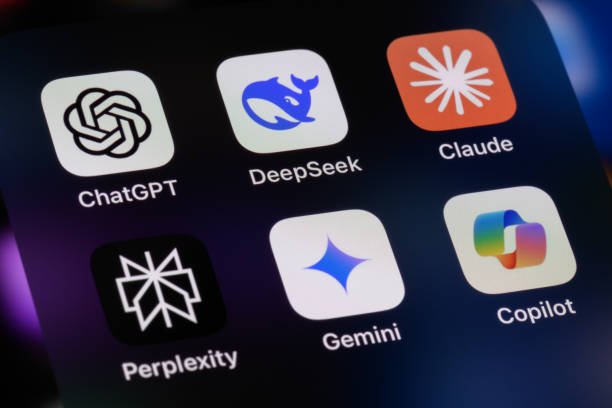
Anthropic, founded by former OpenAI researchers, has emerged as the primary challenger in the enterprise market. Valued at $380 billion in early 2026, Anthropic has focused on “Constitutional AI” and safety, attracting CIOs who are concerned about OpenAI’s aggressive consumer-first expansion. Anthropic’s 2026 revenue is expected to approach parity with OpenAI’s 2024 levels, driven by its success in AI-assisted coding through Claude Code.
The Big Tech Hegemony: Google and Meta
Google’s Gemini and Meta’s Llama series continue to put pressure on OpenAI’s proprietary pricing. Google, in particular, has leveraged its custom TPUs and massive cash reserves ($100 billion) to maintain a lead in search-integrated AI. Meanwhile, Meta’s commitment to open-weight models has forced OpenAI to release the “gpt-oss” family to prevent customer defection in regulated industries.
| Competitor | Core Strength | Strategic Market Position |
| Infrastructure & Data | Integrated search and multi-cloud AI ecosystem | |
| Anthropic | Safety & Coding | Preferred vendor for regulated enterprise sectors |
| Meta | Open Ecosystem | Driving down the cost of basic intelligence via open weights |
| xAI | Scale & Speed | Direct competition in high-end compute with Grok |
6. Target Market and Customer Acquisition
OpenAI’s marketing strategy has shifted from viral consumer adoption to deep enterprise integration. The launch of “OpenAI Frontier” in early 2026 aims to treat AI agents as “digital coworkers,” closing the gap between experimental pilots and integrated business workflows.
Enterprise Partnerships and Strategic Alliances
Key customer deals in late 2025 and 2026 underscore OpenAI’s penetration into diverse sectors.
- Intuit: A $100 million “win-win” integration that embeds ChatGPT into TurboTax and QuickBooks, allowing users to execute financial actions directly within the AI interface.
- Target: A customer experience overhaul that allows for conversational shopping, product recommendations, and food-ordering through Target’s digital platforms.
- Global Health Providers: Institutions such as Cedars-Sinai and the Mayo Clinic have adopted GPT-5 models for clinician workflow automation and discharge summaries.
Advertising and New Channels
OpenAI is exploring conversational advertising within ChatGPT, with estimates for Customer Acquisition Cost (CAC) ranging from $45 to $165 across industries like e-commerce and travel. Early tests suggest that “Inline Conversational Insertion” can achieve 40-60% higher engagement rates than traditional display ads, providing a potential high-margin revenue stream to offset infrastructure costs.
7. Company Culture and Workforce Dynamics
The rapid expansion of the workforce—from 770 in 2023 to over 6,400 in 2025—has created significant cultural dissonance. OpenAI AGI Strategy and Market Dominance 2026
Talent Retention and “Regrettable Retention”
OpenAI has faced a talent drain of senior researchers who feel that the company’s focus has shifted too heavily toward productization at the expense of long-term alignment research. To combat this, the company has offered retention bonuses to nearly one-third of its workforce, particularly in technical and research roles.
| Workforce Metrics | 2023 | 2025 (Est.) |
| Total Headcount | 770 | 6,400+ |
| Weekly Active Hires | ~5-10 | ~50 (during peak) |
| Engineering % | ~25% | 34% |
Cultural Tensions and Workforce Morale
Research indicates that as many as 41% of younger employees in tech firms are “actively sabotaging” AI uptake programs due to fears of obsolescence and unusable tools. At OpenAI, the pressure of 80-hour workweeks has led to mandatory company-wide shutdowns to prevent burnout. The disbanding of the “mission alignment” team in 2025 also signaled a shift that has left some employees feeling like “second-class citizens,” particularly those on experimental projects like Sora or DALL-E.
8. Customer Experience and Loyalty
In 2026, customer expectations for AI have reached a breaking point. While issue resolution rates remain high (88%), customer loyalty outcomes have fallen sharply.
- The 5-Exchange Rule: 57% of customers expect a clear path to a human agent within five conversational exchanges.
- Trust Erosion: Loyalty is eroded not by AI failure, but by “wasted effort” when AI loops or blocks access to a human.
- Agentic Quality: The market for “agentic AI” is expected to grow from $7 billion in 2025 to $93 billion by 2032, highlighting the shift toward autonomous service that requires high transparency and emotional intelligence.
9. Legal and Compliance Landscape
OpenAI is currently navigating the “Fair Use Triangle,” a critical legal period that will determine the future of AI training.
Copyright Litigation and the NYT Suit
The New York Times v. OpenAI suit is the most closely watched litigation in the sector. In early 2026, a federal judge ruled that authors adequately stated a prima facie claim of copyright infringement based on “substantial similarity” between original works and ChatGPT’s outputs, such as unauthorized sequels or summaries. OpenAI contends that its scraping of the internet is fair use, but the case is unlikely to conclude before mid-2026.
The EU AI Act Compliance
As the August 2, 2026, deadline for full applicability of the EU AI Act approaches, OpenAI faces several hurdles.
- High-Risk Categories: Systems used in education, employment, and critical infrastructure must undergo strict conformity assessments and be registered in an EU database.
- Transparency: OpenAI must ensure that users are informed when they interact with an AI and that all synthetically generated content is detectable.
- Prohibitions: The Act bans social scoring and real-time biometric identification, areas where OpenAI has largely avoided participation but must remain vigilant.
10. Sustainability and ESG (Environmental, Social, Governance)
The environmental footprint of OpenAI’s operations has become a top-tier corporate risk in 2026.
Water Footprint and Cooling Challenges
The industry-standard evaporative cooling used in centers like Project Stargate requires staggering amounts of potable freshwater.
- OpenAI’s “Thirst”: Generating a 100-word email through GPT-4 consumes approximately three 16.9 oz bottles of water.
- Projected Consumption: By 2028, AI servers in the U.S. could require 720 billion gallons of water annually—enough to fill 1 million Olympic-sized swimming pools.
- Regional Impact: In Texas, data centers are projected to consume between 29 and 161 billion gallons by 2030, a range that threatens rural aquifers and local water supplies.
Carbon Emissions and Energy Intensity
AI-specific data centers are projected to consume 12% of U.S. electricity by 2028. Just five of OpenAI’s centers are expected to consume as much power as 3 million homes. Despite pledges to reach zero-water by 2027 and carbon neutral targets, the rapid hardware turnover—where new models replace old ones every few weeks—wastes the energy invested in prior training.
11. Growth Strategy and Future Plans
OpenAI’s roadmap is focused on the transition from a “chat” interface to “agentic” capabilities and, ultimately, a researcher-level AGI.
The AGI Roadmap (2026-2030)
- 2026: Development of an AI “researcher intern” capable of accelerating ideas within the research team.
- 2028: Models with beyond-human reasoning abilities capable of autonomously completing multi-week projects.
- 2030: Potential achievement of AGI, defined as a system capable of innovation on its own, though bottlenecks in compute and human capital may cause a plateau.
Expansion into New Domains
OpenAI is diversifying its economic models beyond subscriptions. This includes outcome-based pricing in drug discovery, IP-based agreements in entertainment (Disney), and licensing its “agentic building blocks” to other software vendors.
12. SWOT Analysis
An analysis of OpenAI’s current standing reveals a company that is technically superior but operationally and legally vulnerable.
| Strengths | Weaknesses |
| Unmatched model capability (GPT-5 series). | Extremely high cash burn ($14B in 2026). |
| Massive infrastructure backing (Project Stargate). | Significant talent attrition in senior research. |
| Strategic cloud and data alliances (Microsoft, Oracle, Disney). | Opaque environmental and water footprints. |
| Opportunities | Threats |
| Becoming the “Operating Layer” for knowledge work. | Adverse rulings in copyright “Fair Use” cases. |
| High-margin advertising within conversational interfaces. | EU AI Act penalties (up to 7% of turnover). |
| Autonomous research agents in science and health. | Convergence of competitor models (Llama, Gemini). |
14. Final Evaluation
As of February 2026, OpenAI stands at a crossroads. It has successfully moved from a pure research lab to an industrial superpower, evidenced by its $500 billion infrastructure commitment and its penetration into critical sectors like finance, health, and retail. However, the organizational shift from a non-profit-driven lab to a product-focused PBC has created internal fissures that threaten its technical lead.
The company’s success over the next four years will depend not on its ability to build “bigger” models, but on its ability to secure the “agent platform layer”—the infrastructure that allows AI digital coworkers to act securely within enterprise data stores. If OpenAI can navigate the regulatory hurdles of the EU AI Act and the legal challenges of copyright law while managing its staggering environmental costs, it remains the most likely candidate to define the AGI era. If it fails to turn its consumer brand into durable enterprise stickiness, it risks becoming a high-cost infrastructure provider for more nimble, safety-focused rivals like Anthropic. OpenAI AGI Strategy and Market Dominance 2026