
PolicyBazaar’s success as India’s dominant insurtech platform is inseparable from the vision, experience, and complementary skill sets of its three co-founders—Yashish Dahiya, Alok Bansal, and Avaneesh Nirjar—who converged on a transformative mission in June 2008 to disrupt India’s opaque, agent-driven insurance ecosystem. Their combined two decades of experience in technology, finance, international business, and operations provided the foundational competencies required to navigate regulatory complexity, build technology platforms at scale, and establish distribution networks spanning a billion-person market.
Yashish Dahiya: The Visionary Entrepreneur and CEO
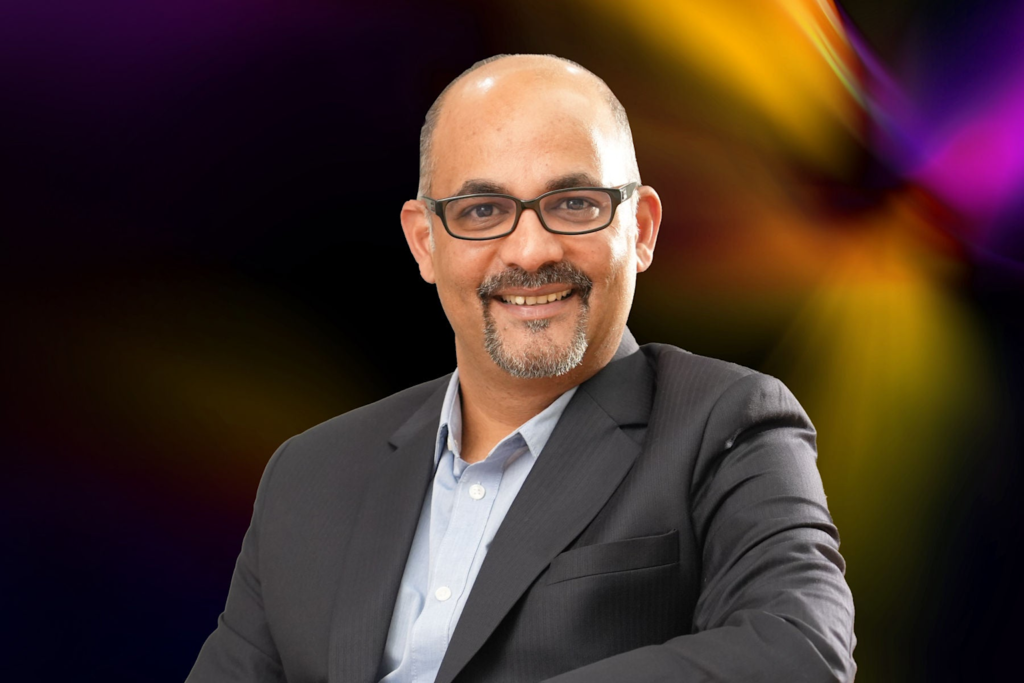
| Yashish Dahiya | |
| x | Yashish Dahiya |
| Yashish Dahiya |
Yashish Dahiya represents the archetype of India’s professionally-trained, globally-experienced entrepreneur. Armed with elite credentials from India’s top institutions—BTech from IIT Delhi (1994), PGDM from IIM Ahmedabad (1996), and MBA from INSEAD (2001)—Dahiya accumulated a deliberately constructed career spanning management consulting, international commerce, and technology entrepreneurship before recognizing the insurance disruption opportunity.
His career trajectory demonstrates strategic career building toward insurance domain expertise. Beginning in 1996 as Business Unit Head at Illinois Tool Works in Rajkot, Dahiya transitioned to management consulting at Bain & Company (2001-2003), where he developed analytical frameworks and strategic thinking capabilities essential for identifying market inefficiencies. At Ebookers Plc (2003-2006), where he served as Managing Director, Dahiya gained direct experience building digital marketplaces in a traditionally offline industry—travel—providing a psychological blueprint for disrupting insurance through technology. Most critically, as CEO of First Europa (a global online insurance aggregator operating across nine countries from 2005 onwards), Dahiya gained direct insurance domain expertise and international operational experience.
This First Europa experience proved pivotal. Dahiya observed that despite being a global leader in online insurance aggregation, First Europa operated in developed markets with mature digital adoption. India’s insurance market—characterized by 1.3 billion consumers, less than 1% digital penetration, massive information asymmetry, and deep distrust in online transactions—represented the ultimate opportunity for an aggregator model. Unlike developed markets where digital adoption was incremental, India could leapfrog generations of distribution evolution by deploying mobile-first comparison platforms targeting India’s emerging middle class.
The personal catalyst for PolicyBazaar’s founding reflects Dahiya’s empathetic entrepreneurship. His own father was defrauded by insurance brokers—a painful experience that crystallized understanding of insurance’s fundamental dysfunction: systematic information asymmetry favoring agents over consumers. This personal motivation transcended profit-seeking; Dahiya explicitly framed PolicyBazaar’s mission around consumer empowerment and transparency restoration. His stated founding principle—”People didn’t know what they were buying. We wanted to empower consumers to choose the right product themselves”—contrasts sharply with transactional entrepreneurship and reflects conviction that business and social impact could converge.
As CEO and later Group Chairman, Dahiya demonstrated consistent long-term thinking. Despite aggressive pressure post-IPO to maximize shareholder extraction, Dahiya reduced his offer-for-sale stake by 85-90% in the November 2021 IPO, signaling confidence that company value would appreciate substantially post-listing. His 4.27% shareholding at IPO (worth ₹2,073 crores at listing prices) remained substantially intact through subsequent years, enabling Dahiya to maintain founder-aligned incentives as the company scaled toward profitability.
Beyond PolicyBazaar, Dahiya’s recent venture into healthcare—founding PB Healthcare (May 2025) as a subsidiary that raised $218 million—demonstrates his commitment to systematically addressing market failures in India’s essential sectors. PB Healthcare aims to vertically integrate hospitals, doctors, insurers, and patients into a seamless ecosystem addressing India’s fragmented, trust-deficient healthcare system. This expansion reflects Dahiya’s thesis that technology-enabled transparency can disrupt any sector burdened by opacity and misaligned incentives.
Career Trajectories of PolicyBazaar Founders (1996-2008)
Alok Bansal: The Visionary Entrepreneur and CEO

While Dahiya embodied vision and long-term thinking, Alok Bansal represented the operational discipline, financial acumen, and systematic execution required to translate ambitious vision into sustainable business. An IIT-IIM graduate (BTech from Kanpur University, PGDM from IIM Calcutta), Bansal accumulated experience across engineering services (Voltas, 1997-1999), industrial operations (GE, 2001-2005), IT services (iGate, 2005-2006), and corporate strategy (Mahindra & Mahindra, 2006-2007).
This diverse operational background proved essential. Unlike pure technologists or consultants, Bansal understood process control, financial discipline, and organizational scaling across complex organizations. His recognition as one of India’s top 100 CFOs (CFO India Magazine, 2016) validated his financial acumen in structuring high-growth, capital-intensive businesses.
At First Europa (2007-2008), Bansal served as Finance Director, where he likely collaborated with Dahiya in observing insurance aggregation’s global potential and India-specific constraints. Unlike Dahiya’s founder-visionary role, Bansal’s professional identity centered on strategic thinking and execution—ensuring that ambitious plans translated into operationally sound, financially sustainable businesses.
His founding role at PolicyBazaar reflected this operational orientation. While Dahiya articulated vision and consumer insights, Bansal likely focused on unit economics, partnership negotiations with insurance companies, and financial sustainability. The early years (2008-2011) presented acute operational challenges: insurance companies resisted aggregator models (threatening traditional agent networks), regulatory environments remained uncertain, and customer acquisition costs competed with thin margins. Bansal’s financial acumen was essential in navigating these tradeoffs, structuring revenue models, and maintaining runway during unprofitable expansion phases.
Bansal’s personal conviction about co-founding teams reflects his operational philosophy. In a 2024 interview at the India 2047 entrepreneurship conclave, Bansal stated explicitly: “I’m not a person who can be ever a single founder. Single founder is very very tough.” This intellectual humility—recognizing that psychologically and operationally, distributed founder teams outperform individual entrepreneurs—shaped PolicyBazaar’s organizational culture around collaboration and distributed accountability.
Post-IPO, Bansal’s role evolved toward Executive Vice Chairman with explicit focus on strategic growth, inorganic expansion, investor relations, and corporate development. This positioning reflects recognition that as PolicyBazaar scaled to public company status, governance, capital allocation, and ecosystem partnerships required sophisticated strategic orchestration. Bansal’s investor relations leadership proved pivotal during post-IPO periods when institutional investors scrutinized execution, profitability trajectory, and geographic expansion strategy.
Like Dahiya, Bansal has remained substantially invested in PolicyBazaar’s future. His stake was reduced from originally-planned ₹95 crores at IPO to ₹13 crores, indicating similar confidence in long-term value appreciation. Beyond PolicyBazaar, Bansal has established himself as an active angel investor in fintech and SaaS startups, and serves as faculty at TiE (The Indus Entrepreneurs) and other accelerators, mentoring early-stage founders on strategy-execution alignment.
Avaneesh Nirjar: The Operations and International Expansion Architect

Avaneesh Nirjar completed the founding triumvirate by bringing operational excellence, international scaling experience, and multi-geography management expertise. With an MBA from Birla Institute of Technology (BIT) Mesra, Nirjar built an international operations career spanning General Electric Capital Services (as Assistant Vice President), Cendant ISO (2004-2006 as SVP Operations & Migrations—managing large-scale operational transitions), HEROITES (as Chief Operating Officer), and FirstEuropa Services (Director of Operations).
This operations-centric background proved critical during PolicyBazaar’s early scaling phase (2008-2011). While Dahiya articulated vision and Bansal managed financial discipline, Nirjar architected the operational infrastructure supporting scaling from a 14-person startup to a multi-city, multi-product organization. His Cendant ISO experience managing complex migrations across geographies and organizations likely informed PolicyBazaar’s early organizational design and process standardization efforts required to maintain quality during rapid scaling.
Nirjar’s FirstEuropa connection aligned with Dahiya and Bansal; the three co-founders shared observation of global insurance aggregation’s potential and India-specific market timing. Unlike Dahiya’s consumer-facing vision or Bansal’s financial discipline, Nirjar’s role centered on operational execution: building call centers, standardizing customer processes, and managing the back-office infrastructure supporting sales and customer service.
However, Nirjar’s trajectory diverged from his co-founders around 2011-2013. In May 2013, MediaNama reported that Nirjar had taken extended leave from day-to-day operations, citing health issues and philanthropic interests. Unlike typical founder departures marked by public conflict, Nirjar’s transition reflected conscious prioritization of personal wellbeing and social impact over continued operational grind. Importantly, Nirjar remained PolicyBazaar’s shareholder and maintained the option to contribute if strategic circumstances required full-time involvement.
This departure pattern reflects PolicyBazaar’s organizational maturation. By 2011-2013, the company had transitioned from startup chaos to structured organization with Business Unit leaders managing insurance, lending, and emerging verticals independently. Nirjar’s reduced involvement enabled decentralized leadership—a necessary evolution for scaled organizations that cannot rely on founder-driven decision-making.
Unlike Dahiya and Bansal, Nirjar has maintained a lower public profile post-IPO, though his shareholder interest and reputational stake align him with long-term value creation. His philanthropic interests, undisclosed in available sources, likely reflect the social impact orientation common among founders whose companies achieve massive scale and wealth creation.
The Founding Partnership: Complementary Competencies and Team Dynamics
The PolicyBazaar founding succeeded fundamentally due to complementary founder competencies and psychological diversity. Dahiya’s visionary thinking (perceiving consumer pain in insurance opacity and recognizing India’s market timing) required validation and operational translation—provided by Bansal’s financial discipline and strategic thinking, and Nirjar’s operational execution. This trinity of vision-strategy-execution represents the idealized founding team structure.
The founding narrative—three individuals with independent success at prestigious global organizations (Bain, GE, Ebookers, First Europa) converging on a shared market insight—reflects what organizational psychologists call “founding network density.” Unlike entrepreneurs emerging purely from disruption ideals, PolicyBazaar’s founders accumulated sophisticated understanding of international business, regulatory navigation, and scaling challenges before attempting India’s insurance transformation.
Their common First Europa background (Dahiya as CEO, Bansal as Finance Director, Nirjar as Operations Director) provided crucial friction-reduction: shared vocabulary, mutual respect built over tangible collaboration, and aligned mental models about insurance aggregation’s viability. When insurance companies resisted online distribution (a fundamental blocking point), founders could address concerns credibly because they’d operated comparable models internationally.
The founders’ psychological complementarity extended beyond functional roles. Dahiya’s public-facing articulation of vision and mission (the “why”), Bansal’s strategic and financial discipline (the “how”), and Nirjar’s operational execution (the “what”) created organizational coherence that transcended founder personalities. This structure enabled PolicyBazaar to maintain mission-focus despite investor pressure toward short-term metrics.
Bansal’s explicit acknowledgment that single founders face unsustainable emotional loads reflects mature leadership philosophy. The ability to distribute decision-making, emotional burden, and accountability across three founders likely prevented the burnout, psychological isolation, and impulsive decisions that plague founder-led startups. When Nirjar required extended leave (2013), the organizational structure allowed transition without existential crisis—a capacity many founder-dependent organizations lack.
Founding Challenges and Strategic Pivots
The founding journey (2008-2013) involved multiple near-lethal challenges that required founder resilience and adaptability.
Insurance Company Resistance: Initial pitches to insurance companies for aggregator partnership met systematic rejection. Insurance companies operated on centuries-old agent-driven models with deeply entrenched incentive structures. The idea of transparent comparison—enabling customers to readily switch between policies based on price and features—threatened traditional distribution economics. Insurance companies viewed comparison platforms as margin-eroding threats rather than customer acquisition channels.
Founders persisted through this resistance via credibility-building: demonstrating international insurance aggregation viability (First Europa precedent), offering insurance companies tangible customer acquisition benefits, and gradually converting pilots into full partnerships. By 2009-2010, the first major insurance partners agreed to participate, validating the model.
Regulatory Uncertainty: The Insurance Regulatory and Development Authority (IRDAI) operated in a cautious, reactive posture toward online distribution innovation. Regulations governing web aggregators remained ambiguous; IRDAI was simultaneously protecting traditional insurance channels while recognizing need for digital innovation. Founders navigated this uncertainty by maintaining proactive regulatory relationships, providing market intelligence, and demonstrating compliance with evolving rules rather than attempting regulatory arbitrage.
In 2011, IRDAI implemented regulations restricting web aggregator advertising revenues—a potential business-model destroyer for early-stage aggregators relying on lead generation economics. Rather than litigating or evading regulations, founders pivoted to direct selling by obtaining insurance broking licenses (eventually realized in June 2021), transforming the business model from lead generation to commission-based distribution.
Customer Acquisition Cost vs. Margin Economics: Early customer acquisition required expensive digital marketing (SEO, affiliate partnerships, advertising) competing against wafer-thin insurance commissions. The unit economics were unforgiving: acquiring a customer through search/affiliate channels might cost ₹2,000-5,000, while a typical insurance commission on a policy might generate ₹1,500-3,000.
Founders addressed this via educational content strategy: instead of pure customer acquisition, PolicyBazaar built content-rich resources (insurance comparison guides, education articles, SEO-optimized resources) that provided genuine utility while establishing brand authority. This “content-led growth” strategy improved customer acquisition economics by establishing PolicyBazaar as a trust-worthy information source rather than transactional platform.
Capital Efficiency and Runway Management: Unlike venture-backed companies with explicit loss-tolerance, founders focused on bootstrap efficiency and capital discipline. The first institutional investor (Info Edge) came via Bansal’s likely network introduction (he worked at nearby iGate) and provided seed capital in September 2008, approximately four months after PolicyBazaar’s June 2008 launch—requiring founders to demonstrate early traction despite minimal capital.
This capital discipline shaped organizational DNA. Rather than pursuing venture-scale burn rates, founders built lean organizations with operational discipline. The company’s eventual profitability (FY24-FY25) reflects decades of capital efficiency—a competitive advantage relative to venture-backed competitors who accepted high burn rates as scaling cost.
The Founding Moment: June 2008 and Market Timing
PolicyBazaar’s founding in June 2008 demonstrated prescient market timing—an underappreciated founder skill. The broader context:
Digital India Emergence: India was entering the mobile internet era. While broadband penetration remained <5%, aspirational middle-class consumers were beginning online research for major purchases. Insurance (requiring significant financial commitment with complex feature comparison) was ideal for digital disruption.
Insurance Market Dysfunction: India’s insurance penetration remained <1.5% (vs. 5-7% in mature markets) despite billion-person population. This represented enormous unfulfilled demand—but unfulfilled due to opacity, mistrust, and agent-driven sales preventing informed choice. A transparent platform could expand TAM dramatically by converting non-buyers to buyers.
Agent Network Economics Strain: Traditional insurance agents faced declining productivity and increasing customer acquisition costs. Digital platforms offering transparent comparison were not agents’ competitors initially—they were customer acquisition channels. This alignment enabled early insurance company participation despite disruption risk.
Founders possessed prescience about convergence of these trends. Unlike purely technical founders building features without market fit, or pure business people chasing trends, PolicyBazaar’s founders combined deep insurance domain knowledge (First Europa), understanding of digital customer journeys, and conviction that Indian consumers valued transparency sufficiently to overcome online transaction anxiety.
IPO and Founder Alignment with Public Shareholders
PolicyBazaar’s November 2021 IPO (raising ₹5,710 crores) represented validation of founder vision but also transition to institutional accountability. Notably, founders’ behavior at IPO reflected confidence rather than wealth extraction. Yashish Dahiya, originally planning to sell ₹250 crores in shares via offer-for-sale, reduced his sell-down to ₹30 crores—retaining 94% of his intended sale value. Similarly, Alok Bansal originally planned ₹95 crores OFS but reduced to ₹13 crores, retaining 86% of his stake.
This “founder skin-in-the-game” signaling was economically significant. By not maximizing IPO exit proceeds, founders publicly committed to long-term value creation—betting that company valuation would appreciate post-listing more than they could extract through immediate sales. This alignment proved correct: post-IPO, PolicyBazaar achieved profitability (₹644 Cr net profit FY24, ₹3,532 Cr FY25) and revenue growth (41% YoY FY25), validating founder conviction.
In June 2025, founders divested approximately 1.09% stake through open market transactions (₹920 crores total), reducing their combined ownership while maintaining substantial stakes. This staged exit pattern—retaining majority holdings while systematically rebalancing—reflects mature founder capital management balancing personal wealth diversification against long-term operational alignment.
Contemporary Roles and Future Vision
As of 2025, the three founders occupy distinct positions reflecting their earlier specializations and current strategic priorities:
Yashish Dahiya continues as Chairman and Group CEO of PB Fintech, orchestrating PolicyBazaar’s expansion across insurance, lending (Paisabazaar), and healthcare (PB Healthcare). His recent $218 million PB Healthcare raise demonstrates continued entrepreneurial energy and conviction that healthcare disruption represents the next massive market opportunity. His stated vision—insuring 40 crores (400 million) Indians within the next decade—reflects founder-scale ambition aligned with long-term nation-building themes.
Alok Bansal focuses on Executive Vice Chairman responsibilities encompassing strategic growth, inorganic expansion, and investor relations. His continued presence in PolicyBazaar’s leadership alongside Dahiya ensures distributed decision-making and prevents founder-dependent organizational structures that risk instability upon founder departure. His active angel investing in fintech and SaaS reflects conviction that founder skills transfer to mentor and advisor roles.
Avaneesh Nirjar maintains shareholder status and emeritus advisory role while pursuing philanthropic interests outside public documents. His ability to step back while maintaining shareholder alignment demonstrates mature founder thinking about personal values and organizational health.
Conclusion
PolicyBazaar’s founders—Yashish Dahiya, Alok Bansal, and Avaneesh Nirjar—represent the idealized complement of India’s emerging startup ecosystem: globally-trained professionals with deep operational experience converging on a market insight aligned with consumer needs and regulatory tailwinds. Rather than charismatic visionaries or pure technical founders, they embodied balanced competencies across vision (Dahiya), strategy and finance (Bansal), and operations (Nirjar) that translated disruption ambition into organizational reality.
Their founding perseverance through insurance company resistance, regulatory uncertainty, and unit economics pressure reflects founder resilience—the unglamorous, daily discipline of showing up and making incremental progress. Their IPO behavior and post-IPO capital management signaled founder-shareholder alignment and conviction in long-term value creation, distinguishing them from purely wealth-extractive exits.
Seventeen years after founding, PolicyBazaar processes 25% of India’s life insurance, 7% of retail health insurance, and commands 93% of digital insurance distribution—a competitive achievement reflecting founder vision, strategic execution, and sustained organizational commitment. Their transition toward new verticals (healthcare, lending) and international markets demonstrates continued founder evolution rather than complacency with dominant positions.
The PolicyBazaar founder story exemplifies that transformational entrepreneurship emerges from convergence of domain expertise, market timing, founder complementarity, and relentless commitment to consumer value—not from venture-scale funding or technology hype alone.
Latest post meesho founder Vidit Aatrey