
The Paradigm Shift in Cyber Extortion
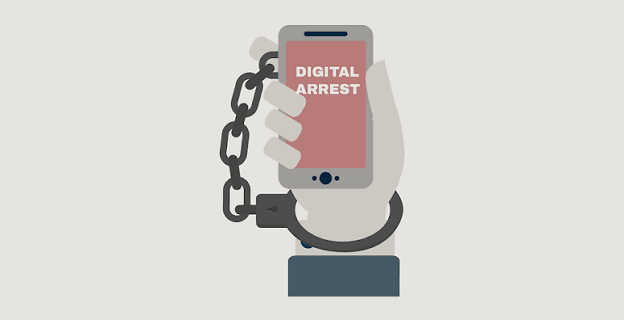
The rapid proliferation of India’s digital public infrastructure has catalyzed unprecedented financial inclusion and economic digitization. However, this transformation has concurrently birthed highly sophisticated vectors for cyber-enabled financial crime. Among these emerging threats, the “digital arrest” scam has rapidly evolved into one of the most psychologically devastating and financially destructive forms of cyber extortion in the country. Categorized technically as an authorized push payment fraud, this criminal methodology represents a severe escalation from traditional phishing or malware attacks. Instead of exploiting software vulnerabilities to illicitly access funds, perpetrators weaponize social engineering, cognitive biases, and the deep-seated public deference to law enforcement to coerce victims into voluntarily transferring their life savings.
The digital arrest scam leverages an elaborate illusion of state authority. Criminal syndicates meticulously impersonate officials from high-profile investigative and regulatory bodies, including the Central Bureau of Investigation (CBI), the Enforcement Directorate (ED), the Reserve Bank of India (RBI), customs authorities, and local police forces. Victims are falsely accused of severe criminal activities—such as money laundering, drug trafficking, or the financing of terrorism—and are placed under fabricated “virtual custody” through marathon video or phone calls.
What distinguishes this phenomenon from isolated consumer fraud is its highly organized, transnational architecture. The financial impact is no longer a localized law-and-order issue but a macroeconomic drain and a pronounced national security threat, inextricably linked to cross-border human trafficking and vast criminal economies operating out of Southeast Asia. This report provides an exhaustive, multi-dimensional analysis of the digital arrest epidemic, dissecting its operational mechanics, the psychological profiling of victims, landmark judicial interventions, the geopolitics of the syndicates, and the advanced technological countermeasures being deployed to secure India’s digital financial ecosystem.
The Anatomy of a Digital Arrest: Operational Mechanics
The execution of a digital arrest relies on a highly structured, multi-phased script designed to instantly induce panic, enforce isolation, and manipulate the victim into liquidating their assets. The operation typically unfolds across distinct stages of escalation.
The interaction invariably commences with a pretextual contact designed to catch the victim off guard. The initial touchpoint is often an automated Interactive Voice Response (IVR) call or a WhatsApp message claiming to originate from a trusted service provider or lower-tier administrative agency. The most prevalent narratives involve a courier company (such as FedEx or DHL) notifying the victim that a parcel registered in their name has been intercepted containing illicit contraband, such as narcotics, fake passports, or blood-stained clothing. Alternatively, the perpetrators may pose as executives from the Telecom Regulatory Authority of India (TRAI), threatening immediate disconnection of the victim’s mobile numbers due to alleged involvement in the distribution of unsolicited marketing or harassment campaigns. In other instances, the initial hook involves claims that the victim’s Aadhaar identity has been compromised to open fraudulent bank accounts used for money laundering.
Once the victim denies involvement and exhibits distress, the scammers execute the escalation phase. The call is abruptly transferred to an accomplice impersonating a senior law enforcement officer, such as an IPS officer, a CBI investigator, or an ED official. To solidify the deception, the communication is shifted to a video conferencing platform, most commonly Skype or WhatsApp. The visual component is meticulously crafted. The perpetrators operate from highly realistic “case rooms” featuring physical or Artificial Intelligence-generated backdrops that perfectly mimic police stations, control rooms, or judicial chambers. The impersonators don authentic-looking uniforms, present forged identification badges, and speak with rehearsed, authoritative legal jargon to suppress any skepticism the victim might harbor.
The most critical and psychologically damaging phase of the operation is the enforcement of digital confinement. The scammers issue a mandate of strict secrecy, falsely citing the Official Secrets Act or national security protocols, ordering the victim not to contact family members, friends, or legal counsel. The victim is instructed to isolate themselves in a closed room and keep their smartphone or laptop camera activated continuously. This state of virtual custody mimics the pressures of a physical custodial interrogation without the perpetrators ever stepping foot in India. Victims have been subjected to this digital confinement for extraordinary durations. For instance, a social media influencer was trapped in a 40-hour continuous video interrogation, a housewife in Bengaluru was kept under surveillance for 11 days, and an elderly woman in Indore was subjected to five days of relentless questioning. This extreme isolation severely impairs the victim’s rational cognitive processing, inducing a state of compliant panic.
During this confinement, the coercion reaches its peak through the presentation of fabricated legal instruments. The syndicates transmit doctored documents, including fake Supreme Court arrest warrants, fabricated First Information Reports (FIRs), and forged RBI asset freeze orders, often bearing the counterfeit signatures of sitting judges or agency directors. Confronted with the immediate threat of physical arrest, severe public humiliation, asset seizure, or harm to their families, the victim is driven to capitulate. The perpetrators provide a seemingly administrative exit strategy, demanding the transfer of funds under the guise of a “security deposit,” “verification fine,” or “bail money,” assuring the victim that the funds will be sequestered in a secure government account and refunded once their innocence is formally established.
The culmination of the scam is the rapid laundering of the extorted capital. Once the victim initiates transfers via the Unified Payments Interface (UPI), Real-Time Gross Settlement (RTGS), or cryptocurrency conversions, the perpetrators instantaneously sever all communication. The stolen funds are systematically fragmented and funneled through a convoluted, multi-layered pipeline of “mule accounts”—bank accounts opened using stolen or coerced identities. This high-velocity laundering obscures the financial trail, moving the capital across international borders and rendering traditional recovery efforts virtually impossible.
Psychological Weaponization and Target Profiling
The efficacy of the digital arrest methodology relies fundamentally on the weaponization of human psychology and the exploitation of socio-cultural vulnerabilities. The scammers leverage the “authority bias,” a deeply ingrained cognitive heuristic where individuals attribute disproportionate accuracy and compliance to figures perceived to hold legal power. In the Indian context, this is exacerbated by a historical deference to bureaucratic authority and a pervasive fear of legal entanglement, making citizens highly susceptible to impersonation-based extortion. The scammers also manipulate the cognitive bias of urgency, forcing immediate compliance and denying the victim the temporal space required for rational analysis or independent verification.
The targeting strategy of these syndicates has evolved from indiscriminate mass-phishing to highly precise, intelligence-driven operations. Cybercriminals harvest extensive personal data from data breaches, dark web marketplaces, and social media platforms, allowing them to profile victims meticulously and tailor their scripts. While the threat spans all demographics, empirical data indicates a deliberate focus on specific high-value cohorts, notably senior citizens, retired government officials, military personnel, medical professionals, and high-net-worth industrialists.
This demographic targeting is driven by several intersecting factors. Firstly, these individuals possess significant financial liquidity, often holding substantial life savings, fixed deposits, and accessible retirement funds. Secondly, despite their professional acumen, many individuals within this older demographic exhibit a lower baseline of digital literacy regarding advanced cyber threats, AI-driven impersonation, and the evolving tactics of digital fraud. Finally, established professionals are highly sensitive to social stigma and reputational damage. The prospect of being publicly associated with crimes like drug trafficking or terrorism is so abhorrent that they become highly pliable to demands that promise a discreet, administrative resolution to the fabricated crisis.
The psychological toll exacted on these victims parallels the financial devastation. The National Human Rights Commission (NHRC) has explicitly warned that digital arrest scams constitute a severe violation of human rights and dignity, inducing profound psychological trauma, anxiety, and depression. Chief Justice of India Surya Kant has noted that these crimes leave victims with a “blistering sense of violation,” leading to intense embarrassment and repression. The societal stigma associated with falling for such scams frequently results in severe underreporting, which further isolates the victim and empowers the criminal syndicates to operate unhindered. In extreme cases, the psychological pressure and financial ruin have driven victims to suicide, as evidenced by the tragic death of an elderly couple in Karnataka who lost ₹50 lakh to the scam. Furthermore, the extreme coercive tactics have manifested in severe violations of bodily autonomy, as demonstrated by a case in Mumbai where a 26-year-old woman was forced to strip during a video call under the guise of a physical search by fake Delhi Police officers.
Quantitative Impact and Macroeconomic Drain
The escalation of digital arrest scams has fundamentally altered the landscape of financial crime in India, transitioning from a localized law enforcement issue to a macroeconomic vulnerability. The financial hemorrhage recorded over the past several years illustrates the aggressive scaling of these transnational operations. The Indian Cyber Crime Coordination Centre (I4C) and the Ministry of Home Affairs track these metrics through the National Cyber Crime Reporting Portal (NCRP) and the Citizen Financial Cyber Fraud Reporting and Management System (CFCFRMS).
An analysis of the aggregated data reveals an exponential growth curve in both incident volume and financial losses, deeply impacting the national economy.
| Metric / Indicator | 2022 | 2024 | 2025 | 2026 (Jan-Feb) |
| Total Reported Cyber Fraud Cases | 10.29 Lakh | 22.68 Lakh | >2.81 Million | Data Aggregating |
| Digital Arrest Specific Complaints | ~35,000 | >123,000 | >241,000 | – |
| Estimated Digital Arrest Losses (INR) | ~91 Crore | ~1,935 Crore | ~22,495 Crore | 11.6 Crore (59 days) |
| Total Intercepted/Saved Funds (INR) | – | – | >5,489 Crore | >11,158 Crore |
Table 1: Escalation of Cyber Fraud and Digital Arrest Metrics in India based on consolidated MHA and I4C reporting.
The data from 2024 alone indicated a 21-fold increase in financial losses compared to 2022, a trajectory that steepened further in 2025 as the syndicates integrated sophisticated AI deepfakes and scaled their mule account pipelines. Between 2022 and 2025, digital arrest scams accounted for over 241,537 specific cases, draining vast reserves from the populace. The National Human Rights Commission noted that over a six-year period, Indians lost a cumulative ₹52,976 crore to cyber-enabled frauds, with digital arrests rapidly consuming an increasing percentage of that total.
State-level data further underscores the pervasive nature of the threat. In 2024, Uttar Pradesh recorded 1,200 digital arrest cases resulting in a loss of ₹25 crore, Karnataka reported 641 cases with staggering losses of ₹109 crore, and West Bengal registered approximately 800 cases. The disparity between the volume of reported incidents (over 2.81 million total cyber frauds in 2025) and the number of formal First Information Reports (FIRs) registered (only 55,484) highlights a severe bottleneck in the law enforcement response, stemming from jurisdictional friction and the complex, cross-border nature of digital financial crimes. Digital Arrest Scam in India: How Cybercriminals Use Fake Police, CBI, and ED Calls
Landmark Case Studies and Law Enforcement Interventions
An examination of specific high-profile incidents provides granular insight into the operational audacity of these syndicates and the critical importance of rapid, coordinated law enforcement and institutional interventions.
The Historic West Bengal Conviction
The judicial landscape regarding digital arrests achieved a major milestone in July 2025, when a district court in Kalyani, West Bengal, delivered the nation’s first conviction for this specific category of cyber extortion. A 70-year-old retired scientist was defrauded of ₹1 crore after being held under digital arrest for nearly seven days by callers impersonating Mumbai Police officers. The Ranaghat Cyber Crime Police and the West Bengal Criminal Investigation Department (CID) launched a sophisticated digital forensics operation, analyzing VoIP patterns and tracing the fragmented financial transactions.
The investigation exposed a massive nationwide syndicate spanning Gujarat, Maharashtra, and Haryana, which utilized call routing to mask their origins while interfacing with scam centers in Cambodia. The syndicate was linked to 108 NCRP complaints globally, having extorted over ₹100 crore. The police rapidly filed a comprehensive 2,600-page chargesheet, leading to a swift trial that concluded within five months. Nine accused individuals were convicted under multiple sections of the BNS and IT Act and sentenced to life imprisonment, establishing a formidable legal precedent against organized cyber extortion.
High-Net-Worth Targeting: The Vardhman Group Incident
The vulnerability of highly successful professionals was starkly demonstrated when S.P. Oswal, the 82-year-old chairman and managing director of the Vardhman Group, was defrauded of ₹7 crore. Scammers impersonating CBI officers fabricated complex money laundering charges, leveraging forged documents to apply immense psychological pressure. The execution of this high-value extortion over just two days highlighted the syndicates’ advanced intelligence-gathering capabilities and their confidence in manipulating elite targets who possess vast liquid assets.
Frontline Intervention and Institutional Vigilance
While forensic investigations post-incident are vital, real-time intervention remains the most effective defense. In November 2024, the Cyber Cell of the Madhya Pradesh Police in Bhopal thwarted an active digital arrest. A resident was coerced via Skype by individuals posing as TRAI and CBI officials, who threatened his family and demanded immediate financial transfers based on fake CBI letters. The victim managed to contact the Cyber Crime Department, prompting an officer to arrive at the residence and confront the scammers on the active video call. The demand for the scammers’ official credentials caused the perpetrators to panic and abandon the extortion attempt immediately, preventing massive financial loss.
Similarly, the critical role of banking personnel in the defense ecosystem was highlighted in central Delhi, where an alert State Bank of India (SBI) branch manager saved a 68-year-old retired school teacher from transferring ₹79 lakh to a fraud syndicate. The victim, shuddering with fear at the bank’s gate after six days of virtual hostage, was counseled by the manager, who had recently undergone specific training on detecting digital arrest anomalies. This human-in-the-loop intervention successfully blocked the transfer and initiated a police response, underscoring the necessity of comprehensive frontline training in the financial sector.
The Geopolitics of Transnational Cybercrime Networks

The most formidable barrier to eradicating the digital arrest epidemic lies in its underlying geopolitical architecture. What manifests domestically as an extortion call is the terminal end of a highly sophisticated, transnational criminal economy heavily entrenched in Southeast Asia.
Data intelligence gathered by the I4C and international agencies indicates that nearly 45 to 50 percent of digital arrest operations targeting Indian citizens originate from specialized “scam compounds” located in Cambodia, Myanmar, Laos, Thailand, and Vietnam. These syndicates operate as vast, corporate-style enterprises, entirely dependent on severe human rights abuses and transnational human trafficking.
Thousands of young professionals from India, alongside individuals from other nations, are lured across borders through fraudulent advertisements promising lucrative data entry, customer service, or IT roles. Upon arrival in these jurisdictions, their passports are confiscated, and they are imprisoned in heavily guarded compounds. Interpol data reveals that 74 percent of human trafficking victims linked to these networks are forced into these regional scam centers. Under the constant threat of physical violence, starvation, and torture, these captive workers are forced to execute the digital arrest scripts against their compatriots back in India, effectively serving as human slaves for the syndicates.
The scale of intervention required to extract these citizens is massive; between 2022 and 2025, the Indian government successfully facilitated the rescue of 6,998 Indian nationals from these scam centers. The illicit profits generated by these compounds are astronomical. Analysis by the United States Institute of Peace (USIP) estimates that the revenues from cyber scam operations account for nearly 40 percent of the combined Gross Domestic Product (GDP) of Cambodia, Myanmar, and Laos. This vast accumulation of capital heavily enriches local political elites and militant factions, embedding the criminal infrastructure deep within the host nations’ economies and rendering local law enforcement complicit or ineffective.
The Diplomatic Gap and Jurisdictional Friction
Indian law enforcement faces an inherent structural limitation: domestic measures, regardless of how well-resourced, cannot unilaterally dismantle a criminal economy embedded in a foreign sovereign jurisdiction. The domestic response is largely confined to addressing the symptoms within India’s borders—freezing compromised accounts, blocking telecom nodes, and arresting local money mules.
This jurisdictional friction is exacerbated by India’s position regarding international cybercrime treaties. India is not a signatory to the Budapest Convention on Cybercrime, having cited concerns over national sovereignty, cross-border data access provisions, and its exclusion from the original drafting process. Furthermore, India chose not to sign the recently adopted United Nations Convention against Cybercrime (UNCC), citing misalignments regarding surveillance parameters and domestic privacy laws established under the Puttaswamy judgment. Consequently, India lacks binding bilateral cybercrime extradition agreements with the primary host nations of these scam compounds, forcing investigators to rely on protracted and often ineffective Mutual Legal Assistance Treaties (MLATs).
Legal Framework and Judicial Intervention
Although the term “digital arrest” is a colloquialism lacking any statutory recognition, the Indian legal system possesses a comprehensive framework to prosecute the underlying criminal acts. The enforcement mechanisms span both the Bharatiya Nyaya Sanhita (BNS) and the Information Technology (IT) Act, 2000.
The fundamental premise of the scam relies on a legal fiction. As clarified by the Supreme Court in the landmark case of Satender Kumar Antil v. CBI (2025), the Bharatiya Nagarik Suraksha Sanhita (BNSS) mandates that all enforcement actions affecting personal liberty—including arrests and the service of appearance notices—must adhere strictly to physical procedures. The Court explicitly ruled that no official notice resulting in arrest or detention can be legally delivered via digital platforms such as WhatsApp, SMS, or email. Therefore, any virtual interrogation or digital demand for bail money is inherently unlawful and invalid.
When prosecuting these syndicates, law enforcement applies a matrix of specific statutory provisions:
- Section 204 BNS (Impersonating a Public Servant): Directly addresses the fabrication of fake police and CBI identities, carrying imprisonment of up to three years.
- Section 318 BNS (Cheating): Covers the deceptive scheme inducing victims to transfer funds.
- Section 336 BNS (Forgery): Applies to the creation of counterfeit arrest warrants, court orders, and official seals.
- Section 308 BNS (Extortion): Covers the coerced extraction of capital through threats of injury or imprisonment.
- Section 111 BNS (Organized Crime): Acknowledges the transnational, syndicated nature of the fraud.
- Sections 66C & 66D IT Act (Identity Theft and Cheating by Personation): Specifically targets the misuse of digital resources and stolen data to facilitate the crime.
The Supreme Court’s Suo Motu Intervention (December 2025)
Recognizing the systemic failure to contain the crisis, the Supreme Court of India initiated aggressive suo motu action in late 2025. The intervention was triggered by an egregious case in Ambala, Haryana, where a 73-year-old woman was extorted of ₹1 crore. The fraudsters had utilized a highly sophisticated forged Supreme Court freeze order, complete with the fabricated signature of a former Chief Justice, fake ED officer credentials, and counterfeit judicial seals.
Chief Justice of India (CJI) Surya Kant elevated the discourse by defining digital arrests not merely as economic offenses, but as crimes against human dignity, emphasizing the targeted exploitation of senior citizens. On December 1, 2025, the Supreme Court issued a series of sweeping interim directives designed to shatter jurisdictional silos and empower federal investigators.
The Court designated the Central Bureau of Investigation (CBI) as the primary agency to investigate digital arrest scams nationwide, mandating all States and Union Territories to grant the agency general consent for these specific probes. Crucially, the Court granted the CBI a “free hand” to investigate the role of complicit banking officials under the Prevention of Corruption Act, recognizing that the rapid opening of vast networks of mule accounts could not occur without localized institutional negligence or corruption. Furthermore, the Court issued notices to the Reserve Bank of India, scrutinizing the delayed deployment of advanced Artificial Intelligence and technology to autonomously identify and freeze these illicit financial conduits.
Technological Ecosystem Defense and Countermeasures
In response to the velocity of the threat and the directives of the Supreme Court, the Indian government has initiated a pivot from reactive policing to proactive, technology-driven ecosystem defense. This strategy involves the synchronization of the Ministry of Home Affairs (MHA), the Department of Telecommunications (DoT), and the Reserve Bank of India (RBI).
1. The I4C and Centralized Intelligence Sharing
The Indian Cyber Crime Coordination Centre (I4C), established as an attached office of the MHA, serves as the central nervous system for India’s cyber defense. A critical advancement in this framework was the launch of the Central Suspect Registry in September 2024.
Developed in collaboration with major banks, financial intermediaries, and telecom providers, the registry aggregates cybercrime identifiers—such as mobile numbers, bank accounts, UPI IDs, and device IMEIs—sourced directly from the National Cybercrime Reporting Portal (NCRP). By compiling data on over 1.4 million cybercriminals, the registry enables banks to verify customer credentials and monitor transactions in real time. By mid-2026, the registry had received over 30.48 lakh suspect identifiers and facilitated the real-time blocking of fraudulent transactions worth a staggering ₹25,698 crore, neutralizing thousands of layer 1 mule accounts.
The I4C supplements the registry with the Pratibimb module, an advanced geospatial analytics platform that maps the physical locations of cybercriminals and their infrastructure based on network data, allowing state police to execute precision raids. Additionally, the Sahyog portal streamlines the issuance of legal notices to IT intermediaries for the rapid takedown of fraudulent content and communication links. The public interface of this ecosystem, the Citizen Financial Cyber Fraud Reporting and Management System (CFCFRMS), accessible via the 1930 helpline, has been instrumental in saving over ₹11,158 crore across 32.80 lakh complaints by facilitating immediate API-driven fund freezing.
2. ASTR: Dismantling the Illicit Telecom Infrastructure
The operational continuity of scam syndicates relies entirely on anonymous communication facilitated by millions of fake SIM cards. To dismantle this foundational infrastructure, the Department of Telecommunications (DoT) deployed a groundbreaking technological solution: ASTR (Artificial Intelligence and Facial Recognition Powered Solution for Telecom SIM Subscriber Verification).
Operating on the PARAM supercomputer at the Centre for Development of Advanced Computing (C-DAC), ASTR ingests the combined subscriber databases and photographs from all Telecom Service Providers (TSPs). The AI algorithms utilize facial recognition to identify non-bonafide connections by detecting instances where a single facial image has been used to register multiple SIM cards under entirely different names and forged identity documents. Digital Arrest Scam in India: How Cybercriminals Use Fake Police, CBI, and ED Calls
The deployment of ASTR yielded immediate and massive results. In a targeted operation in Gujarat, ASTR analysis revealed that merely 15,000 misused photographs were utilized by corrupt Point of Sale (PoS) agents to issue an astounding 2.25 lakh benami (proxy) SIM cards. The system detected specific faces that were mapped to over 1,000 individual SIM cards. This actionable intelligence enabled the Gujarat Police and the Anti-Terrorism Squad (ATS) to file 27 coordinated FIRs across 13 districts within a month, resulting in the dismantling of numerous illicit PoS operations. Nationwide, the DoT has utilized ASTR to disconnect more than 82 lakh suspected mobile connections that failed subsequent re-verification, effectively shattering a major vector of the cybercrime supply chain.
3. MuleHunter.ai: The RBI’s Algorithmic Shield
The critical bottleneck in recovering extorted funds is the syndicates’ use of highly interconnected “mule accounts.” These accounts are utilized to instantly receive, split, and launder capital across multiple jurisdictions, outpacing traditional, rule-based banking security audits.
In a direct response to the escalating crisis, the Reserve Bank Innovation Hub (RBIH) developed MuleHunter.ai, an advanced Artificial Intelligence and Machine Learning model designed specifically to eradicate these illicit financial conduits. Formally announced by the RBI in late 2024, MuleHunter.ai operates as an infrastructure-level solution, aggregating and analyzing transactional data, account activity patterns, and cross-institutional fund flows.
The model was rigorously trained on 19 distinct patterns of mule account behavior, enabling it to detect money laundering and illicit fund transfers with unprecedented speed and accuracy, drastically reducing the false positives that plague legacy systems. By integrating real-time intelligence feeds from the I4C’s Central Suspect Registry, MuleHunter.ai continuously adapts to evolving fraud tactics. The RBI has deployed this powerful AI engine free of cost to participating public and private sector banks, effectively centralizing the detection framework and eliminating the systemic vulnerabilities caused by fragmented, individual banking software. The Ministry of Finance has actively mandated State Level Bankers’ Committees to ensure total adoption of the tool across the banking sector.
4. The Financial Kill Switch and Systemic Insurance
While AI provides predictive defense, the MHA has recognized the necessity for immediate, reactive consumer empowerment. A high-level inter-departmental committee, encompassing representatives from the RBI, CBI, DoT, and MeitY, is in the advanced stages of developing a transaction “Kill Switch”.
This proposed mechanism would embed an emergency protocol within all UPI platforms, fintech applications, and mobile banking environments. Upon realizing they are victims of an ongoing social engineering scam, citizens could activate this switch to instantly freeze all linked bank accounts, digital wallets, and credit lines. This real-time intervention aims to halt the outward flow of funds immediately, overriding normal transaction processing and preventing the scammers from splitting the capital.
Furthermore, to mitigate the catastrophic financial losses suffered by individuals, the committee is exploring the implementation of a comprehensive fraud insurance mechanism. Structured similarly to international terrorism insurance pools, this framework would be backed by contributions from banking institutions and insurers. By spreading the systemic risk of digital fraud across the entire financial ecosystem, the mechanism aims to guarantee victim compensation and manage tail risks while maintaining affordable premium structures.
Strategic Vulnerabilities and Future Outlook
Despite the robust integration of AI tools, proactive judicial oversight, and unprecedented inter-agency coordination, the fight against digital arrests is hindered by significant structural paradoxes within India’s governance framework.
The most glaring vulnerability is the pronounced asymmetry in financial resource allocation. While digital arrest scams inflict tens of thousands of crores in economic damage, government investment in digital security infrastructure has paradoxically contracted. The Union Budget for 2026-27 allocated merely ₹790 crore to cybersecurity capital projects—a severe 58 percent decline from the ₹1,900 crore allocated in the previous fiscal year. Furthermore, cybersecurity spending remains heavily fragmented across MeitY, the MHA, and the DoT. The absence of a dedicated, trackable budgetary line specifically targeting cyber fraud mitigation makes it structurally impossible for the state to invest in proportion to a threat that vastly outpaces the budget of any single ministry.
Additionally, addressing the root cause of the epidemic requires a strategic pivot from domestic fortification to aggressive international diplomacy. The diplomatic gap that protects the scam compounds in Southeast Asia must be closed. India must pursue robust, binding bilateral cyber-cooperation and extradition treaties with Myanmar, Cambodia, and Laos. Concurrently, the government must reconsider its isolated stance on international frameworks, seeking pathways to engage with mechanisms like the UNCC while safeguarding domestic privacy laws, thereby facilitating rapid, cross-border intelligence sharing and the dismantling of the offshore criminal infrastructure.
Conclusion
The digital arrest scam represents a masterclass in the weaponization of human psychology and the exploitation of a rapidly digitizing economy. By perfectly mimicking the coercive power of the state, transnational criminal syndicates have bypassed traditional cybersecurity perimeters, directly manipulating citizens into liquidating their assets. The resulting epidemic has transitioned from a localized consumer hazard to a macroeconomic crisis and a profound violation of human dignity, inflicting severe financial and psychological trauma on thousands of victims while enriching geopolitical criminal networks.
The institutional response in India is achieving formidable momentum, representing a paradigm shift toward proactive ecosystem defense. The Supreme Court’s decisive mandate empowering the CBI has shattered domestic jurisdictional silos, while the deployment of state-of-the-art technologies—such as the DoT’s ASTR system for eradicating illicit telecom infrastructure and the RBI’s MuleHunter.ai for algorithmic financial protection—demonstrates a robust, whole-of-government approach. However, securing the digital frontier ultimately demands the resolution of systemic contradictions: correcting severe budgetary asymmetries, implementing critical consumer safeguards like the financial kill switch, and engaging in aggressive international diplomacy to eradicate the offshore sanctuaries of cyber-slavery. Only through a sustained, fully funded, and globally coordinated strategy can India dismantle the architecture of cyber extortion and restore trust in its digital transformation. Digital Arrest Scam in India: How Cybercriminals Use Fake Police, CBI, and ED Calls