
Table of Contents
Myanmar: A Strategic Analysis Cybercrime Networks and Human Trafficking.
Executive Overview
The proliferation of industrial-scale cyber-scam compounds across Southeast Asia represents one of the most severe escalations of transnational organized crime in the twenty-first century. Ground zero for this phenomenon is the Republic of the Union of Myanmar, a nation currently engulfed in a protracted “polycrisis” characterized by entrenched civil war, fragmented sovereignty, mass displacement, and economic collapse following the February 2021 military coup. Within this power vacuum, sophisticated criminal syndicates—primarily originating from China—have forged symbiotic alliances with local ethnic armed organizations (EAOs), border guard forces, and junta-aligned militias to construct fortified, autonomous enclaves dedicated entirely to cyber-enabled fraud.
By early 2026, the scale of this illicit economy had reached unprecedented dimensions, shifting from a regional security issue to a global economic and human rights crisis. Global financial losses attributed to organized fraud and scams are estimated at $442 billion annually, with Southeast Asian forced-criminality syndicates responsible for at least $64 billion of this total. Victims in the United States alone reported losses exceeding $10 billion to Southeast Asia-based scam operations in 2024, representing a 66 percent year-over-year increase. However, the crisis extends far beyond financial devastation; it is fundamentally a humanitarian catastrophe. An estimated 120,000 individuals in Myanmar, and up to 300,000 across the broader Mekong region, are held in conditions amounting to modern slavery, trafficked from over 66 countries and coerced into perpetrating global fraud under the threat of extreme violence.
This report provides an exhaustive, in-depth analysis of the Myanmar cyber-scam ecosystem as of mid-2026. It traces the structural evolution of these compounds, the militarized political economy that shields them, the industrialization of human trafficking for forced criminality, the sophisticated financial architecture enabling money laundering, and the complexities of the international community’s response. The analysis indicates that while coordinated law enforcement actions, international sanctions, and geopolitical pressures have disrupted specific nodes of this network, the scam economy exhibits a highly adaptive resilience. Driven by billions in illicit capital inflows, the industry simply relocates, rebrands, and leverages advanced technologies such as artificial intelligence and decentralized satellite communications to sustain its operations.
The Genesis of the Scam Economy in a Polycrisis
From Border Casinos to Cyber-Fraud Factories
The origins of Myanmar’s cyber-scam infrastructure are deeply rooted in the historical political economy of the country’s restive borderlands. Beginning in the 1990s, loosely regulated casinos and online gambling ventures proliferated in autonomous zones along the frontiers with Thailand and China. These early gambling hubs, established in areas where the central state’s administrative reach was historically weak or deliberately conceded to ethnic militias in exchange for ceasefires, served as the foundational infrastructure for later fraud operations.
The pivotal transition occurred during the COVID-19 pandemic. Global travel restrictions and border closures effectively severed the flow of physical patrons to these border casinos, prompting criminal networks to aggressively pivot their business models. The syndicates capitalized on improved internet connectivity to transition from gambling profits to complex online fraud schemes, repurposing empty resorts, hotels, and half-built special economic zones (SEZs) into dedicated cybercrime compounds.
The 2021 Coup and the Militarization of Illicit Economies
The February 2021 military coup catalyzed this transformation, plunging Myanmar into a severe civil conflict and creating an ideal incubator for transnational organized crime. The resultant breakdown of the rule of law, coupled with the military junta’s desperate need for off-book revenue and proxy alliances, allowed these criminal enterprises to scale rapidly.
The State Administration Council (SAC)—the military junta that seized power—has faced unprecedented territorial losses, international sanctions, and shrinking formal revenues. To sustain its multi-front war against various pro-democracy resistance forces and ethnic armies, the SAC has become heavily reliant on allied proxy militias and Border Guard Forces (BGFs). These militias provide critical manpower and territorial control for the junta in exchange for almost total autonomy over illicit economies within their fiefdoms, including narcotics, illegal logging, rare earth mining, and cyber-fraud. Analysts characterize the scam economy not merely as a criminal byproduct, but as an existential financial prop for the regime’s war footing.
By 2025 and 2026, open-source intelligence and satellite imagery confirmed the existence of over 339 documented compound sites across Cambodia and Myanmar. These sites represent a profound industrialization of fraud, transitioning from scattered, opportunistic scams to highly structured corporate enterprises with specialized departments for human resources, scriptwriting, technical support, and financial laundering, all shielded by the military capabilities of their host militias.
Geopolitical Dynamics and the Waterbed Effect
Proxy Militias and Territorial Sovereignty
The persistence of cyber-scam compounds is fundamentally tied to the control of physical logistics and territory. The operations are intensely territorial, requiring the physical movement of labor, uninterrupted supply chains, and secure geographic sanctuaries. In Kayin State, along the Thai border, the dominant actor facilitating this ecosystem is the Karen National Army (KNA), formerly known as the Karen Border Guard Force, commanded by warlord Saw Chit Thu.
The KNA exercises sovereign control over the Myawaddy corridor, housing notorious hubs like Shwe Kokko and KK Park. Saw Chit Thu and his family members control extensive business networks that lease land to Chinese crime syndicates, provide perimeter security for the compounds, and facilitate the smuggling of trafficked workers across the Moei River. Despite public rebranding efforts in 2024 to distance the KNA from the struggling military regime and performative announcements of crackdowns, the underlying revenue-sharing arrangements and protection rackets remain intact. Similar dynamics exist with other armed factions, such as the Democratic Karen Benevolent Army (DKBA), which provides armed security for compounds like the Tai Chang (Casino Kosai) complex in Kyaukhat.
China’s Intervention and Operation 1027
The geopolitical landscape of Myanmar’s scam economy experienced a seismic shock in late 2023 and early 2024 due to the shifting priorities of neighboring China. Beijing had grown increasingly alarmed by the targeting of Chinese nationals by scam syndicates operating in the Kokang Self-Administered Zone in northern Shan State, an area controlled by the junta-aligned Kokang BGF led by the powerful Ming family.
The military junta’s refusal to dismantle these hubs prompted China to tacitly endorse a massive military offensive by the Three Brotherhood Alliance—comprising the Myanmar National Democratic Alliance Army (MNDAA), the Ta’ang National Liberation Army (TNLA), and the Arakan Army (AA). Dubbed “Operation 1027,” the offensive resulted in the most significant military defeat for the Myanmar junta in its history. The MNDAA captured Laukkai, the capital of the Kokang region, effectively dismantling a cyber-scamming hub that generated an estimated $1.5 billion in annual revenue. The fallout was swift: the Ming family patriarch, Ming Xuechang, reportedly committed suicide, and his relatives were extradited to China, alongside tens of thousands of trafficked Chinese scam workers.
Passage Reordering and the Strategic Relocation of Compounds
While Operation 1027 was hailed as a major victory against the scam syndicates, an analysis of the post-offensive landscape reveals a classic “waterbed effect”—applying pressure in one area simply caused the illicit activity to bulge elsewhere. Rather than eradicating the industry, the fall of Kokang triggered a massive strategic relocation of criminal syndicates.
Operations migrated away from the Chinese border toward the Thai border (specifically into KNA-controlled Myawaddy), deeper into rural Myanmar interior (such as Mongyai and Hopang), and across international borders into Cambodia and Laos. This resilience is explained by the concept of “passage reordering.” The syndicates rely on a complex network of internal roadblocks, formal border posts, and informal river crossings to filter the movement of trafficked labor and capital. In northern Shan State, the MNDAA’s territorial victory produced a decisive reordering of gateway authority, choking off the scam economy in that specific locality.
Conversely, in Kayin State, despite intense pressure from Thai law enforcement and advancements by the anti-junta Karen National Liberation Army (KNLA), the KNA maintained its brokered control over the Myawaddy checkpoints. Because local officials and militias control these checkpoints, compound operators routinely receive advanced warning of highly publicized, performative raids orchestrate by the Myanmar military. When crackdowns occur, operators systematically transfer thousands of trafficked workers to nearby auxiliary sites before the raids begin, ensuring the continuation of their illicit operations while the state media parades empty buildings and seized hardware.
The Architecture and Technology of Cyber-Scam Compounds
Architectural Typologies and Spatial Analysis
The physical infrastructure of these operations reflects their dual purpose: maximizing the efficiency of digital fraud while serving as impregnable detention centers for trafficked labor. The architecture of these sites has evolved to accommodate tens of thousands of workers while repelling external scrutiny. Spatial analyses have identified several distinct typologies of scam compounds operating within Myanmar’s borders:
| Compound Typology | Architectural Characteristics | Notable Examples |
| Fortified Scam Parks | Massive, self-contained gated estates resembling industrial parks. Features include high perimeter walls topped with barbed wire, internal road networks, multi-story dormitory blocks, intensive CCTV surveillance, and uniformed armed guards. | KK Park (Kayin State), Shwe Kokko (Kayin State) |
| Prison-Like Compounds | Rigidly enclosed sites prioritizing containment over aesthetic disguise. Characterized by watchtowers, repetitive high-density housing blocks, and internal fencing designed to segment and control worker movement. | Huanya Park (Kayin State) |
| Casino / SEZ Developments | High-rise, compact urban developments initially zoned as special economic areas or entertainment districts. Features large parking areas, commercial facades, and highly restricted entry points. | Myanmar New Yum (Shan State) |
| Rural & Concealed Sites | Fragmented, smaller-scale operations hidden beneath dense tree cover to evade satellite detection. Often built rapidly in remote areas following crackdowns on larger urban hubs. | Qingsong Park (Kayin State) |
| Urban Controlled Units | Small, walled sections within otherwise legitimate urban environments, often occupying a single floor of an office building or a gated residential complex. | Apollo Campus (Myawaddy) |
Despite claims by the Myanmar junta that compounds are being dismantled, a 2025 spatial analysis by C4ADS of 21 known scam compounds in Myawaddy Township found that 14 of them—including KK Park—had shown significant new construction or expansion. Between February and December 2024 alone, more than 20 new structures were built within KK Park, and data for daily nighttime radiance showed a rapid increase in electrical usage, far outpacing legitimate neighboring cities.
Decentralized Infrastructure and Technological Weaponization
These compounds are entirely self-sufficient ecosystems, operating largely independent of the failing state infrastructure around them. In response to actions by the Thai government to sever cross-border electricity and telecommunications to hubs like Shwe Kokko, syndicates rapidly adapted. They smuggled in high-capacity diesel generators and deployed thousands of Starlink satellite internet terminals.
High-resolution satellite imagery from late 2025 revealed Starlink hardware being installed on the rooftops of newly constructed buildings in sites like Qingsong Park and Deko Park, ensuring resilient, untraceable broadband connectivity that bypasses easily disrupted terrestrial fiber-optic networks entirely. The Associated Press found that scammers from at least 13 new outposts used Starlink IP addresses even after SpaceX purportedly announced it had cut off service. Furthermore, network analyses of device connections from Myawaddy compounds revealed that one in five device signals was routed through US-registered internet service providers, demonstrating the global integration of the syndicates’ digital infrastructure.
The efficacy of these operations has been exponentially amplified by the integration of advanced technologies. By 2026, the scam industry had weaponized artificial intelligence (AI) to scale its operations. Syndicates utilize large language models to generate automated, contextually aware replies, translate scripts across more than 100 languages, and track worker performance metrics. Furthermore, the industry heavily relies on deepfake technology, face-swapping, and real-time voice cloning software to bypass verification checks and conduct live video calls with victims, significantly enhancing the credibility of the fabricated personas. In specialized compounds, specific job roles such as “AI models” have emerged, where attractive trafficked individuals are utilized as the visual front for AI-enhanced fraud, while backend operators handle the scripted manipulation. Myanmar: A Strategic Analysis Cybercrime Networks and Human Trafficking.
The syndicates also act as consumers and distributors of advanced malware. Threat intelligence operations have identified compounds utilizing highly sophisticated “infostealer” malware, such as Lumma Stealer (LummaC2), Risepro, and META Stealer, which are designed to silently extract browser credentials, crypto wallets, and autofill data from victims globally, feeding this data directly into the fraud ecosystem.
Human Trafficking for Forced Criminality
The Demographics of Deception
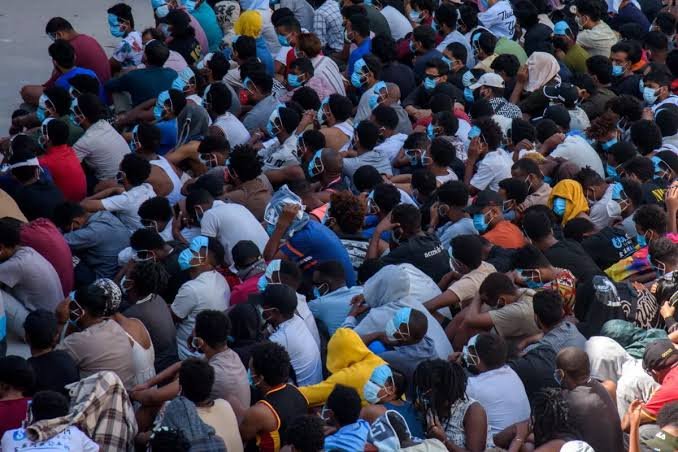
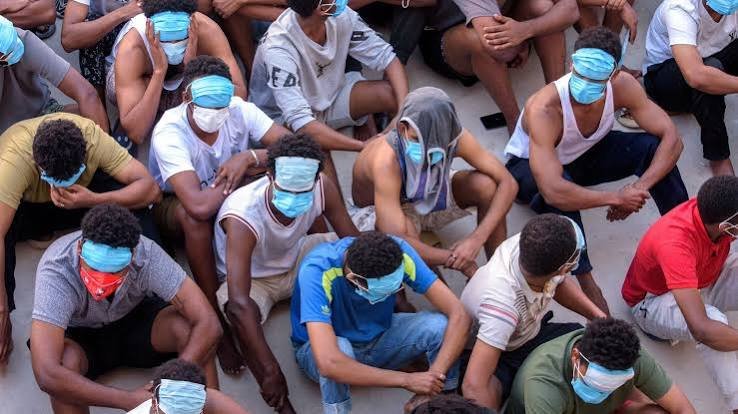
The economic engine of Myanmar’s cyber-scam compounds is fueled by an industrial-scale system of human trafficking. A comprehensive report issued by the United Nations Office of the High Commissioner for Human Rights (OHCHR) in February 2026, titled A Wicked Problem, explicitly categorized this crisis as a systemic convergence of human trafficking, torture, and forced criminality. The OHCHR estimates that at least 120,000 individuals are held in Myanmar alone, forming part of a broader captive workforce of over 300,000 across the Mekong region.
Following China’s aggressive repatriation of its citizens and the implementation of strict domestic travel restrictions, the syndicates executed a strategic demographic pivot. To sustain operations and target highly lucrative victims in North America, Europe, and Australia, the criminal networks shifted their trafficking pipelines to procure fluent English speakers. By 2025 and 2026, the demographics of the compounds had globalized dramatically. Civil society networks documented victims from at least 66 different countries. In one instance, 41 distinct nationalities were documented at a single border crossing over a five-month period in 2025. The compounds now house massive influxes of trafficked individuals from South Asia (India, Bangladesh, Sri Lanka), Southeast Asia (Philippines, Malaysia, Indonesia), Africa (Kenya, Uganda, Ethiopia, Rwanda, Zimbabwe), South America (Brazil), and even European nationals from France, Germany, and Spain.
The recruitment methodologies exploit global economic vulnerabilities and relational trust. Approximately 85 percent of victims documented between 2022 and 2026 were recruited through fraudulent online job advertisements posted on social media platforms, messaging applications, and legitimate job boards. These advertisements offer lucrative, seemingly legitimate roles in digital marketing, customer support, data entry, or cryptocurrency trading, frequently targeting educated professionals. The deception is highly sophisticated; Indian victims reported undergoing professional video interviews, receiving test assignments, and being issued formal offer letters with company seals before being directed to travel on tourist visas. Alarmingly, behavioral analyses indicate that nearly 75 percent of victims were recruited by someone they already knew and trusted—such as a relative or friend who was already trapped inside a compound and forced to act as a recruiter under threat of violence.
Demographically, civil society data indicates that 76 percent of documented victims are male, and 79 percent are under the age of 35. Tragically, minors make up 12 percent of documented cases, with the youngest recorded victim being just 12 years old.
The Architecture of Enslavement and Torture
The operational reality inside these compounds mirrors maximum-security penal colonies, governed by extreme violence and absolute control. Upon arrival via sophisticated smuggling routes—often involving flight transits through Bangkok and illicit nighttime crossings of the Moei River—victims are systematically stripped of their passports, identification documents, and personal mobile devices.
Victims are immediately subjected to debt bondage. Recruiters inform the trafficked individuals that they owe exorbitant sums for their travel, visas, and accommodation, effectively binding them to unrealistic profit targets. Contracts, if provided at all, are mechanisms of coercion. Workers are forced to endure 12- to 19-hour shifts, engaging in continuous, scripted manipulation of global victims.
The enforcement of quotas relies on a terrifying spectrum of physical and psychological abuse, detailed extensively by survivors and UN investigators. The OHCHR reported that every single victim interviewed had witnessed or directly experienced severe mistreatment amounting to torture. Low-performing teams are routinely subjected to public torture during morning assemblies as a deterrent to others. Specific abuses documented include severe beatings, electric shocks with cattle prods, solitary confinement in lightless rooms, and immersion in “water prisons”—cages submerged in water where victims are held for hours or days. Furthermore, victims are deliberately brutalized by being forced to inflict violence upon one another; for example, a Bangladeshi victim reported being ordered to beat other workers, while a Ghanaian victim was forced to watch his friend being beaten.
Syndicates also commodify the victims themselves; individuals who consistently fail to meet targets are “sold” to rival compounds, with their fictitious debt burdens escalating with each transfer. In instances where workers attempt to escape or become entirely unproductive, syndicates routinely extort their families, initiating video calls to broadcast the victim being tortured until ransoms of tens of thousands of dollars are paid. Deaths resulting from violence, starvation, or suicide are frequently reported.
The Gendered Dimensions of Exploitation
The trafficking crisis exhibits highly specific gendered impacts. While male victims comprise the majority of documented cases and are frequently treated solely as perpetrators by authorities, women and girls face compounded forms of exploitation.
The integration of artificial intelligence and the demand for authentic visual verification in romance scams have drastically increased the value of female captives. Women are often forced into “FineChat” roles, acting as the visible, on-camera persona to lure affluent male victims or participating in forced sexual video calls. Beyond forced criminality, the OHCHR and regional NGOs have documented epidemic levels of sexual violence within the compounds, a trend that escalated sharply in 2024 and 2025. Female victims report systematic rape, forced prostitution in compound brothels, sexual humiliation, and forced abortions. In one documented case, twelve women released from compounds in Myanmar reported being raped and impregnated, while a pregnant Filipina survivor experienced physical violence and electrocution.
Compounding the tragedy is the lack of legal protection upon rescue. Due to a pervasive failure by transit and destination countries to adhere to the non-punishment principle of human trafficking law, survivors who manage to escape are frequently treated as illegal immigrants or cyber-criminals. They are routinely detained in immigration facilities, fined for visa violations, and sometimes prosecuted for the very fraud they were tortured into committing, creating an endless cycle of re-traumatization and stigmatization. Myanmar: A Strategic Analysis Cybercrime Networks and Human Trafficking.
The Industrialization of Fraud and Financial Laundering
The Mechanics of “Pig Butchering”
The primary revenue engine for these compounds is a sophisticated form of long-term investment fraud known colloquially as “pig butchering” (shāzhūpán). This methodology marks a departure from traditional, fast-paced cyber scams. It relies on the psychological grooming and systematic financial depletion of victims over weeks or months.
The scam lifecycle begins with initial contact, often disguised as a misdirected text message, a professional inquiry on LinkedIn, or a match on a dating application. The trafficked worker, operating under a carefully constructed fabricated persona, initiates a benign conversation. Once trust is established, the narrative pivots to discussions of wealth generation, eventually encouraging the victim to invest in a polished, entirely fraudulent cryptocurrency trading platform or decentralized finance (DeFi) liquidity pool.
These platforms display fictitious exponential returns, designed to manipulate the victim into liquidating retirement accounts, taking out mortgages, and borrowing heavily. When the victim finally attempts to withdraw their “profits,” the platform demands exorbitant “tax” or “clearance” fees, extracting the final available capital before the scammer severs all communication. In 2025, reported U.S. losses from cryptocurrency investment fraud reached $7.2 billion, demonstrating the devastating efficacy of this model.
Cryptocurrency and B2B Guarantee Marketplaces
The staggering profitability of Myanmar’s scam compounds relies on an illicit financial architecture capable of moving tens of billions of dollars across borders instantaneously. While traditional underground banking and shell companies are utilized, cryptocurrency has become the primary conduit for extracting, moving, and laundering victim funds. Syndicates overwhelmingly utilize stablecoins—specifically Tether (USDT) operating on the TRON blockchain—due to its price stability, low transaction fees, and rapid settlement times.
The most significant development in the professionalization of the scam economy is the emergence of digital guarantee marketplaces. These platforms function as business-to-business (B2B) ecosystems where the fragmented services required to run a scam operation are bought and sold. The undisputed apex of this ecosystem was Huione Guarantee (later rebranded as Haowang Guarantee), an illicit Telegram-based marketplace operated by subsidiaries of the Cambodia-based conglomerate Huione Group.
| Financial Entity | Role in the Scam Ecosystem | Estimated Illicit Volume |
| Huione Guarantee / Haowang | Telegram-based B2B marketplace for scam syndicates. Facilitated the sale of malware, stolen data, money laundering services, and physical torture devices. | $24 Billion to $31 Billion |
| Huione Pay | Fiat-based payment platform acting as the financial backbone for the Huione conglomerate, operating with severely deficient AML/KYC controls. | Processed at least $103 Billion in general USDT transactions |
| Prince Group | Transnational Criminal Organization utilizing complex webs of casinos, real estate, and financial institutions to consolidate and transfer scam-derived assets. | Billions (DOJ seized $15B in Bitcoin from Chairman Chen Zhi) |
| H-Pay Service PLC | Successor component of Huione Group designed to circumvent sanctions and maintain illicit money laundering channels. | Assessed as a primary money laundering concern by FinCEN |
Operating primarily in Chinese, Huione Guarantee acted as an escrow service, facilitating transactions between thousands of individual merchants and scam syndicates. The platform provided everything required to establish and run a cyber-fraud compound in Myanmar. Merchants sold bulk personal data obtained from global breaches, custom-built fraudulent cryptocurrency trading platforms, malware-as-a-service, and sophisticated money laundering services. Chillingly, blockchain analytics firms revealed that merchants on Huione Guarantee also openly marketed physical instruments of torture, including tear gas, electric batons, and electrified shackles explicitly advertised for “preventing escapers” and controlling trafficked workers.
Between 2021 and its disruption in mid-2025, Huione Guarantee processed up to $31 billion in USDT transactions, rendering it the largest illicit online marketplace ever recorded—exponentially larger than notorious dark web markets like Silk Road or AlphaBay. This financial infrastructure has facilitated a broader convergence of transnational crime, with syndicates now offering their highly efficient laundering services to external actors, including state-sponsored hackers such as the Democratic People’s Republic of Korea (DPRK).
Global Law Enforcement and Sanctions Response
Multilateral Crackdowns and Strike Forces
Recognizing the systemic threat posed by the scam economy, the international community significantly escalated its response throughout 2025 and early 2026. The strategy has largely relied on a combination of financial sanctions, multinational law enforcement operations, and targeted disruptions of digital infrastructure. Myanmar: A Strategic Analysis Cybercrime Networks and Human Trafficking.
The United States Department of Justice established the Scam Center Strike Force, coordinating with the FBI, the Secret Service, and international partners to disrupt the physical and digital lifecycles of the syndicates. In a watershed series of operations under the banner of “Operation Riptide” and “Operation Level Up” in April 2026, the Strike Force executed a multi-pronged assault on the ecosystem.
Key law enforcement actions included:
- Criminal Indictments: Unsealing charges against two Chinese nationals, Huang Xingshan and Jiang Wen Jie, who managed the Shunda compound in Min Let Pan, Myanmar. The investigation revealed that under Jiang’s supervision, operators successfully defrauded a single American victim of over $3 million, a theft celebrated within the compound. The two men were arrested in Thailand attempting to transit to a new compound in Cambodia.
- Digital Infrastructure Seizure: The seizure of a Telegram channel (@pogojobhiring2023) with over 6,500 followers used to recruit English-speaking trafficking victims, and the takedown of 503 fake cryptocurrency investment domains.
- Asset Freezes: The restraining of over $700 million in cryptocurrency tied to scam money laundering, preserving the funds for potential victim restitution.
- Bounties: The U.S. Department of State announced a reward of up to $10 million for information leading to the disruption of the Tai Chang (Casino Kosai) scam center in Myanmar’s Karen State.
Simultaneously, INTERPOL orchestrated “Operation SECURE” between late 2024 and April 2025. Involving 26 countries in the Asia and South Pacific region, the operation specifically targeted the infostealer malware infrastructure used to harvest initial victim data. The operation resulted in the takedown of over 20,000 malicious IPs and domains, the seizure of 41 command-and-control servers, the arrest of 32 individuals, and the proactive notification of over 216,000 potential victims.
Sanctions and the Targeting of Financial Chokepoints
The United States Department of the Treasury has aggressively deployed sanctions to sever the syndicates from the global financial system. The Office of Foreign Assets Control (OFAC) and the Financial Crimes Enforcement Network (FinCEN) have targeted the corporate conglomerates and militias enabling the fraud.
| Target Entity | Jurisdictional Focus | Regulatory / Enforcement Action |
| Huione Group & H-Pay Service PLC | Cambodia / Global | FinCEN issued a finding pursuant to Section 311 of the USA PATRIOT Act, invoking Special Measure 5 to designate the entities as a primary money laundering concern, effectively severing them from the U.S. financial system. DOJ simultaneously seized backend cloud computing infrastructure used by the group. |
| Prince Group & Chen Zhi | Cambodia / Global | OFAC designated the conglomerate as a Transnational Criminal Organization (TCO). Sanctioned 146 associated persons, including leadership elements. |
| Kok An & L.Y.P. Group | Cambodia | OFAC designated the Cambodian Senator, his business empire (including Crown Resorts and Anco Brothers Co Ltd), and 28 associated entities for retrofitting casinos into scam compounds. |
| Karen National Army (KNA) & Saw Chit Thu | Myanmar | OFAC designated the junta-allied militia as a TCO, sanctioning its leader and subordinates for operating Shwe Kokko and KK Park. |
| Democratic Karen Benevolent Army (DKBA) | Myanmar | OFAC designated the armed group and affiliated companies (Trans Asia, Troth Star) for developing and protecting the Tai Chang scam centers. |
Private sector cooperation has also yielded significant results in enforcing these financial chokepoints. Tether, the stablecoin issuer, coordinating actively with U.S. law enforcement, froze $1.5 billion in USDT associated with confirmed pig butchering scams between 2022 and 2026. This included specific, targeted freezes of $344 million and $225 million connected directly to Southeast Asian syndicates, demonstrating that public blockchains can be leveraged to trace and disrupt illicit flows when industry and law enforcement collaborate.
The Facade of State Compliance and the Extradition of She Zhijiang
Despite the mounting international pressure, the official response from the Myanmar military junta remains largely performative. At the INTERPOL-UNODC Global Fraud Summit in March 2026, Myanmar’s delegation claimed to have taken “decisive and concrete actions,” citing the establishment of a National Anti-Scam Centre, the enactment of new cyber laws, and the transfer of 71,000 foreign nationals. However, this narrative starkly contradicts the reality on the ground. The junta continues to rely on the revenue generated by the BGFs that operate the compounds, and the “transfers” of foreign nationals are largely the result of EAO offensives (like Operation 1027) or China forcing the junta’s hand, rather than genuine domestic law enforcement.
The limitations of traditional law enforcement are starkly illustrated by the case of She Zhijiang. A dual Chinese-Cambodian national and the chairman of Yatai International Holdings Group, She was the primary architect of the Shwe Kokko mega-complex. Arrested in Bangkok in August 2022, She fought a protracted three-year legal battle, claiming to be a Chinese spy facing political persecution. Following the exhaustion of his appeals, Thai authorities extradited him to China in November 2025 to face charges of operating illegal casinos and laundering over $380 billion.
While heralded as a diplomatic triumph, the operational impact of his extraction on the ground in Myanmar was negligible. Shwe Kokko and the surrounding compounds continued to expand throughout his incarceration and subsequent extradition. The infrastructure he established was deeply embedded within the militarized economy of the Karen Border Guard Force. In decentralized, franchise-model criminal economies, the removal of a primary investor simply allows local warlords like Saw Chit Thu and rival Chinese syndicates to absorb the existing infrastructure and continue operations unabated.
Strategic Outlook and Concluding Analysis
The persistence of Myanmar’s scam compounds underscores a fundamental shift in the nature of transnational organized crime. The phenomenon represents the convergence of illicit digital economies, industrialized human trafficking, and fractured state sovereignty. Based on the exhaustive analysis of current data, intelligence, and geopolitical trends, several critical assessments define the strategic outlook:
The traditional law enforcement paradigm—focused on arresting isolated kingpins and seizing individual domains—is insufficient to dismantle this ecosystem. The extradition of figures like She Zhijiang or the indictment of compound managers like Huang Xingshan disrupts specific operations but fails to address the structural incentives. The scam economy is a territorial enterprise shielded by military force. As long as the Myanmar military junta relies on proxy militias to maintain its grip on power, it will continue to provide geographic sanctuary to these syndicates. Addressing the scam crisis is therefore inextricably linked to resolving the broader political and military conflict within Myanmar.
Given the inability to physically dismantle the compounds via traditional policing, disruption must prioritize the financial architecture. The staggering volume of illicit capital cannot easily enter the legitimate global financial system without passing through centralized chokepoints. The aggressive use of OFAC designations and Section 311 actions by FinCEN against entities like Huione Group and Prince Group have proven highly effective at raising the cost of doing business. Expanding this strategy requires compelling major cryptocurrency exchanges, stablecoin issuers, and cloud infrastructure providers to proactively monitor and freeze assets connected to known scam geographies and B2B guarantee marketplaces.
Furthermore, the scam economy is uniquely positioned to exploit advancements in artificial intelligence. The transition from manual “pig butchering” to AI-automated engagement, combined with real-time deepfake technology, will exponentially increase both the scale and the success rate of these frauds. As syndicates integrate these tools, the reliance on massive, centralized human labor forces may eventually decrease, shifting the model from sprawling, vulnerable compounds to smaller, highly technical, and deeply concealed operations that are even harder to detect via satellite imagery.
Finally, the international legal and consular frameworks for human trafficking are failing to manage the reality of “forced criminality.” Victims from over 66 countries are trapped in a legal gray area, frequently criminalized by their home nations upon rescue. The international community must universally adopt and enforce the non-punishment principle, recognizing that individuals coerced into committing cybercrime under the threat of torture are victims requiring comprehensive rehabilitation and financial restitution, not prosecution.
The cyber-scam compounds in Myanmar are not a transient anomaly but the vanguard of a new, highly resilient form of globalized crime. They thrive in the seams of geopolitical instability, shielded by armed conflict and empowered by digital anonymity. Dismantling this ecosystem requires moving beyond localized crackdowns toward a unified, multilateral strategy that simultaneously targets the technological vectors, severs the illicit financial pipelines, and directly addresses the political complicity of the armed actors providing sanctuary. Myanmar: A Strategic Analysis Cybercrime Networks and Human Trafficking.